
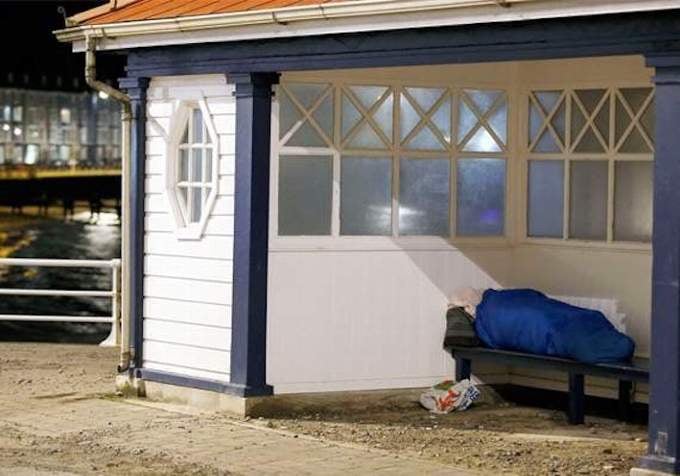
While the pandemic “undoubtedly exacerbated” homelessness in Wales, the issue has “remained constant over recent years” in Ceredigion.
Figures from Ceredigion County Council revealed the number of people homeless or at risk of homelessness within 56 days has remained constant, but has increased slightly during the pandemic.
In 2017/18 the number stood at 432, which then decreased to 419 in 2018/19, increasing to 427 in 2019/20 and 435 2020/21.
In 2021/22 thus far, from 1 April to 30 November, Ceredigion council said 263 people were recorded as being either homeless or at risk of homelessness.




Shelter Cymru reported that, currently, there are eight people listed as rough sleeping across the county.
In terms of those in Emergency Accommodation, this increased “significantly” over the pandemic after the Welsh Government adopted an “everyone in” approach to Emergency Accommodation placements.
The number of those in such accommodation increased from 80 in 2019/20 to 156 in 2020/21.
Whereas pre-pandemic only those in the Priority Need criteria would have been offered this accommodation, after the pandemic hit, Ceredigion County Council was tasked with “ensuring all are provided with Emergency Accommodation when required”.
Rob Simkins, campaigns manager with Shelter Cymru, said: “Pre-pandemic, homelessness laws were different.
“The public health laws suspended priority need meaning that everyone was owed a duty to be housed by local authorities.
“This meant the numbers of people living in temporary accommodation shot up dramatically, as everyone who’d been sofa surfing, sleeping in their cars and “hidden homeless” were now able to be housed.
“The pandemic was obviously also massively disruptive in terms of people’s lives and incomes and undoubtedly exacerbated homelessness and people’s ability to afford their home in Wales.”
Rob and Shelter Cymru are concerned recent economic issues may be a “perfect storm” for many of those struggling.
“The £20 cut in Universal Credit, freezing of Local Housing Allowance and rising energy costs are obviously very concerning,” Rob continued.
“We’ve spoken about how this represents something of a perfect storm for many people and we’re worried about the impact this will have on people’s ability to afford their homes.”
In September this year, the Senedd Cymru Equality and Social Justice Committee undertook a short inquiry into the “impact of the pandemic on levels of indebtedness, with a particular focus on personal, household and consumer debt”.
During this inquiry Shelter Cymru, as well as Chwarae Teg and Community Housing Cymru, gave written evidence about the impact.
On Tuesday, 30 November, the Welsh Government launched their ‘Ending Homelessness Action Plan’, which will see landlords encouraged to lease their properties to homeless people.
Landlords will be encouraged to lease their properties to local authorities in return for a rent guarantee and additional funding to improve the condition of their property.
These properties can then be used by local authorities to provide affordable and good quality homes for people who are at risk of or experience homelessness.
Climate Change Minister Julie James also announced a new £30 million funding pot over five years for local authorities.
As well as this, the Welsh Government plan to build 20,000 low carbon, good quality and affordable homes for rent over the next five years.
But the Welsh Conservatives expressed concern the government may be “over-promising and under-delivering”.
The Shadow Minister for Climate Change, Janet Finch-Saunders MS said it is “great to see Labour ministers finally getting the ball rolling to eradicate homelessness”.
The minister added: “It all boils down to the delivery of the plan. Ministers are often big on rhetoric but their record on delivery over the last two decades has been extremely poor to say the least.”
Comments
This article has no comments yet. Be the first to leave a comment.