
Madam,
I am responding to the letter by James Davies in which he writes to Borth villagers and makes a number of inaccurate and misleading statements.
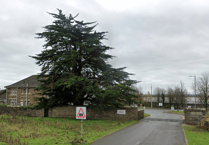
He seeks to portray himself as defender of an historical route to St Matthew’s Church over the Capel Seion railway crossing. It is a historical footway route but never historical for vehicles.
Some of the older residents of Borth will recall in the 1950s vehicles wishing to gain access to the church for weddings and funerals normally travelled via Ynys Fergie Farm, with the farmers’ permission.
Furthermore, correspondence in the National Library of Wales confirms the church had to obtain the permission of Great Western Railways for a funeral cortege to use the Capel Seion crossing in the early 20th century.
The late Rev Idris Davies, vicar of St Matthews in the 1950s/60s, entered into correspondence with the railway company about parishioners using the compacted earth road to travel to church by vehicle. Agreement was reached whereby for many years into the 1970s the gate was unlocked for church services and manned by Bob Pierce, of Gloucester Cottage.
Eventually the gate was left unlocked when telephones were installed at the railway crossing gates, so vehicle users could phone for permission to cross.
St Matthews Church Parochial Church Council paid to have the private road upgraded with tarmac in the 1990s.
Mr Davies misleads villagers by stating the church wardens have confirmed there have been no formal discussion about closure of the Capel Seion crossing to vehicles on the provision of an alternative upgraded vehicular route. The wardens dismiss this as being untrue and perhaps Mr Davies will confirm the source of the allegation made in his letter.
Mr Davies’ reference to villagers collecting peat and using the road to transport it to the village pre-dating the railway is again some-what misleading. The Cambrian Rail was constructed in the 1860s and cutting peat from the bog was only permitted by those who owned the land or by licence.
Mr Jones, of Ynys Fergie, had peat on his land which Ianto Tudor used to cut and my great-grandfather Hugh Williams had a licence to cut two acres of peat in the Ynyslas area.
He transported the cut peat by coracle up the River Leri and off-loaded it near Brynllys, where it was transported by horse and cart to Gwastad via the Capel Soar, not the Capel Seion railway crossing.
Mr Davies acknowledges the long-overdue upgrade of the road, achieved by long-standing negotiations with Network Rail and three landowners over two years by Cllr Ray Quant, which was regularly reported to Borth Community council where Mr Davies attends all council meetings.
For him to blast about misleading vehicular rights now the new road is completed is typical mischief-making; especially as it opens a much easier route for the Peaceful Places Church Trail which attracts tourists into Ceredigion and the Borth community.
Yours etc,
Cllr Billy Williams, Ty Du farm, Borth.
Have your say on the local issues affecting you - email [email protected] or join in the conversation on our Facebook page
Comments
This article has no comments yet. Be the first to leave a comment.