

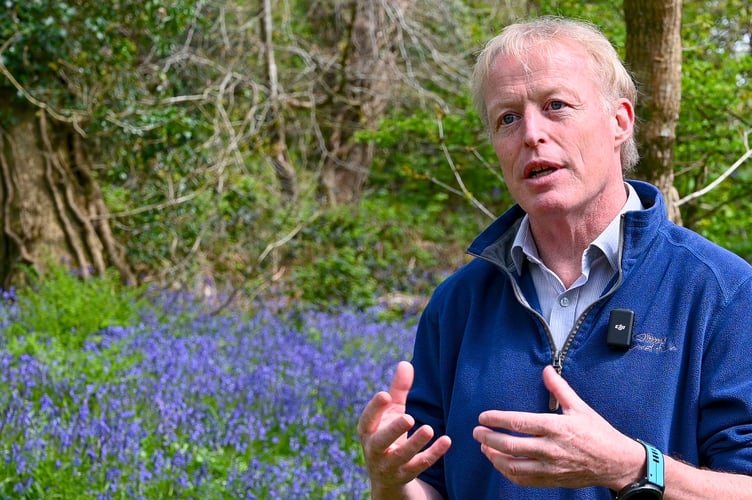
Scientists are calling for a ‘systems reset’ in how sustainable development is understood and pursued.
Co-written by an Aberystwyth University academic, the new research calls for a fundamental shift in how humanity understands and pursues sustainable development, to better address today’s environmental and social crises.
The findings challenge the traditional three-pillar model which treats nature, economy, and society as separate domains, arguing that this is not fit for purpose in a world facing accelerating climate change, biodiversity loss, and social inequalities.
The authors propose a new model that sees sustainable development as a single, dynamic system; where nature forms the foundation, the economy operates within society, and society governs through shared values.

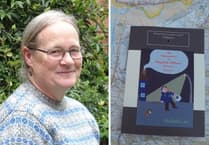

Professor Mike Christie, Professor of Environmental and Ecological Economics at Aberystwyth Business School, is a co-author of the new paper published in Nature Communications Sustainability.
He said: “Despite decades of work on sustainability, we continue to see rising inequality, accelerating biodiversity loss, and a climate in crisis. Treating nature, the economy, and society as separate issues has led to disconnected and often conflicting priorities, and a worsening of the problems we are trying to resolve.”
The scientists suggest that sustainability depends on keeping natural, economic, and social systems in balance. When one is overused or neglected, the whole system becomes unstable. Such a shift in thinking would support rebalancing global development within planetary limits and ensuring equitable outcomes for all.
The research concludes that today’s global sustainability crises stem not only from flawed market systems, but from a wider ‘values failure’.
Professor Mike Christie added: “Sustainable development requires more than addressing market failures – it needs the diverse values of different groups in society to be recognised and integrated, ensuring that all voices are considered in shaping our collective future.”
Comments
This article has no comments yet. Be the first to leave a comment.