

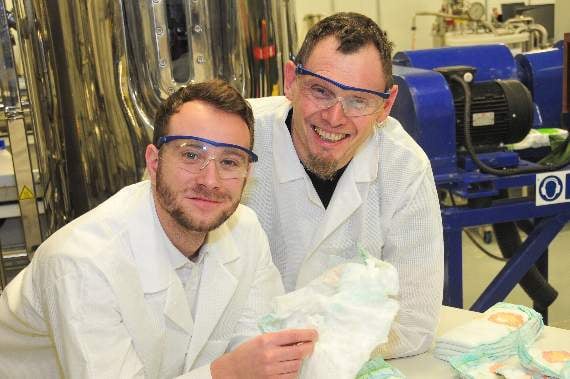
DISPOSING of different types of waste is a headache for many at any time of the yea, but managing specific types of waste, including disposable nappies, presents significant environmental challenges.
Now a new eco-friendly process developed by Aberystwyth University biology graduate Joe Freemantle could provide a solution.
Joe has devised a process to turn disposable nappies, incontinence pads and sanitary products into valuable products including pure cellulose fibre and bio-fuel.
Every year the UK produces one million tonnes of Absorbent Hygiene Product (AHP) waste, with the majority going to landfill sites and contributing to the build-up of greenhouse gas emissions.



Joe developed the new process during his studies for a Master’s degree in Green Biotechnology and Innovation Management at the Institute of Biological, Environmental and Rural Sciences at Aberystwyth University.
“Our intention is to intercept this waste and by using separation and refining technologies, allow for the recycling of valuable components, reducing the amount of AHPs that end up in landfill/incinerators and in turn reduce the demand and therefore the emissions associated with the production of these materials,” said Joe.
“The nappies then need to be processed - separating the fibres from the plastic components and the sanitary waste must be made non-toxic, before fermentation to liquid transport fuel.
“It will also be possible to regenerate very pure and valuable cellulose, which can be used to manufacture polymers such as rayon, lyocell and viscose.”
See this week’s south editions for the full story, in shops and online tomorrow
Comments
This article has no comments yet. Be the first to leave a comment.