
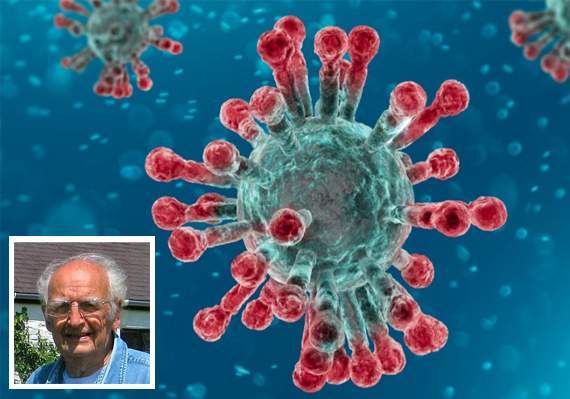
A VACCINE developed by a late scientist from Ceredigion could prove a vital weapon in the fight against coronavirus, it was claimed this week.
Eric Worrall, a vaccine technologist with the United Nations Food and Agriculture Organisation and the UK Department for International Development for 50 years, is said to have developed the vaccine after retiring to his Talsarn smallholding.
Its original purpose was to assist private investors in Indonesia in their ultimately successful fight against H5N1 avian influenza on large poultry farms.
Mr Worrall died in 2014 at the age of 84 but his daughter, Jane, said this week that the vaccine was ‘equally applicable’ to all enveloped viruses including coronavirus and – subject to the usual trials – could prove a suitable vaccine for humans.
.png?width=209&height=140&crop=209:145,smart&quality=75)
.png?width=209&height=140&crop=209:145,smart&quality=75)

Mr Worrall subsequently wrote a paper on his research and results, which was published in the peer-reviewed journal Vaccine.
His sons and daughter have now sent a copy of their father’s paper to MP Ben Lake in the hope he can forward it to someone ‘in the know’ at the UK Government.
“We are not scientists nor are we connected to any research establishments or pharmaceutical companies, so find it difficult to draw attention to this vaccine when so much has already been invested in other methods and trials,” Jane, 65, told the Cambrian News.
“But we feel at this time of a potential national and global emergency that the government really should look at this to see if it could be a rapid, simple and useful solution to the coronavirus vaccine problem.
“The salient and unique benefits of the vaccine are that it is administered via nasal drops which form a first line of defence by attaching to the mucosal epithelium (ie: the linings of nose and lungs) which defends against infection while waiting for the usual immune response to take effect.
“The vaccine is simple to produce and was widely tested in the field in an area of endemic infection, and the results were conclusive and very successful.
“Another unexpected and unique effect was observed, in that the vaccine appeared to halt the progress of the disease in birds already showing symptoms of infection.”
Shortly before he died, Mr Worrall detailed another operating method which fine-tuned the vaccine and explained how it was having an ‘unprecedented’ curative effect.
“As far as coronavirus is concerned, he had seen something similar coming for some time,” said his daughter.
“He’d have been frustrated that he couldn’t get any attention for his vaccine as it was something he really believed in.
“He was obsessed with it – just before he died he left the final operating method and a vital component necessary for producing the vaccine with my three brothers and myself.
“We feel we are custodians of something which could save lives, not to mention the economy.”
Comments
This article has no comments yet. Be the first to leave a comment.