

A NEW pilot scheme to deliver life-saving treatment faster to patients within the community has launched in Pwllheli.
The Welsh Government says they have launched the scheme, which involves the North Wales Fire and Rescue Service and the Welsh Ambulance Services NHS Trust, to improve the quality of services provided to the public.
The scheme will take place in specific geographical response areas and members of the public living within these areas who may require emergency assistance for a medical incident may receive a response from their local fire and rescue services.
This month the pilot went live in Pwllheli and staff from Dolgellau will also join the pilot in the next few weeks.
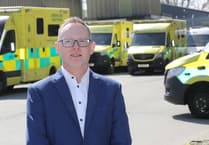


Co-responding teams will be mobilised via fire control, as directed by the Welsh Ambulance Service Trust. North Wales Fire and Rescue Service will not be mobilising fire appliances as part of the co-responding pilot but crews of two will be mobilised via car and will proceed to incidents at normal road speeds and not under blue light conditions.
The vehicles will be equipped with specialised equipment enabling specially trained staff to respond to a set of specified clinical conditions where their arrival could be achieved the soonest and where they would be adding the most value with their training and equipment.
This includes being mobilised to cardiac arrests, casualties who are reported unconscious or choking, and catastrophic bleeding.
North Wales Fire and Rescue Service’s assistant chief fire officer, Richard Fairhead, said: “We would like to reassure residents across Wales that there will be absolutely no reduction in emergency response and service delivery, either from the fire and rescue services across Wales or from the Welsh Ambulance Services Trust, during the pilot period.
“The pilot will involve mobilising responders who are suitably trained individuals who will work to preserve life until the arrival of either an ambulance or rapid response vehicle.
“The exact nature of the pilot will vary in each Welsh fire and rescue service region but the overall aim of working together to save lives will be a common approach in the three regions.”
Greg Lloyd, head of clinical operations at the Welsh Ambulance Service said: “Every second counts in an emergency. If our fire service colleagues can get to a scene before one of our ambulances they can begin to deliver life-saving treatment – that’s only going to improve that patient’s chance of surviving.
“All co-responders are being trained to administer life-saving treatment, including CPR and the use of a defibrillator. We must stress that they will not replace the normal response of a paramedic in a rapid response car or an emergency ambulance, but will form part of an integrated approach to providing immediate, life-saving treatment to patients in our communities.
“Co-responders play an important role alongside frontline ambulance staff in making sure patients get appropriate help quickly and efficiently, and they’re much part of the Welsh Ambulance Service family.”
Comments
This article has no comments yet. Be the first to leave a comment.