

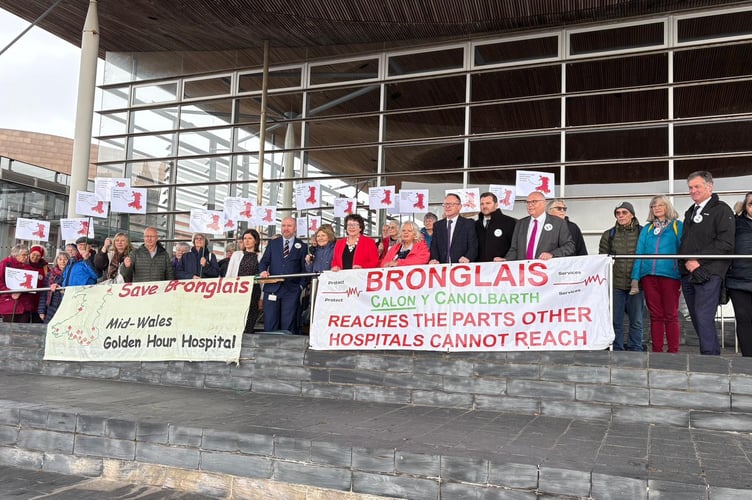
If the people who responded in droves to a consultation on plans to remove vital stroke services from Bronglais Hospital in Aberystwyth are listened to then the whole idea would be scrapped, but health chiefs remain adamant that “services cannot continue as they are.”
Hywel Dda University Health Board will hold an Extraordinary Board meeting on 18 and 19 February to consider the future model for nine services, including the downgrading of stroke services at Bronglais Hospital.
The changes would see the stroke services at Bronglais downgraded to a ‘treat and transfer’ unit with stroke patients presenting at the Aberystwyth hospital then being transferred to the Prince Philip in Llanelli or Withybush in Haverfordwest.
Neither of the options consulted on by Hywel Dda Health Board have stroke services retained at Bronglais.



The board meeting will be decision day for plans that have been met with ferocious opposition, with claims the health board isn’t listening to concerns from people in rural areas.
A public consultation on the Clinical Services Plan, which closed on Sunday, 31 August, drew more than 4,000 responses.
The full responses to the consultation will be presented to health board members at the meeting, with the plans to downgrade stroke services at Bronglais receiving overwhelmingly critical and negative feedback.
The consultation heard from staff at Aberystwyth’s stroke unit who “reported having well-established and experienced stroke teams and questioned the rationale for change.”
Many staff members “raised general concerns about the proposed options, viewing them as poorly thought out and lacking consideration of geography, accessibility, and patient safety,” the report added.
“Particular worries were around longer waiting times, transfer delays, and a lack of clear modelling around rehabilitation capacity and staffing.”
Many questioned why Bronglais was excluded from consideration as a ‘centre of excellence’, with Bronglais staff highlighting Sentinel Stroke National Audit Programme data showing it as the top-performing stroke unit in the health board.
While staff acknowledged some workforce fragility, they believed this could be resolved with proper investment and planning.
Staff and health professionals who responded to the consultation also stressed the impact of the proposals on mid Wales patients, warning that “further consolidation of services to the south would leave a major geographical gap in specialist stroke care, disadvantaging rural patients and increasing travel times.”
It was said that with Bronglais currently supporting around a quarter of Powys stroke cases, removing or reducing its role would “expose patients from Ceredigion, parts of Powys, and south Gwynedd to longer travel times and reduced access to timely treatment and rehabilitation.”
In her response to the consultation, Ceredigion MS Elin Jones said the online questionnaire “offers no flexibility to offer alternative options” and only presents two options to downgrade Bronglais to a ‘Treat and Transfer’ model.
She called that option “unacceptable”.
Ms Jones called for a more “geographically balanced planning and delivery of hospital services”, that would ensure better equity of access across mid and west Wales.
Ms Jones said that “a lack of planning for ambulance capacity and investment” means taking away stroke services in Bronglais was unviable.
“The ‘Treat and Transfer’ model cannot even be considered as an option until there is clarity and commitment on what the additional investment would be to ensure that ambulances would be available 24/7,” she said.
MPs and MSs from Powys also responded to the consultation, expressing strong opposition to the proposed removal of stroke rehabilitation services from Bronglais, “emphasising that their constituents rely heavily on Bronglais as their primary hospital for stroke care.”
A response put together by David Chadwick MP, Jane Dodds MS, Cllr Angela Davies, Cllr Glyn Preston and Cllr Fleur Frantz Morgans said: “We need to see investment in Bronglais, not withdrawal.
“Stroke patients and their families deserve care that is accessible, effective, and local.”
Powys Teaching Health Board emphasised to its fellow health board in its consultation response “the strategic importance of Bronglais for north-west Powys communities.”
Powys health board said it was concerned about the impact of the plan on residents and also raised concern that “decisions appear regional rather than part of a cohesive national stroke strategy.”
Betsi Cadwaladr Health Board said that the plans “require substantial further analysis to understand the full implications for patients in north Wales, their families, and the regional health system.”
Aberystwyth Town Council said in its response that it “strongly opposes all options relating to stroke services” and rejects the proposed ‘Treat and Transfer’ model.
The council argued that this approach neglects the realities of rural Wales, as “patients... will be more socially isolated under a ‘Treat and Transfer’ model, and that social isolation will lead to worse outcomes overall.”
The council said it was “essential” to maintain a full stroke service at Bronglais, capable of acute care and ongoing support of patients in the long term through onsite rehabilitation.
The Stroke Association said that it had “serious concerns” over the plans, and warned that “moving rehabilitation services to Llanelli or Haverfordwest would disadvantage mid Wales patients who would face long and difficult journeys without reliable transport.”
The Stroke Association said it “supports the aim of improving stroke services but finds Hywel Dda’s proposals underdeveloped and potentially unsafe.”
Ceredigion Disability Forum also strongly criticised the plans, warning that “mid Wales has become a health desert”, calling for services to remain local and emphasising the urgent need for a robust transport plan with sufficient capacity and funding before any service changes proceed.
Llanegryn Community Council and Pennal Community Councils in their responses said the plan was “causing extreme worry”.
One submission said: “Rather than removing services from a hospital cut off to the rest of Wales by the pitiful transport links, you should be looking at maintaining these services at Bronglais and removing them from areas with better transport links and closer medical services.”
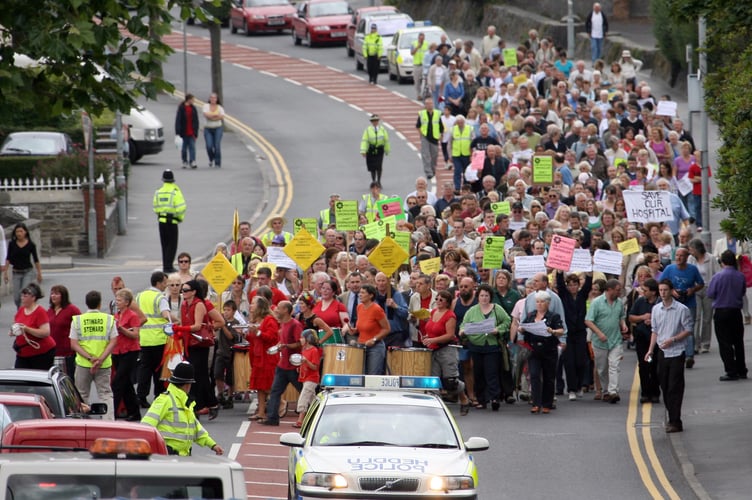
Campaign group Protect Bronglais Services - which is planning a protest against the planned downgrade of Bronglais strokes services in Aberystwyth on 7 February at 10.30am starting at Owain Glyndwr Square - claim the consultation process has cost the health board around £300,000.
In its response to the consultation, the group argued that the process is” fundamentally flawed, incomplete, and detrimental to the Bronglais stroke unit.”
“Bronglais serves a vast and largely rural area across Ceredigion, south Meirionnydd, and central and western Powys, making it geographically essential for mid Wales,” the group said.
“Removing stroke rehabilitation from Bronglais and transferring patients to Llanelli or Haverfordwest would cause serious harm to patients, families, and staff.”
Lisa Francis from Protect Bronglais Services said: "We need to make our voices heard and views clear.
"Mid Wales is a health desert and there is currently no clarity over what they might opt for.
"If the plans to downgrade stroke services at Bronglais are given the go ahead, its makes anything else they plan to do a lot easier.”
The consultation report said that comments in the consultation relating to Bronglais “centred on fears of service loss and a sense of regional neglect.”
“Commenters described Bronglais as an essential resource for mid and north Ceredigion, serving a large rural area where travel to Carmarthen or further south is neither safe nor realistic for many,” the report said.
“Several respondents viewed the consultation as ‘biased’ against Bronglais, arguing that none of the proposed options genuinely protect its current range of services.
“There was also frustration that Ceredigion’s voice is underrepresented in the consultation process, reinforcing a perception that decisions are made around larger population centres.
“Many respondents opposed the closure of the stroke unit at Bronglais, with several having received what they described as excellent care there.
“Travel and transport concerns were frequently highlighted, with respondents fearing that the longer journey to the next nearest stroke unit could negatively affect timely access to specialist treatment and recovery support for often critically ill patients.
“This was a particular issue for those living to the north of Bronglais in south Gwynedd.”
Despite the overwhelmingly negative reaction from the people of mid and west Wales, in its response to the consultation in the report to be put before members, Hywel Dda Health Board remained adamant that stroke services in Bronglais would not continue.
“Currently, there are stroke units at all four hospitals: Bronglais, Glangwili, Prince Philip, and Withybush,” the health board’s report said.
“However, the service fails to meet clinical standards and there are not enough staff to support it, leading to outcomes that are not as good as they could be.
“Evidence shows that outcomes and standards are better if services are brought together and delivered from fewer hospitals, and the Heath Board believes that bringing services together would also help with hiring and keeping staff and making the service more sustainable.”
The health board, in its response, did acknowledge the strength of feeling against the plan.
“Across northern areas of the Health Board, there was widespread strong opposition to removing the stroke unit from Bronglais given its high performance, centrality to mid Wales (including areas of Powys and south Gwynedd), and community value.
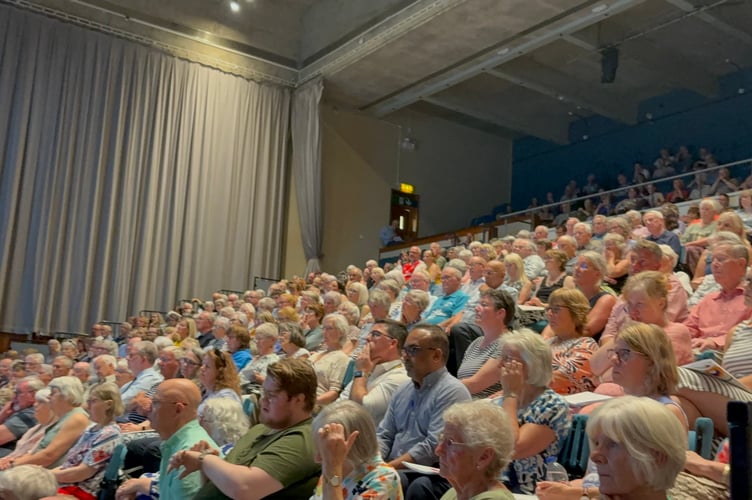
“The strength of feeling includes the 400 people who attended a public meeting in Aberystwyth run by Protect Bronglais Services, and the 17,883 people who signed a petition.
“Consultees across all consultation methods warned that consolidation of services to the south would leave a major geographical gap in specialist stroke care, disadvantaging rural patients.”
Speaking ahead of the meeting, Mark Henwood, Executive Medical Director at Hywel Dda University Health Board said: “We know that these services are fragile and cannot continue as they are.
“Our clinical teams are spread across multiple sites and recruitment is an issue across the NHS.
“Our hospitals require ongoing maintenance, with some parts approaching or having reached the end of their intended lifespan.
“We need to make decisions on the changes needed to address these fragilities, so our services raise standards and meet the needs of our population into the future.”
Mr Henwood has previously said that the health has “heard concerns about the options being considered for stroke services, particularly the ‘treat and transfer’ model.”
“With specific concerns about transport and being able to visit loved ones should they be transferred to access rehabilitation services in another hospital,” he added.
“We want to reassure people that under all options, the initial diagnosis, and where needed, potentially life-saving thrombolysis treatment, would continue to be provided at all four acute hospitals in the Hywel Dda area, including Bronglais Hospital.”
Dr Neil Wooding, Chair of Hywel Dda University Health Board, said: “We have a responsibility to weigh public feedback together with clinical evidence, workforce considerations, sustainability challenges and the need for services to meet the highest possible standards.
“As we move into the next stage, it is vital that the decisions we make are for the benefit of all our communities across Hywel Dda and neighbouring areas.
“We must also ensure that our decisions deliver clear public value and support the best possible patient outcomes.
“As a Health Board, we have a statutory responsibility to provide the best possible services for our communities, and any decisions we make must support that responsibility without setting an unhelpful precedent for the future.
“These decisions will shape our services for the longer term, so it is essential that we take the time needed to reach well informed, balanced conclusions.
“Above all, we must ensure that the services we provide meet people’s needs, both now and into the future.”
The Clinical Services Plan, if approved, would see sweeping changes to critical care, dermatology, emergency general surgery, endoscopy, ophthalmology, orthopaedics, stroke, radiology and urology across mid and west Wales.
It comes against a challenging financial back drop that has seen the health board post large scale deficits for the past few years – including £24.1m for 2024/25 - with a figure north of £30m mooted for the current financial year.
Hywel Dda is currently in the second highest level of escalation for Welsh Government intervention over its finance; strategy and planning; and performance and outcomes related to urgent and emergency care.
Comments
We've recently changed our login process. If you have an account for commenting, you will need to re-register on the login window.
This article has no comments yet. Be the first to leave a comment.