

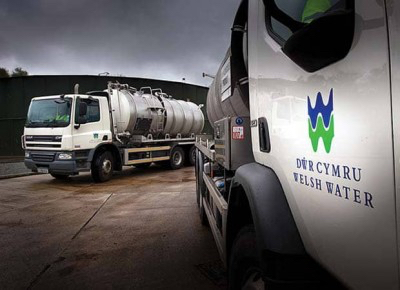
Dŵr Cymru Welsh Water has been told to “put things right” by the industry watchdog after the company was forced to pay out more than £40m for “serious and unacceptable” failures to control sewage spills.
Ofwat previously announced on 12 March that the company had failed to operate, maintain and upgrade its wastewater treatment works and networks adequately to ensure that they could cope with the flows of sewage and wastewater.
A consultation period followed where customers and stakeholders provided feedback on the provisional decision.
On 5 June, Ofwat confirmed its final decision to formally accept a £44.7m enforceable package of undertakings from Welsh Water.


The cash will be used to “reduce spills at specific overflows and improve river water quality in extremely sensitive catchments with the money being funded by the company, rather than added to customer bills,” Ofwat said.
Welsh Water is also “required to rectify all identified breaches and ensure its future compliance.”
Welsh Water's new chief executive Roch Cheroux acknowledged that the company's service had fallen short in some areas, particularly on environmental performance.
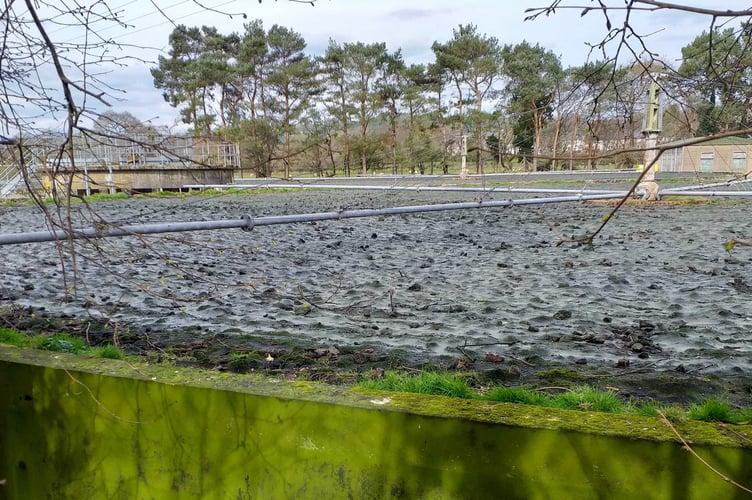
A Welsh Water spokesperson said: “We accept the findings of Ofwat's investigation and apologise for where we have fallen short of the standards that our customers and regulators rightly expect from us.
“We have started a major transformation programme across the company, including within our wastewater services, focused on improving performance, strengthening operational oversight and accelerating investment to deliver better outcomes for rivers and coastal waters.
“The investigation has considered both historic and more recent compliance, and we accept that improvements are needed.”
The telling off from Ofwat and the plans to spend big money to fix the problems are not the first time Welsh Water has been hauled over the coals for environmental concerns.
Last year Dŵr Cymru Welsh Water was fined £1,350,000 and ordered to pay £70,237.70 costs after pleading guilty to over 800 breaches of its environmental permits to discharge sewage.
The fine was later reduced on appeal to £120,000.
Those charges related to Welsh Water’s self-monitoring data submitted to Natural Resources Wales (NRW) as part of its 2020 and 2021 annual reports.
Since 2010 there has been a requirement on water companies to carry out self-monitoring of their effluent discharges from their sewage works and water treatment works.
Upon receiving its 2020 annual report, NRW officers were alarmed to find that the quality of the information provided had noticeably deteriorated compared to previous years, with over 600 breaches recorded.
The locations included water treatment works at Pwllheli, Dyffryn Ardudwy, Elan Valley and Aberystwyth.
In interviews, and in their defence in court, Dŵr Cymru Welsh Water explained that an internal restructure of the sampling team and IT-related scheduling issues coupled with the effects of the Covid-19 pandemic were the main factors in the deterioration.
While the situation had significantly improved by the submission of the 2021 annual report, a number of non-compliances were again identified, albeit these were less in number.
Speaking on the case at the time, Siân Williams, Head of Operations from Natural Resources Wales said: “Dŵr Cymru’s performance has continued to decline for a number of years now, and this is a stark warning to the company that we will not hesitate to use our enforcement powers to secure the improvements we expect to see.
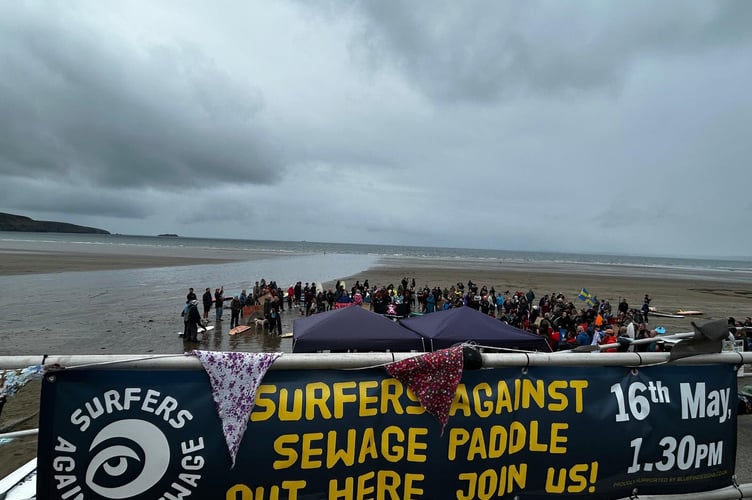
“In line with our ongoing focus on water quality in Wales, we are investing more resources in frontline compliance monitoring and have increased our auditing of Dŵr Cymru’s self-monitoring activities.”
NRW downgraded Dŵr Cymru Welsh Water from a four-star (industry leading) company in 2020 to two-star (requires improvement) company in 2022 and 2023 as part of its annual Environmental Performance Assessment.
During 2023, Dŵr Cymru recorded its worst performance against the environmental performance metrics measured, with a spike in significant pollution incidents and a decrease in incident self-reporting.
In 2024, Welsh Water was ordered to pay a £24.1m underperformance penalty by Ofwat after it was revealed that in 2023, Dŵr Cymru released sewage into rivers, lakes and the sea around Wales for more than 916,000 hours - about 20 per cent of all hours of discharges across Wales and England.
That year, the company had the highest number of sewage spills in 2024, leaking raw sewage into the environment 118,276 times - the highest figure of any UK water company and equivalent to more than once every five minutes.
In April, it was revealed that Ceredigion Penfro was the worst-impacted constituency in England and Wales for untreated sewage discharges in 2025, enduring 94,836 hours.
Aberystwyth Town Council voted last month to call for a Water Quality Summit, demanding water Dŵr Cymru and Natural Resources Wales publicly explain their investment plans for the Rheidol and Ystwyth catchments.
The council has called on Dŵr Cymru to install high-frequency sensors so the public is alerted to sewage discharges immediately.
In Ceredigion, as well as upgrading the Cardigan Wastewater Treatment Works, Welsh Water is investing £5.6 million to upgrade almost 25km of water pipes in the Llechryd drinking water zone.
In Pembrokeshire, where Welsh Water has 80 wastewater treatment works, its investment to 2030 will “concentrate on environmental improvement to help reduce the impact on the Afon Cleddau SAC.”
Welsh Water has 47 wastewater treatment works in Ceredigion, where work is focussed on “protecting and improving the environment by focusing our efforts to reduce our impact on the Afon Teifi SAC.”
The company’s focus in Gwynedd will be on improvements to the 131 wastewater sites throughout the county, while in Powys Welsh Water said it will “continue to upgrade wastewater treatment works in the area and making improvements to some of our storm overflows which will help to boost the water quality of the rivers Usk and Wye.”
The company also plans to upgrade the Usk Reservoir and Craig Goch dam in the Elan Valley.
The programme will also aim to improve resilience in the drinking water network by replacing water pipes in areas that have experienced interruptions to water supplies across all four counties.
Welsh Liberal Democrat Westminster Spokesperson David Chadwick MP, said the Ofwat findings “confirm what communities across Wales have known for years: Welsh Water has been failing to do its job while rivers, streams and coastlines have paid the price.”
“People will be rightly furious that it has taken intervention from Ofwat and a £44.7 million enforcement package to force action on failings that should have been addressed years ago,” he said.
“Dwr Cymru likes to present itself as different from other water companies, yet despite its not-for-profit model, it has still overseen serious wastewater failures, and they have still paid out massive executive bonuses.”
In response to the Ofwat findings, Welsh Water said that it is investing at “record levels” to alleviate the problem and is the second year of a five year plan to transform its fortunes.
Welsh Water said that investment during the past year included £134 million on environmental improvements, £85 million on leakage reduction and £35 million to replace older pipes and improve drinking water quality.
Over the past 12 months, work has begun on a number of major schemes that form part of Welsh Water’s investment plans to 2030 including the new wastewater treatment works to enhance the water quality of the Afon Teifi.
Welsh Water said it has also launched its “largest-ever customer engagement programme as a key part of the development of its new strategy.”
Welsh Water said that “with significant investment decisions ahead, choices will need to be made about the focus, scale and pace of change.”
“Insights gathered through the engagement programme will directly inform those decisions and feed into the development of Welsh Water’s new strategy, helping to ensure its shaped by the priorities, expectations and lived experience of customers and communities across Wales,” the company added.
While the company said it “recognises performance remains below the standards customers rightly expect in a number of areas, there have been early signs of improvement during 2025/26.”
“Leakage has started to reduce as targeted work across the network begins to deliver results, including increased repairs and work on progressive metering,” the company said.
“Customer complaints on water quality have also reduced, through work such as mains conditioning, network flushing and enhanced operational response.
“Internal sewer flooding incidents have reduced too using sewer network monitors to manage high blockage risk and more data-driven proactive interventions.”
The company said it is “continuing to work through a significant performance improvement programme” as it seeks to improve its Environmental Performance Assessment rating by Natural Resources Wales from 2 stars to 3 stars and move out of Ofwat’s ‘lagging company’ categorisation.
“The scale of the challenge reflects both the impact of increasingly extreme weather and the condition of some ageing infrastructure across the network,” Welsh Water said.
The investments, fines, and poor performance come at a time when the average household bill for Welsh Water customers has increased by 4.8 per cent in 2026–27, rising from £652 to £683.
Dwr Cymru said that it “recognises the pressure this places on some households and currently provides financial support through social tariffs and assistance schemes to around 150,000 customers.”
New Welsh Water Chief Executive, Roch Cheroux, appointed six months ago, said: “We are working hard to deliver our vision which is to foster thriving communities by providing world-class water services.
“Water is fundamental to everyday life, and our priority is to provide reliable services our customers can trust.
“My colleagues and I live and work in these communities, and we share the same expectations.
“We know that in some areas we have not delivered the level of service our customers and communities expect, particularly on environmental performance.
“That is why we are investing at record levels to improve resilience, strengthen ageing infrastructure and deliver more reliable services, while keeping bills as affordable as possible.
“We are also listening carefully to customers and communities so that our future plans reflect the issues that matter most to them.”
Chair, Jane Hanson CBE, said: “Over the past year we have focused relentlessly on building the foundations needed to deliver sustained improvements in performance.
“Our AMP8 Business Plan for 2025-30 is the most ambitious in the company’s history, with £6 billion of total expenditure and £4.2 billion of capital investment.
“We recognise the scale of the challenge ahead but important progress has been made through our Trawsnewid transformation programme, and the work on our investment plan is well underway.
“We know customers expect better from us in a number of areas and there is still a significant amount of work ahead.
“I am confident the momentum we have built during Roch’s first six months in his role will support continued improvements for customers and communities.”
Lynn Parker, Senior Director for Enforcement at Ofwat, said: “Our investigation found serious and unacceptable breaches in how Dŵr Cymru Welsh Water has operated its wastewater assets which has resulted in excessive spills to the environment.
“With this investigation now concluded, we expect the company to focus on putting things right so that customers can regain trust in their water company.
“We are playing our part in holding companies to account with this announcement marking the seventh case we have now closed in our sector-wide investigation, taking the total of resulting enforcement packages and fines to more than £300m.”
Ofwat said Welsh Water “will be required to deliver the redress measures included in its enforcement package during 2025-30.”
“This is investment over and above existing plans the company committed to as part of the 2024 Price Review,” Ofwat said.
“These costs will be absorbed by the company and not funded through higher customer bills.
The £44.7m package is greater than the £40m fine that Ofwat would otherwise have imposed as a fine and ensures the money is spent directly on environmental improvements rather than returned to HM Treasury.
Comments
This article has no comments yet. Be the first to leave a comment.