
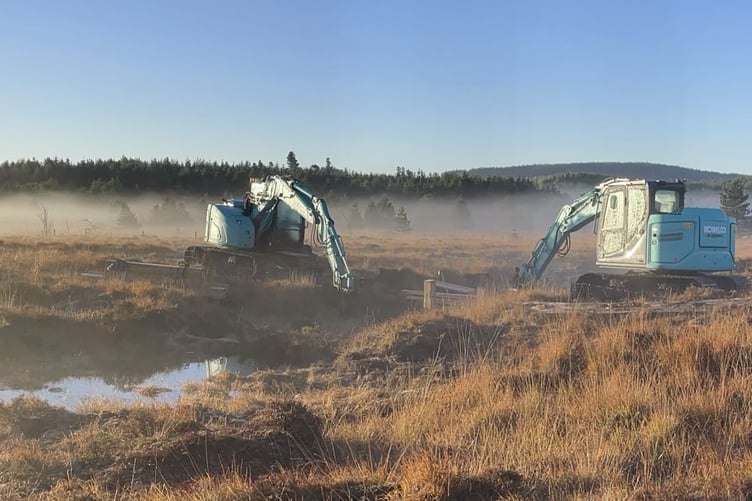
Last week, it was announced that over 300 Welsh farmers and landowners are taking an energy company to court over what they are calling “unlawful” abuses of power.
Speaking to one of the claimants and lawyers pursuing the Judicial Review against Green GEN Cymru’s behaviour, it sounds more like an Erin Brockovich sequel than a surveying dispute.
They allege to have been threatened with arrest, bailiffs and fines if they did not allow access to land, accusing Green GEN of acting in a ‘coercive’ and careless manner to ‘force’ access to private land.




Last April, they took 20 landowners to court over obstructing access to land.
This was throughout lambing season when farmers get little to no sleep, without the added stress of going to court for the first time in their lives, finding the money to cover legal fees, and strange men turning up at their door without warning.
At the hearings in April last year, Ann Davies, MP for Caerfyrddin, described the atmosphere as “incredibly intimidating”: “They had a legal team of 8 or 9, and we’ve got one…”
After that, Mary Smith took the case on pro bono as part of her law firm, New South Law.
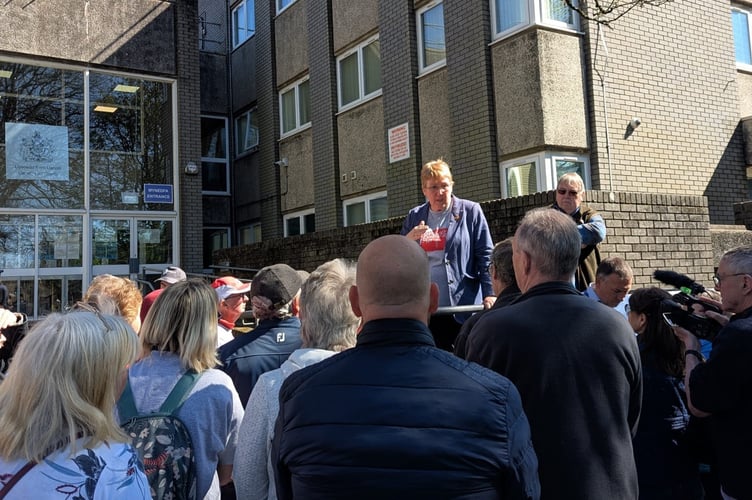
The handful of landowners she started with snowballed into hundreds, and her team now have between 400-500 landowners on their books, all with complaints about the behaviour of Green GEN surveyors.
Mary states these landowners aren’t NIMBY’s being deliberately obstructive; they were asking for reasonable things before granting access, like complying with statutory notices, waiting for tenants to give consent, and wanting to see biosecurity licenses.
Claimants allege that Green GEN officials crossed farming boundaries in dirty clothes in active bovine TB areas, something which can decimate livestock, livelihoods, and generations-long farms.
This January, landowners were granted a Judicial Review set for April.
It was granted on the grounds of abuse of power, procedural impropriety, breach of the European Convention on Human Rights, and unlawful conduct regarding biosecurity and other entry obligations.
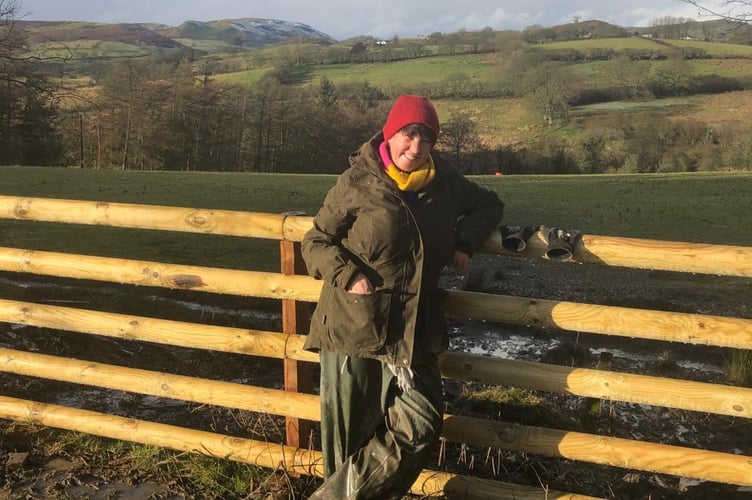
Natalie Barstow, the named claimant and founder of Justice for Wales, which is calling for fairness and lawful process in the delivery of energy projects, said: “We’ve had hundreds of reports from people feeling powerless, outnumbered, and fearful of being arrested or prosecuted.
“Whilst we support green energy, Green GEN’s completely unreasonable behaviour should not be allowed to continue.”
Underlying all this is a story about wind farms and the lengths private companies will go to, to profit from Wales’ natural resources.
The proposals
In the last few years, there has been a “gold rush” with dozens of planning applications to build wind farms in Wales.
There are approximately 48 proposals for private wind farms across Wales currently seeking planning permission, submitted by large companies like Bute Energy, who are responsible for 14 of them (29.1 per cent).
If all their ‘energy parks’ went ahead, Bute states it would produce 25 per cent of the electricity demand for Wales by 2035 through sites near Llanbrynmair, Aberystwyth, Lampeter, two near Llangurig, two near Tregaron, and more in the east, north and south.
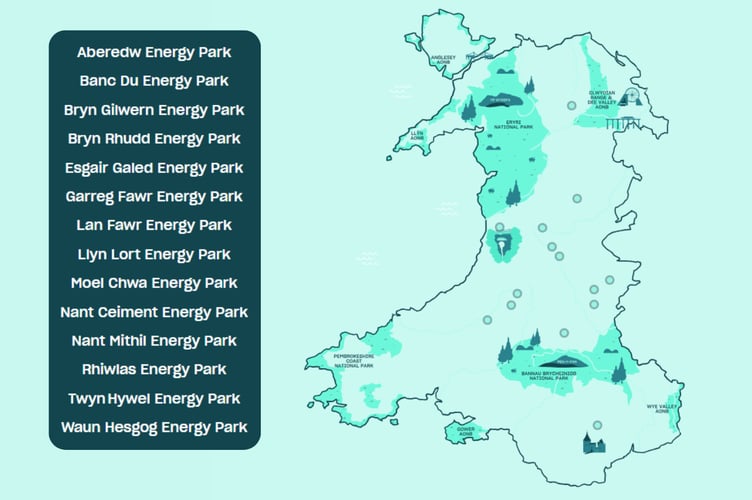
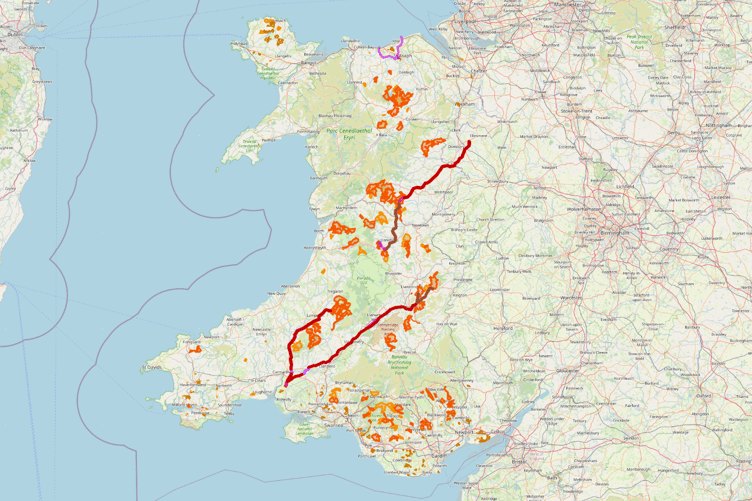
The pylons Green GEN is hoping to install would enable these wind farms to become connected to the Grid.
Bute Energy was incorporated in 2020, with stakes owned by people including a Scottish property developer and a Danish fund management company.
There are a few reasons people point to, to explain the influx in wind farm proposals - Welsh government encouraged applications by creating Pre-Assessed Areas earmarked as ready for wind farm development, funneling large scale projects for approval through the Welsh government rather than local authorities through the new Developments of National Significance designation, that there has never been as much red tape for large-scale wind farm developments in Wales compared to in England (which were until recently banned), combined with the country’s ambitious target to have the nation’s electricity demand met by 100 per cent renewable sources by 2035.
Cofiwch Ddyffryn Tywi: Remember Dyffryn Tywi
MP Ann Davies said that though renewable energy should be pursued, she described the behaviour of private developers as “extractivist”, with the alleged behaviour of Green GEN as like “David versus Goliath": “It’s an extractive economy at its worst.”
Ann said companies like Green GEN and Bute Energy were “venture capitalists”: “We all know how that story ended – it's with David taking charge.
“We’re not putting up with this.
“We’re not waiting for the hammer to fall on farmers who have never been in courts before.”
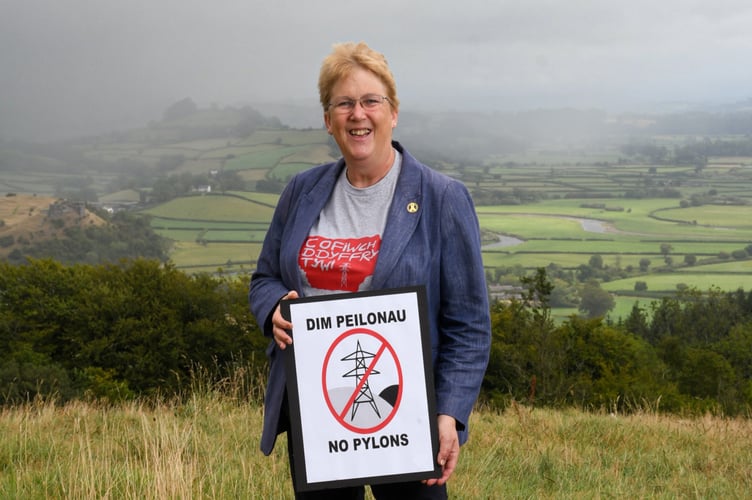
Attending the hearings in April, she wore a t-shirt that said 'Cofiwch Ddyffryn Tywi’, ‘Remember Dyffryn Tywi’ - one of the areas Green GEN Cymru would install pylons. The t-shirt was in the style of the red graffiti signs seen across Wales, calling to ‘Cofiwch Dryweryn’, ’Remember Tryweryn’ - an area drowned in 1965 to make a new reservoir to supply drinking water for Liverpool.
It destroyed a small Welsh-speaking village, Capel Celyn, at a time when the language was under threat.
Seventy-five people were forced to leave their homes, pushing 12 farms, a school, a chapel and a post office underwater.
The relevance to the wind farm ‘gold rush’ is clear – large projects where profits and resources would potentially be sent elsewhere, dismissing the voices of Welsh rural people for a ‘greater need’.
In 1965, it was Liverpool’s growing need for clean water; in 2026, it’s the need for clean energy in a time of increasing flooding in Wales and worldwide, and increasingly unpredictable weather thanks to climate change.
Ann has criticised the Welsh Labour government for taking 15 years to develop the public-owned energy company Trydan Gwyrdd Cymru, which announced its first three wind farm sites last year, adding: “That opened the door for people to come in.
“Don’t issue a policy until you have the way you want it organised and run and planned.”
She pointed to Plaid Cymru’s recently announced pylon policy, which, if elected in this May’s elections, would enact stricter rules on forcing pylon cabling underground, require 10 kilometres between wind farm projects to “break up the skyline”, and require 15-25 per cent community ownership of private wind farms.
Most private wind farm proposals come with ‘Community Benefit Funds’ - Bute Energy offers £7,500 per megawatt, meaning that each wind farm will produce a different amount of funding for local communities depending on the energy produced.
In total, they state the Fund will equate to £20 million unlocked for communities throughout the turbines' lifecycle, which is 25 years.
This money is accessed through grants, which are applied for and selected by a panel of ‘passionate community leaders’ along with a Bute Energy rep and a board of independent experts.
Recent research found that community-owned wind farms in Scotland deliver, on average, 34 times more benefit payments to local communities than privately owned wind farms, which pay community benefit payments an average of £5,000 per megawatt per year.
Community energy: “A really powerful thing”
Carmarthenshire County Councillor Neil Lewis was involved in establishing the community energy scheme Ynni Sir Gâr in 2012, with their first wind turbine launching in Salem, Llandeilo.
He went on to be involved in the setup of 21 community energy schemes across Wales: “All the profits we were able to reinvest.
“Some of these communities are wealthy now – one has a whiskey brewery, there’s retail premises, solar panels on public buildings, a library of things, electric car clubs, biodiversity projects like crayfish reintroduction, willow tit boxes and conservation projects.”
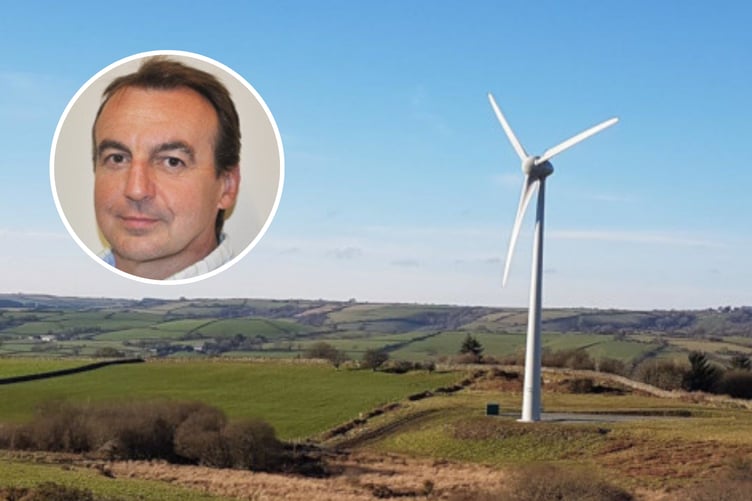
He said there’s a danger in money being held and doled out by large corporations: “I was brought up seeing coal mining companies that promised artificial ski slopes and boating lakes – none of that was true.
“Some wind farm companies are behaving in a similar extractive way.
“That’s not good for Wales, that’s suffered from an extractive economy throughout its history.”
Brought up alongside open-cast coal mining communities, he saw the “decimation” caused by the industry, wanting to “put back the damage I’d seen throughout my life” by creating environmentally-friendly schemes that benefit communities suffering post-industrially.
However the schemes were difficult to launch, with one taking nine years to get permission, “bearing in mind there’s a climate emergency – justice delayed is justice denied.”
Despite the red tape, the government feed-in tariff subsidy regime, which paid for generating renewable energy, meant the community schemes paid back their loans and benefited communities quickly – but the subsidy regime ended in 2019.
Community energy schemes are still incredibly complex and expensive to set up – Neil is calling for the Welsh government to incentivise these initiatives that can be powerful in providing communities with low bills and community-owned cash through the sale of excess power.
Welsh government were approached for comment about this, but did not respond.
In lieu of this, he said: “It’s better to have wind farms than not, and better to decarbonise our lives.
“We’d like to see co-ownership – if a big energy company is building two wind turbines, the community owns one.
“It’s a bag of sugar mentality – if you own your own, you can make long-term plans for the community's benefit and be part of those decisions.”
Along with geographical scars of the coal industry are emotional ones about the landscape being abused for gain elsewhere.
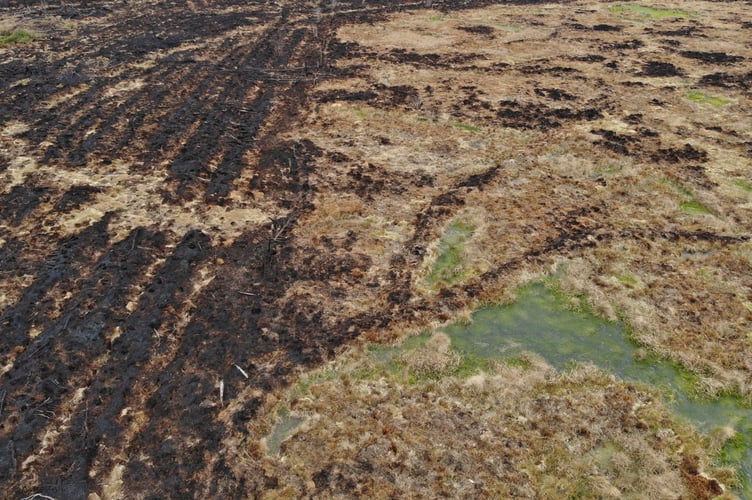
Residents and eco-NGOs have become increasingly concerned with the wind farm proposals planned on land outside of the Pre-Assessed Areas, some of which include delicate, rare and “irreplaceable” habitats.
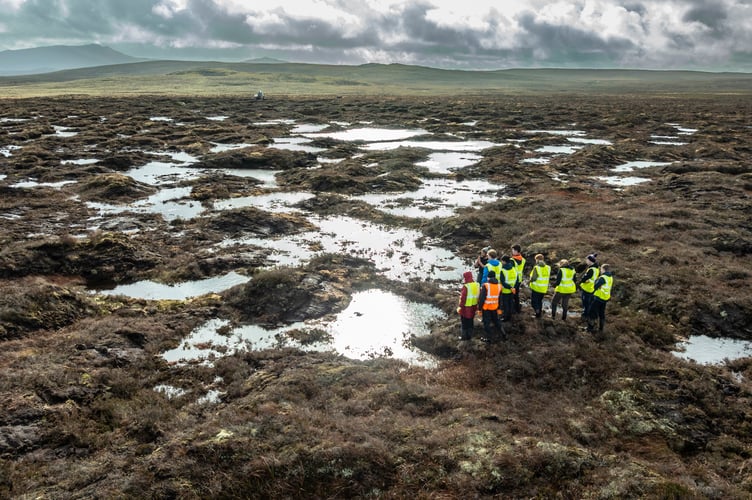
Peatlands are central to this concern – peatlands store twice as much carbon as all the world’s forests, are described as the world's ‘air conditioning system’ and also reduce flood risk, and have become a key tool which needs to be protected and, where damaged, restored, to help combat climate change.
Bute’s proposed Esgair Galed Energy Park between Llanbrynmair and Llanidloes is sited on protected upland peat.
Joe Wilkins, Policy and Advocacy Manager for Wildlife Trusts Wales, said that tackling the climate crisis must not deepen the nature crisis, calling for “appropriate technology in the appropriate place”.
He criticised the inconsistent interpretation of protection policies, meaning companies use loopholes to build on peat, which takes thousands of years to develop and is “incredibly difficult” to restore: “We are increasingly seeing large renewable developments proposed in inappropriate locations, including on or near protected sites and irreplaceable habitats.
“This risks undermining the very areas that should be at the heart of both our net zero and nature recovery efforts, at a time when many protected sites are already in poor condition.
“Peatlands are a particularly stark example. Wales is globally significant for peat.”
He added: “We recognise the urgent need for renewable energy and the support to transition to a decarbonised Wales.
“But this transition cannot come at the cost of our most important species and ecosystems.
“Wales can lead on renewable energy, but only if tackling the climate crisis helps, rather than harms, the ecosystem on which we depend.”
He calls for irreplaceable habitats to be made clearly off limits to development.
Bute Energy responded that, in line with Welsh government policy, their projects deliver a net benefit for biodiversity, including peat restoration, “particularly in areas where surveys identified degraded peat”.
The Bute spokesperson added: “Wales has a real opportunity to deliver renewable energy and peatland recovery together, and onshore wind farms can play a significant role – as they have already done in Wales, and elsewhere in the UK.”
A spokesperson for Green GEN Cymru said on the Judicial Review: “Our legal team continue to examine the implications of this ruling and Green GEN Cymru will not be commenting any further at this stage.
“In the meantime, undertaking routine pre-application environmental and ecological surveys is essential to ensure the potential impacts of our projects are fully understood by the business, planning inspectors, and the communities hosting this infrastructure.
“We have always sought to reach amicable access agreements with landowners and to engage extensively with local communities, ensuring all works are conducted with consideration and respect for local people and the environment.
“Developing this vital infrastructure is critical to meeting the challenges of our energy future and to building a robust, reliable energy network which enables people across Wales to benefit from a more secure energy future.
“We seek to resolve the outstanding matters soon and continue our vital work.”
Beneath the dust still waiting to settle from the Judicial Review and 48 wind farm applications, lie the rolling hills and jagged mountain scapes, and the precious flora and fauna that make the country what it is.
This push and pull between large energy companies, residents, farmers, environmentalists and policy makers is a fight between those who all claim they know what’s best for Welsh land - perhaps this means the answer is somewhere between all these arguments, about finding common ground, and protecting both land and people.
Comments
We've recently changed our login process. If you have an account for commenting, you will need to re-register on the login window.
This article has no comments yet. Be the first to leave a comment.