
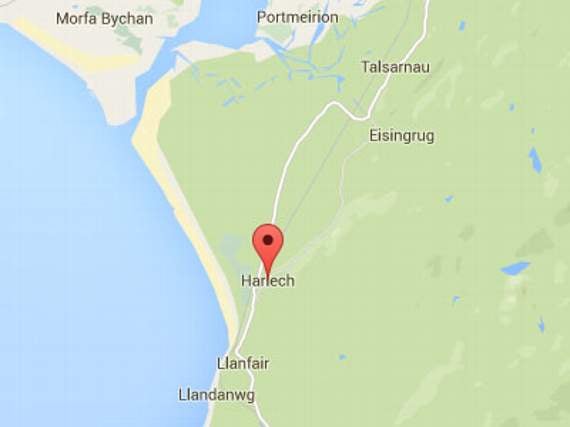
THE latest community news from Harlech.


Historical Society
IN her talk to the society’s March meeting, the acclaimed archaeolo-gist, Frances Lynch, gave a fascinating and masterly insight into the relevance of the many artefacts, sites and monuments in this area to our understanding of prehistoric society. The discovery of tools, weapons and utensils, the artefacts of living, is often accidental and raises questions of whether they were lost or deliberately hoarded or hidden. One such conundrum was the discovery of early Bronze Age Hal-berds which look like daggers but the shaft is at right angles to the blade. At first they were thought to be rare but have since become commonplace. Another was the seeming concentration of stone axes near Pentraeth, in Anglesey, until it was discovered that a local 19th century vicar was a collector and people had given him any that they found. However, collections of artefacts often suggest deliberate motives such as concealing hidden treasure, hoarding stocks for trading, collections of scrap for recycling (common in the Bronze Age) or votive offerings. The Romans used sacred lakes for this latter purpose. This may also explain the discovery of iron swords in Llyn Cerrig Bach, a re-mote Anglesey lake. The distribution of living sites such as stone or wood enclosures is less easy to recognise. Pits were commonplace, being used for grain storage and, when the grain soured, for rubbish. Sometimes, as in Llanfaethlu, they were used as dwellings, replacing wooden houses which had only a short period of use from 3900BC to 3600BC. Further evidence of wooden settlements in this area, are the round huts at Tre Ceiri and wooden post holes at Moel y Gaer near Mold. The locations of graves and monuments were more deliberate choices particularly to delineate and protect ancient tribal burial sites and landholdings. This may explain why the Dyffryn stone burial chamber is so strong. The Bronze Age sites were simple but more obviously memorials for show. There is evidence of tree clearance in order to manipulate the landscape and impress passers-by. Bryn Cader Faner is a striking example. Placed on a ridge at the climax point of a trail of monuments from Llanfair to Bala and the Severn valley, it is stunning from a distance and designed to be seen from a particular spot for maximum impact. After fielding several questions, Frances Lynch was warmly applauded by a large and appreciative audience.
Comments
This article has no comments yet. Be the first to leave a comment.