
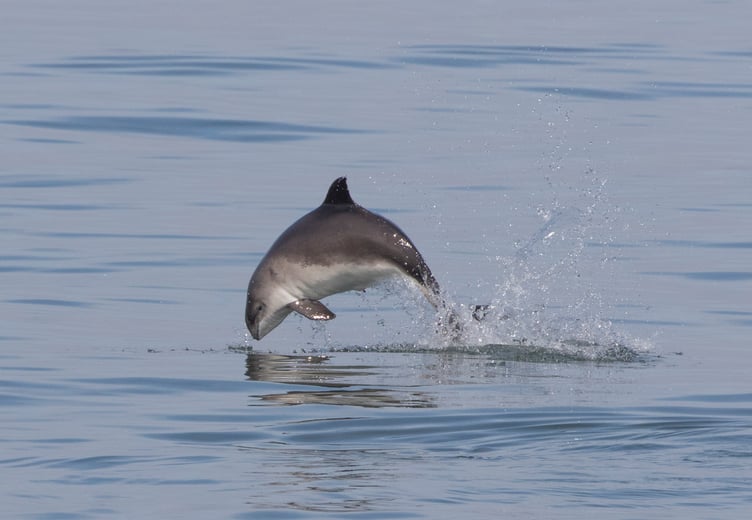
A review of the effectiveness of Marine Protected Areas (MPA) that include cetaceans in their designation has revealed worrying figures for north and West Wales.
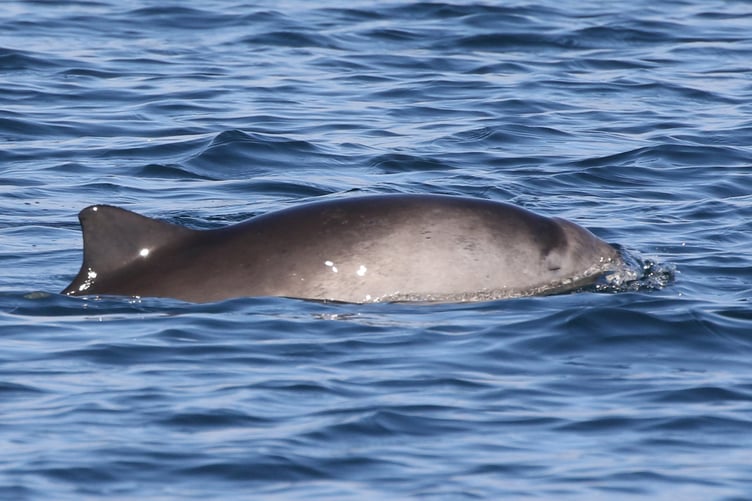
A report by the Whale and Dolphin Conservation (WDC) ranks the West Wales Marine Special Area of Conservation (SAC), which is designated specifically for Porpoise and surrounds Bardsey, near the bottom of the assessment for its effectiveness, with the North Anglesey Marine SAC joint bottom.
The report notes: “It is of concern that none of the six harbour porpoise SACs have management plans or management measures.”
It also states: “North Anglesey Marine SAC (in Wales) and Southern North Sea SAC (in England) both ranked the lowest for management effectiveness. These SACs are designated for harbour porpoise and both scored only 25 per cent overall. This is due to their lack of a management plan, monitoring of the harbour porpoise population and noise regulations. These SACs, along with the other three harbour porpoise SACs designated in 2019, are the lowest scoring overall.”
The report, which can be found at https://shorturl.at/0t6Bh, states that the MPA that scored the highest for management effectiveness was Cardigan Bay SAC.
“This MPA is designated for bottlenose dolphins and scored 60 per cent overall,” the report notes.
“The site has a detailed management plan with comprehensive management advice, although the plan is currently out of date, having been written in 2018.
“The plan includes commercial and recreational fishing regulations, and a voluntary code of conduct for the whale and dolphin watching industry.
“There is a comprehensive outreach and education programme delivered through an appointed site officer.




“There is also a robust monitoring programme, including photo identification of the bottlenose dolphin population. “The bottlenose dolphin population here has declined over recent years and, although the reason is unclear, the sharpest decline in numbers was reported after the MPA was opened to scallop dredging.
“High levels of recreational boat traffic have also been shown to adversely impact the social structure of dolphins in Cardigan Bay15.”
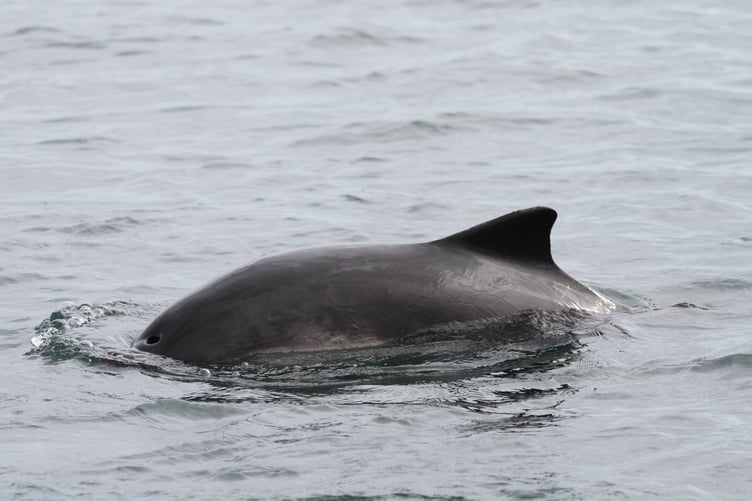
Mick Green, Project Manager of The Bardsey Marine Mammal Project, is concerned about the figures for the West Wales Marine SAC.
“Both ourselves on the Bardsey project, and WDC, would like to see a fuller assessment of the porpoise population in the SAC, and to see work towards a management plan or measures to address any issues that the assessment raises,” he said.
“It is complicated as the site includes waters under the jurisdiction of the Welsh Government, and those of UK waters but it is clear there is not enough commitment and/or funding to investigate properly the reasons for porpoise declines.
“To be fair to Natural Resources Wales, they have carried out assessments of those sites fully in Welsh waters, and Cardigan Bay SAC (designated for bottlenose dolphins) scores well on the WDC assessment.
“But, as large areas of the porpoise SAC are under Welsh Government control, I would like to see a firm commitment to marine conservation from the Senedd.”
Mike said the Pen Llyn a Sarnau SAC, who are project partners on the Bardsey Project, was not assessed for this report as dolphins are not a primary reason for the designation, but like Cardigan Bay it does have a clear management plan with responsibilities and would have scored well.
“But it is clear there is not enough commitment and/or funding to investigate properly the reasons for porpoise declines and there seems to be a lack of communication between Welsh and UK Governments,” he added.
“As large areas of the porpoise SAC are under Welsh Government control, I would like to see a firm commitment to marine conservation from the Senedd. I have had no replies to several emails asking if there is a Cabinet Secretary with specific responsibility for this so I’m presuming there isn’t.
“The Bardsey project would also like to see some statutory recognition of the importance of the area for Risso’s dolphins, which are not included in any designation due to an anomaly in the legislation. The Welsh government has the powers to correct this.”
"Our project has documented a serious decline in porpoise sightings around Ynys Enlli. As this site is supposedly protected for this species we would like to see a proper assessment of the whole site, and a comprehensive management plan drawn up to address issues that may be causing these declines. at the moment it appears to site is protected on paper only.”
Vicki James is the Protected Areas Lead for the WDC.
She said: “Reports of declining harbour porpoise sightings around Ynys Enlli are concerning.
“The West Wales Marine Special Area of Conservation (SAC) was designated to protect this species, yet WDC's 2024 assessment ranked the site among the least effective of the UK's cetacean Marine Protected Areas.
“Our report highlighted that none of the UK's six harbour porpoise SACs have management plans or management measures in place. We would like to see a comprehensive assessment of the harbour porpoise population across the site and, where appropriate, the development of effective management measures to address any pressures identified and help ensure the site delivers meaningful protection for this important species.”
The report explains more about Marine Protected Areas (MPAs), stating that they “are ocean sites designated to protect habitats, species and processes that are essential for healthy and abundant marine ecosystems”.
It goes on: “Designation of an MPA can support long-term nature conservation by effectively managing use of a site. There are several different types of MPA which include sanctuaries, marine parks, marine reserves and Special Areas of Conservation (SACs).
“The UK has set international and domestic targets to protect 30 per cent of the sea by 2030, and to have 70 per cent of MPAs in ‘favourable condition’ by the end of 2042, with the remaining 30 per cent in ‘recovering condition’. Cetaceans (whales, dolphins and porpoises) play a vital role in ocean nutrient cycling, carbon sequestration and supporting marine ecosystem functioning.
“In the UK, 11 MPAs have been designated with cetaceans as the primary qualifying feature (for harbour porpoise, bottlenose dolphin, Risso’s dolphin and minke whale). These MPAs aim to protect habitats that are critical for cetaceans’ survival and to restore their populations; however, MPAs will only achieve their conservation aims if they are managed effectively.
“WDC undertook research to assess the effectiveness of the management of the 11 UK MPAs designated for cetaceans using the Marine Mammals Management Toolkit developed by Ocean Governance. This evaluation examined MPA management across various activities (e.g. fishing, anthropogenic noise, public outreach, research, and monitoring).
“This process allowed for scoring the ‘management effectiveness’ of these MPAs. The analysis also provides a baseline from which effectiveness of MPA management can be tracked and informs progress towards achieving favourable conservation status at these sites. The research concludes that the UK’s cetacean MPA network is not being effectively managed, impacting its ability to meet crucial population and ecosystem recovery targets for designated species.”
Vicki has written a blog based on the report, in which she explains more.
She writes: “You’d think a marine protected area (MPA) means safety for the whales, dolphins, and porpoises living there, right? I used to think so too. But after looking at how MPAs are managed, especially for whales and dolphins, I’ve realised the reality is a bit more complicated.
“The waters around the UK are home to 29 species of whales, dolphins and porpoises, and 11 MPAs have been designated specifically to protect these awesome beings and their habitats.
“But how effective are they? After using a tool to assess how well MPAs are managed, what I found was alarming: 90 per cent of the MPAs I reviewed either don’t have a management plan or are operating under outdated ones. And when you’re talking about safeguarding individuals as vulnerable as whales, dolphins, and porpoises, this is a serious problem.
“Let’s start with noise. It’s not something we think much about when we imagine the ocean, but for whales, dolphins and porpoises, noise pollution can be a matter of life or death.
“They rely on sound for everything - finding food, navigating and communicating with each other. But human activity is making the underwater world unbearably loud.
“The tool I used looked at how well different activities in MPAs (like fishing, noise, public outreach, research, and monitoring) are being managed to keep whales, dolphins and porpoises safe.
“Each MPA received an overall effectiveness score, with lower scores indicating less protection against key threats.
“I found that noise pollution was the most poorly managed threat, with an average management effectiveness score of just 7 per cent. That’s pretty shocking, right?
“One of the biggest culprits is geophysical surveys like seismic blasting, which involves firing powerful airguns into the ocean floor to search for oil and gas, generating noise that travels for miles.
“Construction noise from offshore windfarms is particularly unregulated, with years of high levels of noise, which can drive dolphins and porpoises out of these areas they depend upon.
“Both recreational and commercial vessels add to the constant, chronic din. Imagine trying to have a conversation with a friend while standing next to a roaring jet engine.
“That’s what whales and dolphins are dealing with.
“Countries like Germany have regulations that limit noise pollution from construction activities, but in the MPAs I assessed, no such safeguards exist.
“That’s one of the big things that needs to change if we want whales and dolphins to thrive in UK waters.
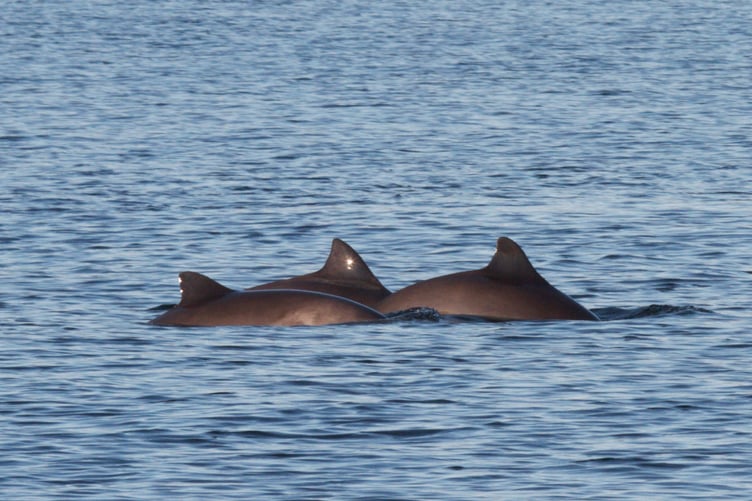
“Bycatch, when whales, dolphins, porpoises get accidentally caught in fishing gear - is another poorly managed threat, scoring an average of just 21 per cent for management effectiveness.
“Those who manage to escape, and don’t suffocate may suffer for weeks, months or even years with gear still wrapped around them, leading to painful infections or starvation.
“It’s a horrific way to die, and the sad reality is that many types of fishing methods that are known to harm marine mammals like drift nets, gillnets, and trawling are still allowed in MPAs.
“Although some areas enforce restrictions, like seasonal closures or bans on certain types of gear, these vary wildly and don’t guarantee that a dolphin or porpoise won’t get caught in a net or that a whale won’t be accidentally entangled.
“Despite these challenges, MPAs are still one of the best tools we have for protecting whales, dolphins, and porpoises. They’re meant to cover key habitats that they rely on. The problem isn’t the idea of MPAs - it’s the management of human activities within them. If we can better regulate things like fishing and noise, MPAs could truly live up to their potential.”
Vicki says there are some key things we can do?
The first is to establish management plans for every MPA and ensure these are up to date.
Implementing strict regulations on noisy activities, particularly from things like seismic surveys and construction, would also help.
Vicki also recommends extending harmful fishing gear bans, and banning oil and gas exploration.
“Whales, dolphins, and porpoises face so many challenges in today’s ocean, but with better management of MPAs, we have a real chance to make a difference,” she adds.
“These areas have the potential to be true havens, but we need to regulate human activities to ensure they live up to that potential.
“Let’s make sure MPAs aren’t just lines on a map, but real safe zones where whales, dolphins, and porpoises can thrive. It’s not too late to fix this, and with the right changes, we can ensure these magnificent beings are protected for generations to come.”
The Welsh Government said: “Natural Resources Wales is carrying out condition assessments, including the West Wales Marine and North Anglesey Marine SACs.
“These cover a dispersed population of harbour porpoise and we will consider next steps once these are published.
“While Risso's dolphin is not currently included in Special Areas of Conservation legislation, the species is a European Protected Species and recognised as a species of principal importance for biodiversity under the Environment (Wales) Act 2016.
“Wales’s biodiversity is one of our strengths, and this new government is committed to conservation and substantive nature recovery. Work has begun on Wales’ first Climate and Nature Action Plan, which will set out a cross-government programme of action to tackle the climate and nature emergency as one connected challenge.”
Welsh Government notes that the West Wales Marine and North Anglesey Marine SACs fall entirely within Welsh waters and are under Welsh Government jurisdiction only, supported by Natural Resources Wales and the Joint Nature Conservation Committee. They are not subject to joint UK/Welsh Government management, so there is no cross-government communication issue for these two sites specifically. Condition assessments for the West Wales Marine and North Anglesey Marine SACs are being carried out by Natural Resources Wales.
They also note that Risso's dolphin is a European Protected Species, meaning consideration must be given during the consenting process where a marine activity could result in an impact on the species, such as disturbance.
Comments
This article has no comments yet. Be the first to leave a comment.