


Unless you are a teacher or the parent/guardian of a child in school, you may not have heard of RSE and the controversy surrounding it. RSE stands for Relationships and Sexual Education, and was introduced in schools last September.
The mandatory RSE Code supports schools to design their own lessons to teach children about relationships and identity, sexual health and well-being, empowerment, safety and respect, but campaigners against the code argued that it gave prominence to LGBTQ+ themes and ignored traditional issues and family life. The Welsh Government denied those claims and said lessons would be age appropriate with the youngest pupils learning about sharing and respect, but campaigners continued to fight against the code with lawyers acting on behalf of a group of disgruntled parents saying RSE would amount to “indoctrination”. The Welsh government once again insisted lessons would be “developmentally appropriate”.
In Gwynedd last August, an extraordinary council meeting was called to discuss the new code. It became so heated that the police had to be called. They cleared the public gallery and councillors had to be held in the council chamber for ‘safety reasons’ at the end of the highly-charged meeting.
The meeting had been called by a group of councillors when some parents threatened to withdraw their children from school amid a campaign by the Child Protection Wales group (PCPW). A leaflet distributed by the group claimed that the curriculum could introduce young children to ideas such as self-stimulation, bondage and anal sex.




The Welsh Government said the leaflet was “full of misinformation and unevidenced, incorrect claims”.
Prior to the introduction of this new code, parents of secondary school pupils could opt out of sex education. They are not allowed to withdraw their children from RSE, so last November a group of parents took the Welsh Government to court.
The judicial review at the High Court in Cardiff heard from five parents who wanted to withdraw their children from RSE, but the legal challenge was defeated.
The High Court ruling was celebrated by teaching unions, charities and the Children’s Commissioner in Wales who have spoken out in support of what they regard as ‘vital’ education.
The campaigning parents - called Public Child Protection (PCP) Wales - lodged a judicial review against the proposed lessons in relationships and sexuality education (RSE) which form part of the new Welsh Government curriculum.
The parents depicted the material covered in lessons as ‘woke’ and ‘dangerous’ - promoting overly ‘sexual lifestyles, gender theory and new sexualities.’ They argued their rights as parents are protected by law to have a say in the subjects their children are taught.
But Mrs Justice Steyn ruled that the teaching material was lawful, calling it ‘objective, critical and pluralistic’ and far from indoctrinating. She also questioned the accuracy of the claimants’ characterisation of the new material.
As she made her judgement, she said: “There is nothing in the code or the guidance that authorises or positively approves teaching that advocates or promotes any particular identity or sexual lifestyle over another, or that encourages children to self-identify in a particular way.”
She added that the curriculum was intended to “encourage tolerance between human beings irrespective of their sexual orientation and identity, and to enable children to deal critically with influences from society, so that they develop into responsible and emancipated citizens capable of participating in the democratic processes of a pluralistic society”.
The reforms to RSE, set out in the Curriculum and Assessment (Wales) Act 2021, have introduced the compulsory lessons to all pupils over the age of seven in Welsh schools.
The milestone ruling has been hailed as a victory for the rights of the LGBTQ+ community in Wales.
Humanists UK has called it a victory for children’s rights while school leaders’ union NAHT said the new lessons will be vital for children’s lives in modern Britain.
The Children’s Commissioner for Wales, Rocio Cifuentes, said the ruling would enable all young people should be given the opportunity to learn about safe, ‘respectful and equal relationships.’
But Welsh Conservatives Shadow Education Minister, Laura Anne Jones MS, said her party would continue to fight for the rights of parents to withdraw their children from RSE lessons and described the ruling as ‘disappointing’.
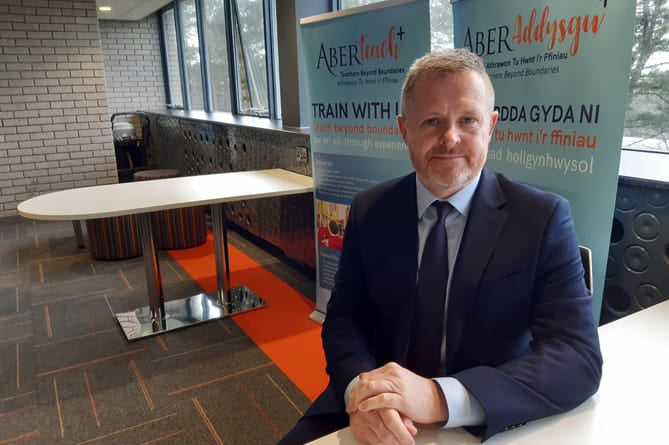
Jeremy Miles MS, the Minister for Education and Welsh Language, has spoken passionately about his hopes for the new code and the misinformation spread about it.
Responding to the campaign claims last August, he released a statement saying: “I want to be very clear that the claims made by these individuals and by this group in its literature have absolutely no basis in truth whatsoever.
“None of the examples of teaching and resources cited by this group are from Wales and I want to be very clear that they would not be permitted under the RSE Code and statutory guidance.
“At the core of this literature is the group’s claims that RSE in Wales is part of a co-ordinated “global rollout” of “comprehensive sexuality education” which it is claimed will sexualise children. That is profoundly wrong and is a deeply dangerous claim.
“I strongly encourage members and anyone concerned to read the code and statutory guidance for themselves to see how misleading and lacking in evidence the claims of this group are.
“As in the current Foundation Phase, our youngest learners will be taught about friendships and families, they will absolutely not be taught about romantic or sexual relationships and this is prohibited by the RSE Code. The law is crystal clear: teaching of RSE must be developmentally appropriate for each and every child.
“We have repeatedly asked the group to desist from spreading on numerous occasions deeply misleading information about RSE and what children will be taught. We will continue to do so. However, they persist in distributing leaflets containing these baseless claims about RSE in the new curriculum.
“I fully support the democratic process and the right to protest, and the importance of applying the law to ensure due process has been followed by governments in taking decisions. However, I am appalled at the aggressive tactics this group is using to put pressure on people working in our local authorities and our schools.
“RSE is about keeping children safe: from harmful relationships and situations, especially online. Children now have to face pressures that we did not have to consider as we were growing up.
“We cannot ignore these dangers. The claims made by this group risk real damage to the education of our young people as they seek to deprive them of this vital learning which will protect them in the future.
“We are proud that our new curriculum and wider reforms are supported by respected organisations such as the NSPCC, the Children’s Commissioner and Welsh Women’s Aid. We have worked closely and openly with our partners over a number of years to develop this, including parents and carers, and teachers, and who have welcomed RSE as critical and timely.”
Mr Miles spoke just as passionately about the code during a visit to Aberystwyth University last Thursday, 12 January.
He said: “The result of the High Court case, which the Welsh Government won, confirms what we have been saying throughout about the code, but misinformation about it has been promoted and if there are parents or guardians hearing about this now and who want to know more about the code, there is material on the Welsh Government website that they can read for themselves.
“If they still have questions after that, they can talk to the school directly. Head teachers have been, and are, really keen to talk to people with concerns.”
He added: “If the things the campaigners were saying were true, I would be concerned too, but they are not, so it is important that parents look at the code for themselves.
“It is the law in Wales that what children are taught is objective, reflective, pluralistic and age appropriate.”
“Young children will learn about empathy, kindness and friendship. By the time children reach 16, they will have learnt more, but it’s all about healthy, safe relationships and standing up to bullies.
“We owe it to young people to help them navigate the world and the internet.”

Dwyfor Meirionnydd MS Mabon ap Gwynfor agrees with the minister.
He said: “There has been a lot of misinformation distributed regarding the RSE code in the Welsh Curriculum and this misinformation, which had no basis in truth, has understandably caused concern to many.
“But the truth is that the RSE code is a positive development and an important step forward to teach our children and young people about how to respect each other, especially as we try to tackle misogyny and the increase in domestic abuse. Our youngest children will learn about family and friendship which can only be a good thing.
“Parents can be confident that their children will be taught important life lessons in an age-appropriate way. Moreover, it empowers the schools to develop their own provision with the understanding that the teachers know their pupils better than anybody else. This ensures direct answerability for parents.
“This is a positive development which will lead to a better, healthier society.”
Ceredigion MS Elin Jones, said she was not aware of anyone in Ceredigion campaigning against RSE in her county.
Share your thoughts on the issues that matter to you. Get in touch today by email at [email protected] or phone on 01970 615000
Comments
This article has no comments yet. Be the first to leave a comment.