

The work of Aberystwyth University scientists has helped show that small changes to whey processing could improve the taste and texture of protein drinks.




Protein shakes are widely used by athletes, people seeking convenient nutrition, and those aiming to maintain muscle mass with age.
In the latest collaboration between researchers at the Institute of Biological, Environmental and Rural Sciences (IBERS), the University of Reading, and Arla Foods Ingredients, the team developed a method to selectively concentrate proteins from whey using a unique filtration technique. This produced more than twice the usual concentration of alpha-lactalbumin, a key protein in baby formula. However, they found that the way minerals are filtered during production is critical to the taste and texture of drinks containing whey protein.
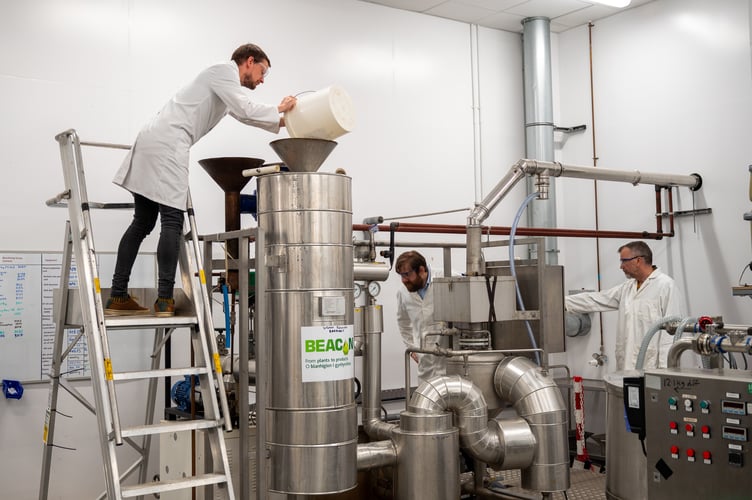
The research team has now improved this filtration method using biorefining facilities at AberInnovation to produce an enriched sample of alpha-lactalbumin and to explore its influence on taste and texture. A trained sensory panel found that the enriched whey product was more bitter and peppery but had improved texture and reduced friction when consumed.
Further investigation found that the bitter and peppery flavours came from minerals that had gathered during initial process trials, rather than from whey protein itself. Researchers then refined the filtration process, improving the drink's taste, while keeping its improved texture.
Dr David Warren-Walker, Senior Bioprocess Development Scientist at the Institute for Biological, Environmental and Rural Sciences (IBERS), said: “Our research has found that by using sophisticated filtration techniques, it is possible to improve the taste and texture of whey protein. This is potentially great news for protein drink manufacturers as it could make their drinks more palatable. This research has been completed at pilot scale using industrially relevant equipment and techniques, which means they could be easily reproduced by protein drinks manufacturers.”
Comments
This article has no comments yet. Be the first to leave a comment.