

As Halloween approaches and thoughts turn, perhaps a little apprehensively, to things that go bump in the night, an author will be discussing his book on witchcraft at the National Library of Wales in Aberystwyth.
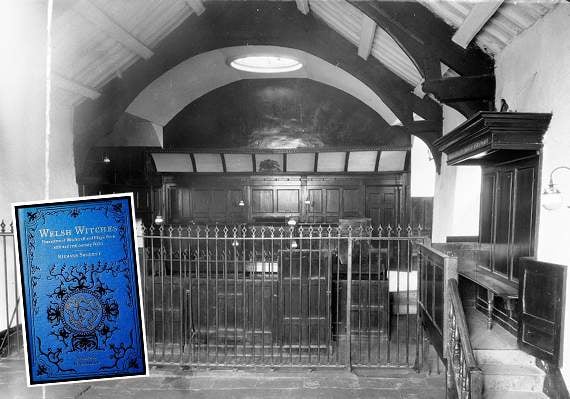
Richard Suggett, RCAHMW’s senior architectural investigator, has written a book - Welsh Witches: Narratives of Witchcraft from 16th and 17th Century Wales - which explores the documentary evidence relating to witchcraft in Wales.
Richard will be discussing his finds at a spooky event at the National Library’s Drwm on Wednesday.
The written evidence surviving from some 20 cases has been fully transcribed in the new book published by Atramentous Press. These texts reveal some remarkable events and personalities that have remained hidden for 300 years.


In these cases we encounter suspected witches, cursers and healers, users of love magic and charms, believers in fairies, and several confidence tricksters who offered wealth and cures through supernatural means.
In Wales, perhaps more so than in other parts of the British Isles, the landscape is full of reminders of the spirit world: many places are associated with witches (gwrach), sprites (bwbach), ghosts (yspryd) and other ghastly beings.
There were some 40 prosecutions for witchcraft in Wales and five suspects were tragically hanged for witchcraft. Places and buildings associated with these trials can still be visited.
The remarkable courthouse at Beaumaris, where Margaret ferch Richard was convicted of witchcraft in 1655 and afterwards executed, uniquely preserves its instructive and atmospheric interior.
The beautiful west window and 16th century roof at Dyserth Church, Flintshire, would have been familiar to the witnesses who gave evidence against Gwen ferch Elis, convicted and hanged for witchcraft in 1584.
Ffynnon Elian, a ‘holy’ well near Abergele, that developed a grim reputation as a cursing well, remains a feature of the historic landscape.
Tickets for Richard’s talk have now sold out but the lecture will be streamed live and available on Periscope.
To explore place names associated with the supernatural, simply type in gwrach (or another word) into the Royal Commission’s Historic Place Names in Wales website and view the results.
Comments
This article has no comments yet. Be the first to leave a comment.