

Historical society


THERE is a plaque to the memory of HW Tilman in the Merioneth Yacht Club which describes him as “Soldier, Mountaineer, Explorer, Sailor.” But there was much more to this largely unrecognised adventurer than this, as David Craik demonstrated in front of a large and appreciative audience at the April meeting. Tilman’s exploits were equal to those of Captain Scott and Edmund Hilary but their significance has been overlooked.
Described as “short and square with a parade-ground manner”, Major Bill Tilman was decorated twice in the First World War. The Treaty of Versailles heralded another “scramble for Africa” over the former German colonies and in 1919 he obtained some land from the Colonial Office in what is now Kenya. In 1930, taking a break from his farming and administrative duties, Tilman embarked on his first serious climb which he typically described as “a long walk up Kilimanjaro.” It took nine days, during which he renamed various points en route in English, including the Bismarck Hut and Kaiser Wilhelm Spitze.Hitler came to power in 1933 and, with his ally Mussolini, laid claim to the lost colonies. Tilman was instrumental in driving the Italians out of Uganda and asserting British control. Then followed his most notable mountaineering exploits, including the first ascent of the Himalayan Peak of Nanga Parbat (25,643 feet) which remained the highest summit climbed by man until 1950. He was also involved in two ascents in Everest, the second of which in 1938 along Mallory’s ill-fated route, reached 27,500 feet. His companion, Noel Odell, who had supported Mallory in 1924, fell in the same spot on the North Coll as Mallory but was saved by Tilman’s insistence on being roped together.During the Second World War, Tilman took part in the Dunkirk evacuation and campaigns in Iraq, Italy and Albania. In 1943 he assisted the Partisans in Albania, coordinating resistance against the Italians and Germans and in 1945, following the deposition of Mussolini, he coordinated a guerrilla campaign in NE Italy against the Germans. His reward was a DSO and the freedom of the Italian city of Belluno.Following his return to Britain, he took up sailing and lived in Barmouth for the last thirty years of his life. He became president of the Merioneth Yacht Club and was one of the founders of the Three Peaks Yacht race. Throughout this period his thirst for exploration remained and he embarked on a series of voyages on some of the World’s most dangerous oceans in a series of 45 foot Bristol Pilot cutters appropriately named ‘Mischief’, after cutting his teeth on 14-foot dinghies. He made two attempts at the north west passage both of which failed but a voyage to the South At-lantic in 1967 was more successful, reaching The Falkland Islands and South Georgia.In 1977, in his eightieth year he was invited to join another voyage to the South Atlantic as crew/navi-gator aboard the vessel, En Avant, an old converted steel tug. Somewhere between Rio de Janeiro the vessel disappeared without trace, with the loss of all hands. Bill Tilman had always said that he never wished to die in his bed.
North West Cancer Research
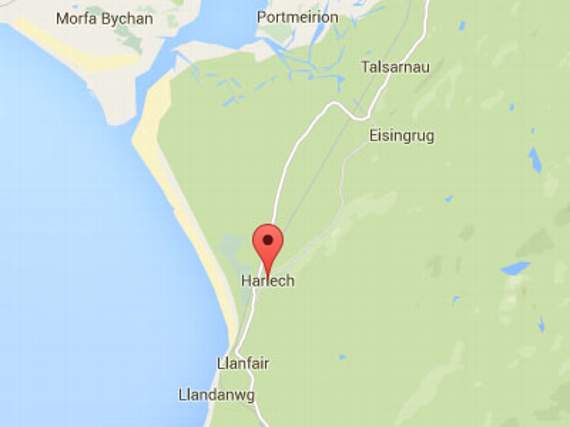
AT our meeting on 14 April, Myfanwy Jones, Chairperson, was proud to present two of our members with NWCR Long Service Awards. Gwenda Jones and Edwina Evans have both been members of the Harlech Committee for 25 years. The Long Service Awards were signed & forwarded by Ann Jackson, Chief Executive at the Clatterbridge Headquarters of NWCR. During our meeting we shared old photos and memories of past NW Cancer Research events over the years whilst also commenting on the fast passage of time. Gwenda and Edwina were thanked for their dedication over the years and also for their continuing support as members of the Harlech Committee.
Comments
This article has no comments yet. Be the first to leave a comment.