

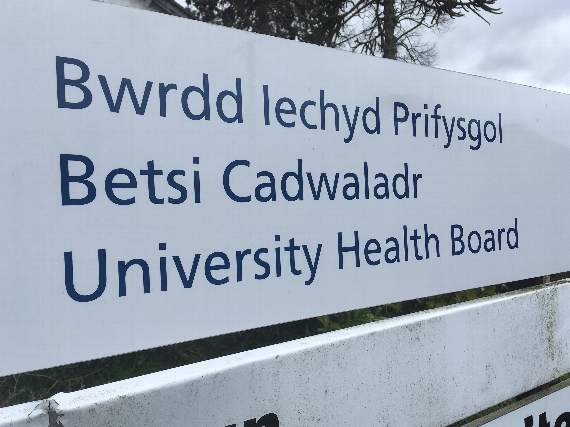
A health board was rapped by auditors for “deficiencies in governance and management” that led to a project soaring £60m over budget and arrests being made.
The final bill for removing asbestos and revamping Ysbyty Glan Clwyd, Bodelwyddan, went almost 55 per cent over its original budget to £171m.
The Wales Audit Office report shows how “weaknesses in the business cases” for the works were not addressed by Betsi Cadwaladr Health Board or the Welsh Government prior to being signed off.
In January 2014 more money would be needed for the £110.4m project, after the health board discovered invoices totalling £5m had not been paid.

NHS Wales auditors were called in and found “two different versions of the regular reports about the project’s financial performance”.
They also discovered “instances of progress reports being amended to misrepresent the project’s position to the project board”.
North Wales Police arrested a number of health board staff and external partners after Betsi Cadwaladr referred the dual reporting of figures to NHS Counter Fraud Service Wales.
A second NHS audit in September 2014 found the outline and full business cases for the scheme were “insufficiently prepared” with no evidence of “effective internal review and scrutiny”.
Betsi Cadwaladr failed to tell the contractor its maximum costs were £89.9m, “substantially lower than the supply chain partner’s own expectations”.
It then emerged only one contract was signed – for £42.6m.
However, unknown to Welsh Government or Betsi Cadwaladr, a member of staff “subsequently amended the strategy to a two-contract strategy”.
While two staff faced disciplinary action by the health board, the CPS decided not to bring charges against any individual or organisation.
The board also chose not to pursue civil proceedings.
WAO auditor general Adrian Crompton said: “This report demonstrates the fundamental importance of good governance and robust oversight of complex capital projects.
“The very significant cost overrun might well have been avoided if concerns about the original business case had been properly addressed at the outset.”
He added lessons learned “are of relevance to all Welsh public bodies engaged in major capital programmes”.
The board was served with statutory improvement notices by the Health and Safety Executive in 2010, following two “asbestos-related incidents”.
In 2012 Welsh Government agreed funding of £110.4m to strip out 300,000 tonnes of waste from the hospital.
However concerns about the business case were not fully addressed and not communicated to Welsh Government.
Although the project was “largely completed on time”, it cost Welsh Government an additional £53.2m.
Betsi Cadwaladr also had to find a further £7.2m from its own funds.
Other work at Ysbyty Glan Clwyd included state-of-the-art operating theatres, new emergency treatment quarter, new wards, new pathology department, new critical care unit and new communal areas.
Mark Wilkinson, executive director of planning and performance, accepted the board had been “overly optimistic” about costing the “ambitious and complex” project.
He added: “The urgency at which we were required to begin construction work to meet the HSE’s requirements, as well as the nature of removing asbestos from a live working environment, resulted in costs which were unforeseen at the outset of the project.
“We took immediate actions in 2014 to strengthen the project governance and, following the commissioning of an external review, implemented revised governance and management structures and processes for all capital projects in 2015.
“As acknowledged in the report, the health board has learned lessons from this project, including strengthening governance arrangements both on this and all other capital projects in North Wales.”
A Welsh Government spokeswoman said the work had “significantly enhanced the facilities for patients and staff” at the hospital.
She added: “The report recognises the programme was complex due to the hospital continuing to operate whilst the work was undertaken.
“It also notes improvements made by the health board and ourselves around the management of capital schemes.”
Comments
This article has no comments yet. Be the first to leave a comment.