
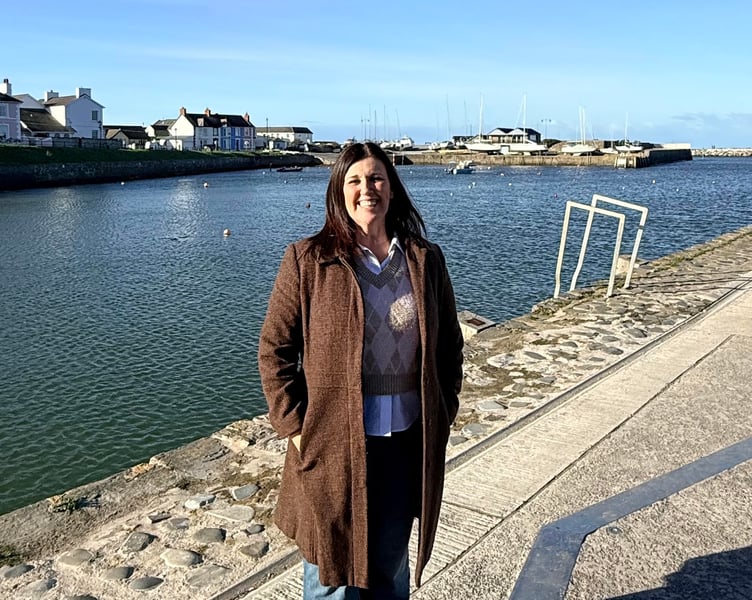
When Claire Archibald's mother was brought home from hospital, she burst into tears. She had feared she would never see her house again.
For the Reform UK Member of the Senedd, who had helped care for both her parents through their final illnesses, the moment remains a powerful reminder of what dignified end-of-life care can mean.
"She wanted to come with her family, and that's where she was when she took her last breath, with me there," she told the Cambrian News.
Now the Ceredigion Penfro MS wants dedicated hospices in both Ceredigion and Pembrokeshire, suggesting facilities of around ten beds could offer families another choice when caring for loved ones at home becomes impossible.
Mrs Archibald, Reform UK's Shadow Minister for Social Care, believes existing buildings or unused hospital space could be adapted rather than constructing expensive new facilities.
"All right, we're not going to be able to have a 20-bed hospice. I get that. But we could have a 10-bed hospice in Pembrokeshire and in Ceredigion," she said.
The proposal is an ambition rather than a funded scheme, but it comes amid growing concern over the future of hospice provision in Wales.
Mrs Archibald worked in care homes before joining an NHS community care team supporting terminally ill patients. She also worked in hospital and cared for her parents herself, experiences which she says exposed both the strengths of compassionate care and the pressures facing families.
She described how specialist staff helped her mother return home with equipment and regular visits, allowing relatives to spend time together without bearing every responsibility alone.
"Most people should be able to have the privilege to die at home if they wish," she said.




But she warned that moving more care into people's homes cannot succeed without dependable support for those looking after patients.
"When we talk about care closer to home, you have to know that a family is behind that," she said.
In her former community team, she recalled, workers could stay longer with someone who needed reassurance, while colleagues rearranged other calls. She contrasted that with the time pressures she believes increasingly constrain social care.
"Sometimes we're the only people that they see all day," she said, criticising a system in which carers may have little opportunity to do more than complete essential tasks.
She wants specialist community palliative care teams, properly trained staff and closer cooperation with charities. But she also argues that not every family can cope with caring for someone during their final days.
"A hospice would come in ... because the family could go and be the family rather than the carer," she explained.
Her father, she recalled, spent almost all of his final days at home before being admitted to hospital shortly before his death.
Mrs Archibald pointed to the work of Paul Sartori Hospice at Home in Pembrokeshire, a charity she has supported professionally and personally, while arguing that community care should be complemented by somewhere patients can stay overnight.
Her comments follow the closure of Shalom House hospice in St Davids in 2025 amid financial pressures. The former hospice building was subsequently put up for sale.
Hywel Dda University Health Board continues to provide specialist palliative care services, including support in Ceredigion through Tŷ Geraint and hospice-at-home arrangements. The distinction, Mrs Archibald argues, is between those services and having a dedicated inpatient hospice locally.
She floated the idea of adapting an older building, potentially near the coast, or allowing a charity to operate hospice beds within an existing hospital ward.
"It doesn't take a lot of money. What it takes is common sense, just planning," she said.
However, she acknowledged that she was not an economist and did not provide a costed assessment of staffing, facilities or ongoing clinical provision.
The funding question is substantial. In September, Hospice UK and Hospices Cymru called for an additional £30 million across the remainder of the Senedd term to stabilise Welsh hospices, warning that rising costs and demand threatened services.
The organisations say Welsh hospices support more than 20,000 adults and children each year, delivering care in homes, communities and inpatient units. Their appeal concerns the sustainability of existing provision as well as the capacity to respond to future needs.
The Welsh Government announced £4.3 million in additional support in March and new national commissioning guidance, with a more consistent approach to funding intended from April 2027.
Mrs Archibald nevertheless wants ministers to place palliative care higher on the agenda and give locally elected representatives clearer responsibility for how services are delivered.
"I would like to see a palliative care plan," she said, arguing that patients with dementia and motor neurone disease must be considered alongside those with cancer.
Wales already has a national quality statement for palliative and end-of-life care, published in 2022, but she believes the existing arrangements have not delivered the support families need.
She proposed a system in which Welsh Government funding is passed to councils, with named officials accountable for decisions and fewer intermediary boards.
"I don't believe in quangos (quasi-autonomous non-governmental organisations)" she said, arguing that patients and unpaid carers too often become lost between organisations.
For Mrs Archibald, this is also a question of who gets to write policy. She believes politicians should draw more heavily on people who have actually delivered the services under discussion.
"The problem is we've gone down a road of people coming from university straight into politics," she said.
"And yes, they can write a paper, but they don't know people. They do not have that life experience."
She stressed that she would seek advice from experienced palliative care professionals rather than assume her own background gave her every answer.
Her experience has also complicated her views on assisted dying, an issue on which she acknowledges a conflict between religious conviction and the suffering she has witnessed.
"I am Catholic, so... I can't agree with it," she said, explaining that her parents' final words and moments remain precious to her.
Yet she also recalled caring for a woman in her forties with motor neurone disease who wanted the choice to end her life.
"And so I have to say... it has to be a right to choose your own view" she said, while emphasising that she remains uncertain and willing to hear opposing arguments.
MPs rejected a proposed assisted dying law for England and Wales by 286 votes to 270 in September, leaving the legal position unchanged.
The debate underscores the difficult territory facing a politician whose convictions have been shaped as much by experience at patients' bedsides as by her faith.
Elected in May as one of two Reform UK representatives for Ceredigion Penfro, where the party secured 25.8 percent of votes, Mrs Archibald is now part of the Senedd's official opposition. She says the responsibility of office is ultimately about listening to those who depend on public services.
"I am honoured to be serving the people that I'm with," she said.
Her ambitions for hospices remain uncosted, with no site or funding commitment established. But she insists the objective is simple: ensuring that people facing death, and the families beside them, are afforded dignity, practical help and choice.
Comments
We've recently changed our login process. If you have an account for commenting, you will need to re-register on the login window.
This article has no comments yet. Be the first to leave a comment.