

Madam,
I refer to the article ‘University under fire over historic mansion neglect’.
Whilst referring to the historic importance of the Plas and its grounds, the article fails to explain why both are of such importance, other than their very recent use as the centre of what was originally the Welsh Plant Breeding Station.
In 1986, a multi-period burial site, Iron Age to early medieval period, was excavated at the site.
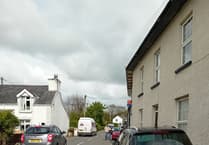



The Plas was, from circa 1460 until 1950, the ancestral home of the Pryse family and the centre of a traditional landed estate which, at its height, extended to some 33,000 acres including several profitable lead and silver mines.
Members of the Pryse family served in various public offices throughout this time and several were Members of Parliament for the then Cardigan Boroughs seat, which included the former Borough of Aberystwyth.
The long façade shown to the right of the photograph was added in 1860 by Sir Pryse Pryse, 1st Baronet (1838-1906) and parts of the older portion of the Plas, to the left of the photograph, are believed to date back to medieval times.
A fine collection of family portraits and other paintings, which adorned the walls of the Plas, were purchased by the National Library of Wales from Pryse Settled Estates in 1984.
A member of the family who could be described as a ‘colourful character’, and who many will still remember, was Lady Marjorie Pryse, who died as recently as 1993. It was her nephew, Sir Pryse Loveden Saunders-Pryse, 5th and last Baronet (1896-1962) who sold Gogerddan, the home farm and the remainder of the estate in 1950.
The family intermarried with other local landed families, including the Powells of Nanteos and the Loxdales of Castle Hill, Llanilar, where descendants of Sir Pryse Pryse still live today.
Yours etc,
David Gorman, Bamber Bridge, Preston.
Have your say on the local issues affecting you - email [email protected] or join in the conversation on our Facebook page
Comments
This article has no comments yet. Be the first to leave a comment.