
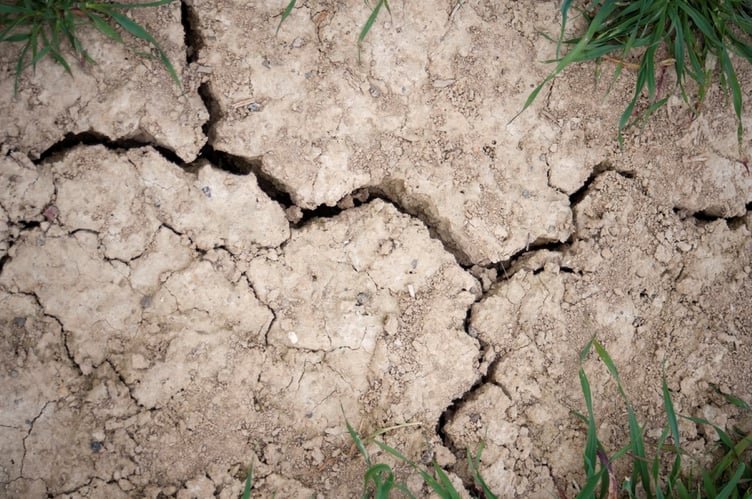
Across west and mid Wales, drought is no longer an abstract entry on an official map. It can be seen in exposed stones along shrinking rivers, in pasture that has stopped growing and in the extra bales farmers are already feeding to livestock months before winter.
Natural Resources Wales has extended drought status across the whole country after an extraordinary July brought just 8% of Wales’s long-term average rainfall. The agency said the month was on course to be the driest July since records began 190 years ago, with sustained heat accelerating the decline in river flows, groundwater and soil moisture.
The declaration, made on 30 July, followed drought status for north Wales and the Upper Severn a week earlier. It now encompasses the contrasting landscapes of Gwynedd, Ceredigion, Powys, Carmarthenshire and Pembrokeshire, where the same lack of rain is producing different but connected pressures on rivers, farms, habitats and communities.
NRW declares drought when a combination of indicators — rainfall, river flows, groundwater, soil moisture and observed impacts — points to a significant shortage of water in the natural environment. That is separate from the triggers used by water companies for public supply restrictions, but the two pictures can overlap as prolonged dry weather drives up demand.

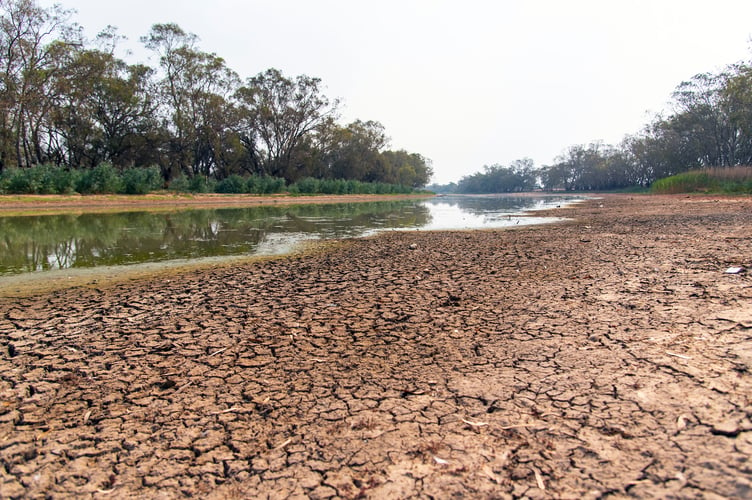
By late July, most monitored rivers in Wales were exceptionally low. Among those highlighted were the Dyfi and Clywedog in mid Wales, the Teifi on the Ceredigion-Carmarthenshire boundary, the Cothi and the Cleddau in Pembrokeshire. NRW teams have received reports of drying channels, fish in distress, localised mortalities and algal blooms, while falling groundwater has added to concern about how quickly catchments could recover.
Reservoir and compensation releases are being used in some places to support ecosystems, fisheries and lawful abstraction. Controls on abstraction and other measures are being applied through NRW’s drought plan, but officials stress that releases must be husbanded: water used to protect a river today may be needed again if dry conditions persist into autumn.
Gwynedd was among the first areas moved into drought status, after north Wales received less than 2% of its expected July rain by 23 July. In a county defined by steep uplands, fast rivers and internationally important habitats, extended dryness can change conditions rapidly. Small tributaries lose depth and cool refuges, while higher water temperatures and reduced oxygen place fish and invertebrates under stress.
The Dyfi, which rises near the Gwynedd-Powys border before reaching Cardigan Bay, is one of the rivers identified as exceptionally low. Its condition illustrates why drought is managed by catchment rather than county line: what happens in upland headwaters affects communities, fisheries and wetlands many miles downstream.
The tinder-dry landscape has also kept wildfire risk high. Recent fires have damaged forestry, grassland and sensitive habitats, leaving NRW teams to monitor erosion, damaged soils and the longer recovery of sites that may be more vulnerable if intense rain eventually arrives.





In Powys, the drought reaches across the Upper Severn, Wye, Clywedog and Dyfi systems. These rivers support farms, towns, wildlife and abstraction, and several continue across the border into England. NRW is liaising with the Environment Agency over the Wye, Severn and Dee so decisions are informed by the health of the whole river rather than one administrative area.
For livestock businesses, the immediate problem is often grass. Fields that would normally provide a second or third grazing rotation have browned off, forcing farmers to open winter forage early. That creates a delayed financial risk: hay, silage and feed bought later in the year could be dearer if demand rises across Wales.
Private supplies are another concern in rural Powys. Households or farms relying on springs, wells and boreholes have less resilience when groundwater falls. Public water customers should follow their supplier’s guidance, while users of private supplies who experience difficulty are advised to contact their local authority.
Ceredigion’s drought picture combines environmental stress with unusually high pressure on drinking-water networks. A temporary use ban introduced in July covered parts of mid and south Ceredigion, north Pembrokeshire and north Carmarthenshire. The measure was described as a response to exceptional demand rather than an indication that reservoirs were empty, underlining the difference between environmental drought and a water company’s supply position.
Along the Teifi and smaller coastal streams, low flows can concentrate pollutants, raise temperatures and reduce the connected pools fish depend on. Farmers face the same shortage from another direction: weak regrowth limits grazing, while crops and horticulture need more water just as restrictions and environmental safeguards make every abstraction decision more sensitive.
Tourism adds a seasonal dimension. Visitors are being asked to use water carefully and avoid barbecues or open flames in the countryside. Anyone seeing a wildfire should move to safety and call 999; environmental incidents can be reported to NRW around the clock on 0300 065 3000.
In Carmarthenshire, attention has focused on the Tywi system and its tributary, the Cothi. Water held in a fisheries reserve at Llyn Brianne has been released into the Tywi downstream of Capel Dewi to support river conditions and fish populations. NRW said the operation was deliberately cautious so enough could be retained if further help is needed later in the year.
The intervention shows both the value and limits of managed releases. They can improve flow, temperature and oxygen in a targeted reach, but they cannot replace sustained catchment rainfall. Nor can they erase pressures on dairy and livestock farms, where drinking water, shade and sufficient feed are becoming daily management questions.
The dry ground also increases the danger that future heavy showers will run off rather than soak in. That means drought planning must sit alongside flood and soil management: the same farm or habitat can endure water scarcity now and damaging runoff when the weather breaks.
Pembrokeshire’s productive farmland makes the drought’s food implications especially visible. Arable farmer Tom Rees said wheat, barley, oilseed rape and early potatoes had performed reasonably, but the main potato crop was suffering as the window for growth narrowed.
On 160 acres, he estimated yields could fall from a typical 20 to 22 tonnes an acre to 16 or 17 tonnes. He also feared 40% to 50% of the crop could fall below the minimum size commonly accepted for main supermarket lines, compared with about 5% in a normal season. “I think there will be a real shortage of potatoes this autumn,” he said.
Mr Rees argued that applications for large irrigation ponds should be accelerated so winter rain can be captured on farms. Such stores, he said, could support crops, biodiversity and firefighting. The proposal points to a broader resilience debate: Wales is not short of rain in every season, but increasingly needs infrastructure and land management capable of holding more of it when it falls.
Streams feeding the Cleddau are also under pressure, and low water can fragment habitat or leave fish stranded. Coastal breezes may temper daytime heat in places, but they do little to replenish soil moisture or river flow.
Across Wales, farmers are improvising. Boreholes, rainwater collected from sheds, shade from trees and temporary sprinklers are helping some herds. But adaptation has a price, and not every holding has the land, geology or finance for a reservoir or borehole.
NFU Cymru president Abi Reader said the declaration would not surprise farmers already seeing weaker crop yields and difficulty securing enough food and water for animals. With winter forage being opened early, she warned that some businesses may have to buy replacement feed later at significant cost.
The union has called for a prompt, flexible response to requests for derogations from specific Sustainable Farming Scheme requirements where extreme conditions prevent compliance. The Welsh Government has said it recognises the pressure on livestock, crops and farm businesses, and will look favourably on temporary derogations supported by evidence.
For consumers, any effect on prices will depend on the duration of the drought, harvest quality, imports and wider market conditions. Yet the mechanism is clear: lower yields, smaller produce and higher feed or irrigation costs can move through the supply chain.
The immediate forecast contains a possibility of rain, but not the prolonged, widespread soaking needed to reverse accumulated deficits. The Met Office outlook for 16 to 25 August says Atlantic fronts are likely to bring rain to some places, perhaps heavy at times, before high pressure exerts more influence and drier conditions return for many.
From 26 August to 9 September, high pressure is forecast to be dominant near the UK. Changeable interludes, showers or longer spells of rain remain possible, but overall rainfall is considered more likely to be below average than above. Temperatures are expected to be above average, with further hot spells or heatwaves possible, especially in southern areas.
The UK Hydrological Outlook, issued on 10 August using data to the end of July, is more sobering. It expects below-normal to exceptionally low river flows across Wales through August, with record lows possible and drought impacts likely to continue into autumn. Groundwater is expected to remain normal to below normal over the next three months, including notably low levels in parts of south Wales’s Carboniferous Limestone.
The three-month meteorological guidance used by the outlook indicates a 1.5-times greater chance of a dry August-to-October period and a 2.3-times greater chance of warmer-than-average conditions. Heat matters because it increases evaporation and plant demand, reducing the benefit of rain that does fall.
Long-range forecasts cannot say precisely which Welsh valley or coastal strip will receive a downpour. Thunderstorms may deliver intense rain to one catchment while missing the next. A brief wet spell can suppress fire risk and freshen the surface, yet river flow and groundwater may remain depressed after months of accumulated deficit.
Rhian Thomas, NRW’s sustainable water and nature manager, described a rapidly changing picture. “The toll on the environment, our land and agriculture is clear to see,” she said, pointing to wildfires that have devastated forestry, grassland and special habitats.
“With no strong indications for notable rainfall in the forecasts, and risks of further heatwaves over the summer, it’s more important than ever that we all use water wisely. Every drop we waste is less water for our rivers and wildlife when they need it the most.”
That message is practical as well as symbolic. Using full washing-machine loads, shortening showers, fixing leaks and avoiding unnecessary outdoor use can reduce peak demand. People should also check their water company’s latest advice because restrictions and supply conditions vary by area.
NRW drought teams are meeting regularly and have increased monitoring, working with the Welsh Government, water companies, the Environment Agency and the Wales Drought Liaison Group. The coordination is intended to balance public supply, lawful abstraction and the immediate ecological needs of rivers whose resilience is already diminished.
Summer 2026 has reinforced a longer trend. Met Office provisional figures to mid-July put Wales’s mean temperature 2.2°C above the seasonal average, with daytime maximums 2.7°C above average. The UK had already recorded more days above 30°C by 15 July than during all of 1976.

NRW says the extreme pattern of the past year is a stark example of climate change in Wales and the UK. Its planning assumption is that hotter, drier summers and wetter winters will become more familiar, demanding changes in drought planning, flood management and the way land is managed for wildfire and pest resilience.
For the five counties, resilience will not mean one solution. Gwynedd needs healthy headwaters and fire-aware land management; Powys needs cross-border catchment planning and support for private supplies; Ceredigion needs careful demand management around the Teifi; Carmarthenshire needs strategic river releases and soil resilience; Pembrokeshire needs water storage that can sustain valuable food production without stripping rivers.
The drought may eventually be broken by Atlantic weather, but the latest outlook offers no confidence of a swift reset. Until sustained rain reaches whole catchments — not merely isolated fields — every low river, dry pasture and depleted aquifer will remain part of the same story: a country learning how to live with too little water in summer, even as it prepares for too much in winter.
Comments
This article has no comments yet. Be the first to leave a comment.