

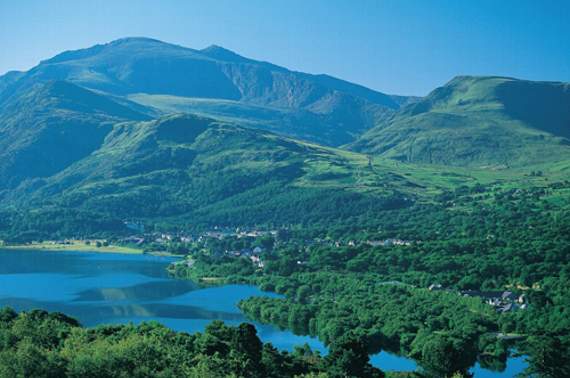
Plans to implement a specific charge on visitors to climb Snowdon look set to fail.
Gwynedd Council backed calls for this last October amid fears the county is suffering from “over tourism”.
Cllr Glyn Daniels presented the motion, with members backing an “opening of the debate”, and his claims reinforced by a recent Gwynedd Council report.
With Wales’ highest peak attracting more than 500,000 visitors every year, it was pointed out that even a modest £2 charge to climb it would generate £1 million a year.



Cllr Daniels asked members to work with the park authority to explore a “considerable fee”, arguing it would boost coffers with “also room to believe” it would reduce excess cars “causing traffic jams and hazards”.
The park authority itself has already cast doubt on such proposals, claiming a change in the law would be required, with national parks not holding tax raising powers.
In a formal response to Gwynedd Council, chief executive of the National Park, Emyr Williams, said “attempting to set tariffs would raise a number of points”.
“Setting any kind of ‘charging system’ would set a precedent for Public Rights of Way and would be contrary to the ethos of the Highways Act.
“This would undoubtedly be subject to significant and severe legal challenge at a national level.
“This is arguably contrary to the ethos of the National Parks Act and all the legislation that has been in place since the Second World War.”
Noting that any charging would also raise practical questions over who should benefit, such as landowners, tenants, the park or communities, Mr Williams added that implementing any such access regulations would be “very difficult”.
Writing that gates and physical barriers on the ground could be “complicated and expensive to set up,” invisible boundaries with an online payment system would mean “lower costs to set up but difficult to manage”.
“Any option of implementation would require an element of enforcement and control. In order to do this a staff resource would be required on the ground,” Mr Williams added.
“This would have to result in the creation of a specific role as the role of council staff and Authority Wardens at present focuses on developing the relationship we have with the public, landowners and partners rather than enforcement.”
But with Gwynedd Council having commissioned a report looking at how the area can benefit more from tourism – which included input from the national park – one of the findings was that one of the most sustainable long-term revenue-generating solutions could involve a more general tourism tax.
Although such a levy would require the Welsh Government to introduce new legislation, Gwynedd Council has been lobbying ministers to allow the charging of a modest “tourism tax” on overnight visitors to help mitigate the “tourism imbalance.”
A Welsh Government spokesperson said: “The work to explore a potential tourism levy was paused due to the pandemic.
“We will resume engagement with the tourism sector and our partners in local government, and our focus will continue to be on supporting the tourism sector in its recovery.”
Comments
This article has no comments yet. Be the first to leave a comment.