
Scientists have reported a significant shift in marine species and habitats linked to warming sea temperatures.
Partners in the world of marine research and observation, including the Marine Biological Association (MBA), have highlighted major ecological changes occurring across the region’s waters in the latest State of South-West Seas 2025 report.
The report, which brings together observations and evidence on marine species, habitats and environmental conditions across southwest England and the wider Celtic Sea region, documents a range of significant shifts in marine species and habitats linked to sustained warming of sea temperatures, changing environmental conditions and broader ecosystem change.
It provides one of the most comprehensive annual assessments of marine environmental conditions in the southwest and draws on observations from researchers, conservation organisations, citizen scientists and marine industries.
Chapters were authored by experts from organisations including the Wildlife Trusts (Devon, Cornwall, Dorset and Alderney), Plymouth Marine Laboratory, the University of Plymouth, Exeter University, the Seal Research Trust, Natural England, and the Marine Management Organisation, as well as individual contributors.
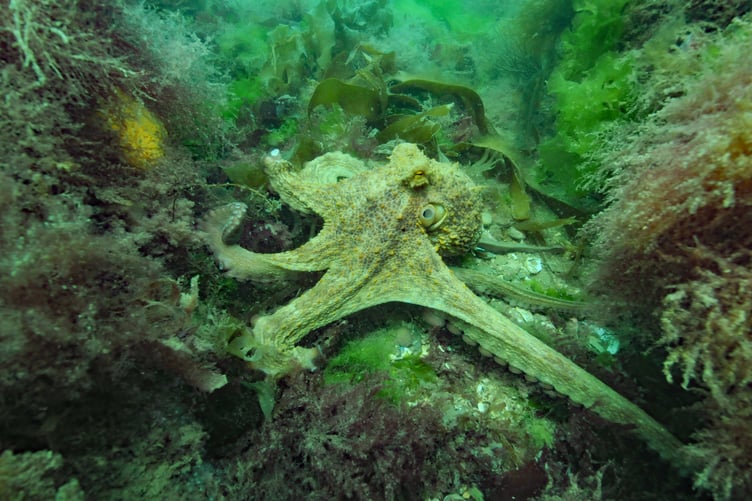
Among the most notable findings is a dramatic increase in Common Octopus populations across southwest waters. The phenomenon, described by contributors as the ‘Year of the Octopus’, has had widespread ecological and economic implications.
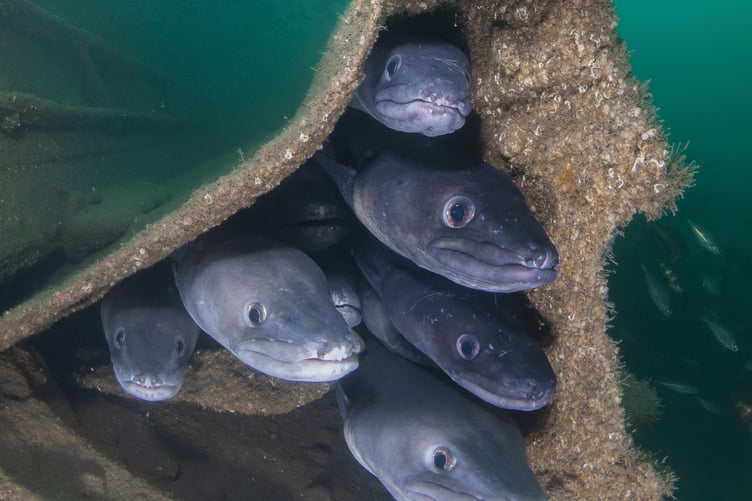
Increased octopus abundance has affected shellfisheries targeting lobster, crab and scallops, while simultaneously providing a substantial food source for predators including Grey Seals, Risso’s Dolphins, Blue Sharks and Conger Eels. The findings come during the third consecutive year in which spring and summer sea temperatures in the western English Channel reached marine heatwave conditions, with the Met Office warning of 'extreme levels' of marine heatwave teocmperatures this week.
The report also highlights growing evidence of climate-related shifts in species distributions.
Populations of Spiny Lobster, Black Bream, Two-Banded Sea Bream, Blackspot Bream and Comber continue to increase and extend their ranges, while increased abundance and extent of several warm-water species and of recent new records for Britain were documented during the year. These new and unusual records included the Hair Curler Sea Slug (Spurilla neapolitana), warmer water and potentially toxic dinoflagellates, and several rare fish records.


At the same time, some species appear to be under pressure. Basking Shark sightings remained at historically low levels, summer mackerel catches were again poor, and reduced numbers of certain starfish species persisted across the region.
Changes were also observed among marine mammals. Common Dolphins appear to be shifting northwards, Risso’s Dolphin sightings continue to increase, and coastal Bottlenose Dolphins are becoming less frequently recorded in some parts of the Southwest during summer.
Meanwhile, Seals Research Trust volunteers recorded a likely world first of successfully weaned wild seal pup twins in Cornwall.
The report identifies mixed fortunes for marine habitats. Seagrass meadows continue to expand and show encouraging signs of recovery, while prolonged periods of high temperatures caused bleaching in some intertidal algal communities. The first published UK record of the non-native Sea Squirt Didemnum pseudovexillum was also reported, highlighting ongoing biosecurity concerns.
Dr Keith Hiscock, MBA Senior Research Fellow and Editor of the report, said: "These findings emphasise the value of sustained long-term marine observations. The changes recorded across southwest seas illustrate how marine ecosystems are responding to a combination of warming temperatures, shifting environmental conditions and human pressures. Continued monitoring is essential if we are to understand and, where possible, react to changes effectively."

The changing temperature in the sea has also led to marine heatwave being declared this summer.
Surface waters in Northwest European seas are currently experiencing moderate to severe marine heatwave conditions, with widespread areas of “strong” conditions and some locations reaching “severe”.
This means that waters in June reached temperatures usually expected in August and are on average 2°C warmer than usual, locally reaching +4-5°C anomalies offshore parts of the Welsh and English coasts.
These elevated sea-surface temperatures have developed rapidly partially because of last week’s record-breaking atmospheric heatwave and could intensify further in the coming week when settled and sunny weather is likely to return.
The provisional UK June temperature record was exceeded on three consecutive days last week. Typically lagging inland weather by around 3-5 days, sea-surface temperatures have responded quickly, with the Bay of Biscay reaching unprecedented values for June.
While this exceptional land heatwave was primarily driven by atmospheric conditions, the surrounding marine environment played a role in prolonging warmth on land as the heatwave declined, when light winds favoured the movement of warmer-than-average marine air inland.
In tidally-mixed regions such as the Irish Sea, English Channel and southern North Sea, temperatures are elevated not only at the surface but also at depth, with anomalies of around +2°C observed below the surface. Elsewhere, warming is largely confined to the upper ocean layers.
Dr Ségolène Berthou, Air-Sea Interaction Specialist at the Met Office, said: “Marine heatwaves around the UK have developed rapidly following the recent heat dome, and we are now seeing widespread strong to locally severe conditions.
“This is the third and most intense marine heatwave we have seen this year.
“While these warmer seas did not significantly increase peak temperatures on land, they reduced night-time cooling and helped sustain warmth, particularly in coastal areas.
“With further sunny and calm weather likely next week, there will be little opportunity for the ocean to release this excess heat. This means the surface marine heatwave could intensify further, potentially reaching extreme levels in the south. Such conditions would be highly unusual for UK waters.”
Prof. John K. Pinnegar is the Principal Scientist and Lead Advisor (Climate Change) at CEFAS. He said: “Marine heatwaves can have significant impacts on ecosystems and wildlife. Prolonged periods of unusually warm sea temperatures can lead to shifts in fish populations, damage important habitats such as seagrass and kelp, and increase the likelihood of harmful algal blooms. These changes can result in mass-mortality events for some marine species and alter the distribution of commercially-important fish and shellfish.
“Prolonged periods of elevated seawater temperatures can also encourage new species to visit UK waters, establish new populations, potentially shaking up UK ecosystems. A recent example includes the population bloom of common octopus we've been experiencing since last year, with serious negative consequences for crab and lobster fisheries in southwest England.”
Holly Clements, Met Office Head of Warnings and Guidance, said: “It is vital for the public to understand that although sea-surface temperatures are currently well above average in many coastal locations, this does not avoid the risk of cold-water shock.
“With warmer weather approaching, and even with marine heatwave conditions, it’s important to remember that the water around the UK is still cold. Entering it unexpectedly can lead to cold-water shock.”
The Met Office says it continues to monitor and forecast both atmospheric and oceanic conditions closely, as interactions between the two can influence the duration and impacts of heat events across the UK.
Comments
This article has no comments yet. Be the first to leave a comment.