

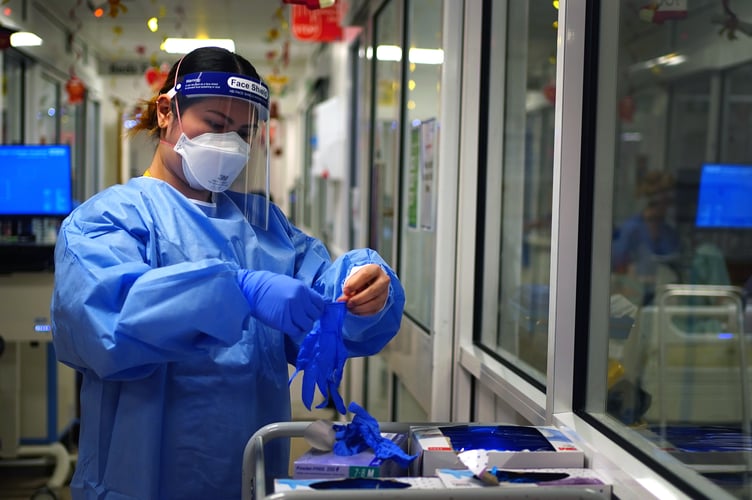
Wales’s post COVID-19 contingency plans lack sufficient independent verification to give confidence that they would withstand another major emergency.
The Senedd’s Public Accounts and Public Administration Committee is calling for robust independent evaluation of the Welsh Government’s revised structures to measure how effectively they work in practice.
The committee’s report, published today (Wednesday 11 March 2026), examines how lessons from Wales’s response to COVID-19 have been applied to current contingency arrangements.
Although important reforms have been introduced - including the Wales Resilience Framework and updated governance structures - the Committee heard that concerns remain about monitoring, accountability, and the absence of external verification.



The committee recommends that the Welsh Government strengthens its evaluation of civil contingencies by introducing clear performance indicators, backed by independently substantiated evidence, to conclusively show whether we are seeing measurable improvements in the way we respond to emergencies. It also wants to see better support and integration with emergency responders, including the invaluable volunteer sector.
Mark Isherwood MS, Chair of the Senedd’s Public Accounts and Public Administration Committee said: “The Welsh Government may be better prepared today than before the COVID-19 pandemic, but preparedness built on self-assessment alone is not enough. The people of Wales should feel confident that our systems will hold up under pressure and subjecting emergency plans to external scrutiny is essential to building true resilience.
“Evidence also shows that emergency response systems are overly complex, and that our invaluable volunteer sector remains sidelined. There needs to be clearer coordination and a system that fully integrates and supports responders to perform at their best.
“We are grateful to every witness who contributed to this work and pleased to have delivered these recommendations before the end of the Senedd. We strongly recommend that this work continues and that similar inquiries are carried out for the remaining Modules of the UK COVID‑19 Inquiry in the next Senedd.
“Above all, we must never forget the people whose lives were lost and the families who still carry the weight of that grief. We hope our recommendations will help improve future resilience and we must do everything in our power to ensure that such a tragedy is never allowed to happen again.”
Emergency responders - particularly the Fire and Ambulance Services - raised significant concerns about the complexity of the civil contingencies system.
They told the committee how they face ongoing pressure servicing four Local Resilience Forums and numerous subgroups, creating delays, duplication, and unclear decision making during emergencies.
Lee Brooks, Executive Director of Operations at the Welsh Ambulance Service, said: “Well-coordinated structures, clear lines of accountability and effective information sharing are essential if we are to respond quickly and safely when people need us most.
“So too is exercising our people and testing systems, both of which are having to be balanced alongside the ongoing challenges of day-to-day service delivery.”
The Committee also found that voluntary and community responders - including the British Red Cross, disabled people’s organisations and other trusted institutions- remain insufficiently integrated into emergency planning and response.
Comments
We've recently changed our login process. If you have an account for commenting, you will need to re-register on the login window.
This article has no comments yet. Be the first to leave a comment.