
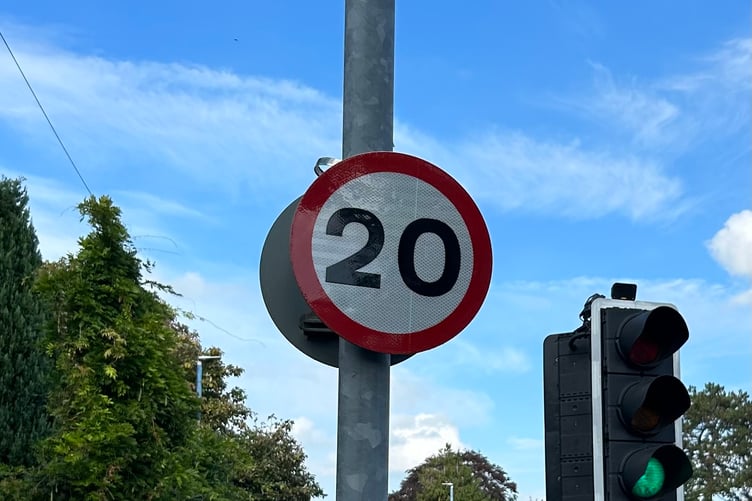
Senedd Members have rejected a Reform motion calling for the Welsh Government to scrap default 20mph speed limits.
The proposal was defeated by 51 votes to 37 following a debate in the Siambr.
Opening the debate, Reform's shadow transport minister, Jason O’Connell, pointed to rising fatalities across the Welsh road network, noting that 91 people were killed on Welsh roads in 2025.
Mr O’Connell accused Plaid Cymru of being "big on independence but silent on road safety" and said: "Plaid has been focused instead on breaking up the United Kingdom, plotting with Sinn Féin and making us weaker as a result.
However, Labour’s Vikki Howells criticised Mr O'Connell's comments, warning against misleading the Senedd by using total road deaths across all speed limits to judge urban zones.
She pointed out that collisions on 20mph and 30mph roads fell by 300 between 2022 and last year.
Transport Minister Mark Hooper defended the policy, stating the lower speed limits where pedestrians, cyclists, and vehicles mix remain "fundamentally the right policy".
Mr Hooper confirmed there were 19 fatalities on 20mph roads during 2025.
He highlighted that total casualties on 20mph and 30mph roads combined have fallen by 23% since the limit was introduced.
He said his party is "committed to reducing the number of people killed and seriously injured on Welsh roads”.



Reform's Wales leader Helen Jenner argued the policy had wasted public money, pointing to councils having to replace hundreds of signs only to reconsider and restore 30mph limits on specific routes.
She said her party makes "no apology for standing up for common sense and saving public money”.
She said when the default policy was introduced, local authorities were “required to make substantial changes across their road networks before many of those same roads were then reconsidered and, in some cases, changed back again”.
She continued: “On Ynys Môn, nearly 700 road signs were replaced ahead of the introduction of the default limit.
“The council then had to revisit a number of roads, consider 25 proposals to restore 30mph limits and ultimately approve 22 of them.
“Is it any wonder our electors get so frustrated when public money is wasted in this way?”
Conservative MS Janet Finch-Saunders supported the Reform motion, reminding members her party had opposed the 20mph policy from the start.
However, Green Party MS Paul Rock urged members to accept the scientific evidence, noting that a pedestrian struck by a vehicle at 30mph faces a 50% chance of severe injury, compared to 10% at 20mph.
Mr Rock said by focusing on cost, “the fact that lower speeds reduce the risk of death and serious injury” is being lost.
He concluded: “This debate ultimately comes down to this: whose freedom do we value in society?
“Is a car journey that is, on average, less than a minute quicker really more important than the ability of a child to walk safely to school, an older person to cross the road with confidence, or a disabled person to travel independently through their community?”
Comments
We've recently changed our login process. If you have an account for commenting, you will need to re-register on the login window.
This article has no comments yet. Be the first to leave a comment.