
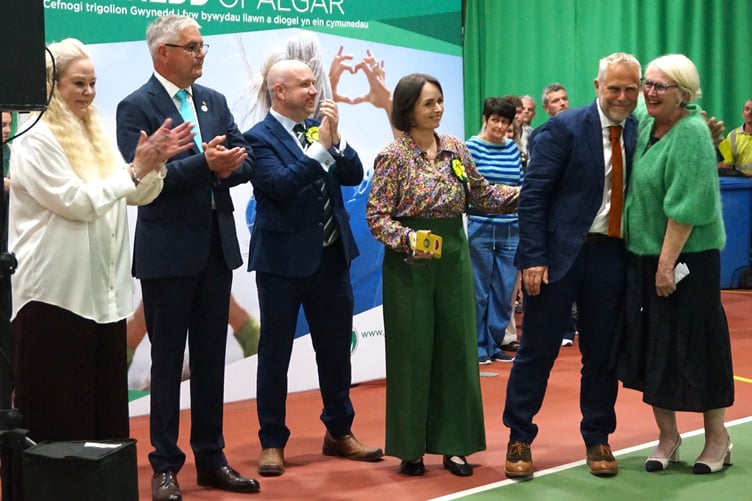
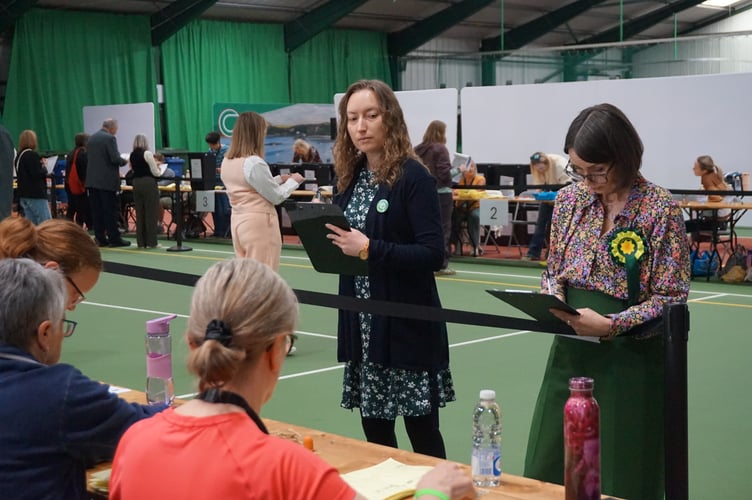
As the last place in Wales to call, all eyes were on the Arfon Tennis Court in Caernarfon after a long day of waiting, counting and pacing.
Just after 6pm the atmosphere at the indoor courts changed, there was a hushed tone as cameramen rushed behind their cameras and reporters with notepads hovered close to the stage where the Returning Officer was about to stand.
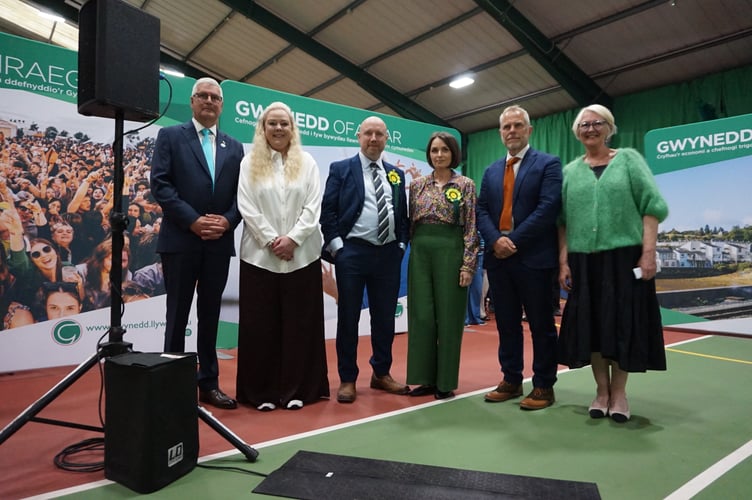
To the side, just off from the spotlight, six people stood – one, two, three... there were four green Plaid rosettes, two Reform blue.
-has-completed-an-engagement-process-to-shape-it.jpeg?width=209&height=140&crop=209:145,smart&quality=75)

The Plaid Cymru stronghold in the northwest was always speculated to keep its Plaid colours, but there had been a fierce campaign by Reform targeting the rural communities and their dissolution with the status quo.
At about 6.08pm, the Returning Officer announced what was now obvious to the room but to no one else yet in the nation, that the north of Wales had chosen to keep their Plaid representation, not just with the two returning Members of Senedd but adding two more – a victory that those in the room had admitted “hoping” for on the day, but was nevertheless, “astounding”.
The cheers grew loudest when announcing the last winning candidate – new Senedd Member Elwyn Vaughan representing the Montgomeryshire area had squeezed into the hotly contested sixth seat.
Reform UK had hoped for three seats, but won seats two and five out of the six available as part of the new system, still growing impressively in numbers for a party only in its infancy.
Cheers for their impressive gains however were muffled, the room seemingly not wanting to acknowledge the elected newcomers - Andrew Griffin and Claire Johnson-Wood shuffled off before this newspaper could interview them about their new jobs.
So there it was, just after 6pm it was clear that Wales had chosen Plaid Cymru to be its new government after a tortuous day of waiting on 8 May and a painful campaign period, ending the 104-year reign of Welsh Labour as the largest party in the country.
As the scaffolding came down around the election count, and cameras, suits and lanyards dispersed into the hush of the leisure centre car park and soft lighting of the north Wales mountains, the question of ‘what next’ was on everybody’s lips – home? The pub? The Senedd?
Some had been waiting longer than others for this day.
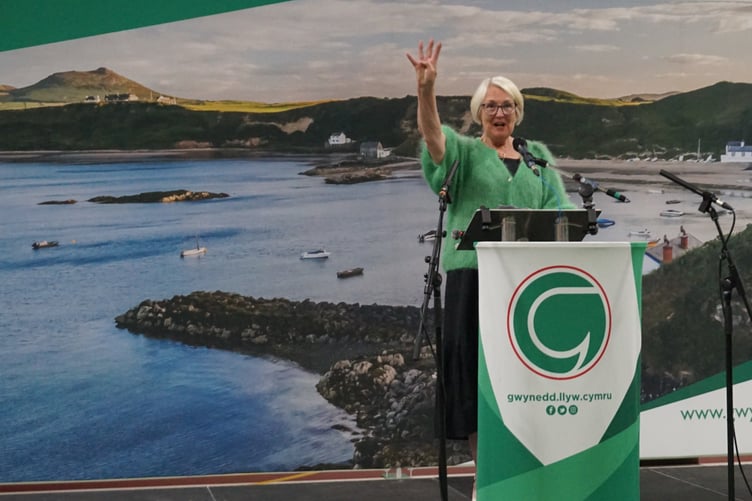
Siân Gwenllian
Siân Gwenllian has been campaigning for Plaid Cymru for over half a century, starting in her school days and following the footsteps of her parents as political activists.
The former Arfon MS, born the same year as Plaid got its first ever MP in Gwynfor Evans in 1966, was the lead Plaid candidate for Gwynedd Maldwyn.
In an interview minutes after the announcement, Siân paid tribute to those in the party who came before her: “It's a poignant moment for me in some respects - I have been a member of Plaid Cymru for over 50 years now.
"But there are so many people in the history of our movement who have given so much to our political party and now we're starting to realise some of that dream and hope and vision for Wales.
"It's an emotional time thinking about the people who have gone before us, laying those seeds to the success that we now have to grasp and build upon and maintain the trust of the people of Wales."
Plaid becoming Wales’ biggest party was the culmination of 101 years of work.
Her own journey into politics has also been remarkable – having always been political, she wasn’t able to run for Senedd until she was 60, after becoming a single parent to four children at an early age.
Her youngest son was just three when her husband Dafydd died of cancer.
Explaining to the reporter after her interview, “it would’ve been impossible with childcare, living in north Wales and travelling to Cardiff.”
She added: “Come 60 [the children] were old enough, I could venture into this new world.”
First elected in 2016 with a landslide, it was the result of 25 years of work first in the community council, and then in Gwynedd Council.
She turns 70, entering her 10th year in Senedd, aiming to continue encouraging women into politics: “We need to help more women to get into politics whilst maintaining their positions when elected.”
She spoke of family-friendly hours, hybrid working and job shares, “electing from the first point two people to do the job of an MS, would work well for women especially in the north, and would open the doors for more women.”
Plaid Cymru was formed in 1925 to address the threat to the Welsh language and culture. Though now considered part of mainstream politics in Wales, they struggled to get an MP until 40 years later, but from that point on, had many early wins in establishing the Welsh Language Act in 1967 and 1993, the Welsh Development Agency in 1974 and the first Welsh TV channel in 1982.
Mabon ap Gwynfor
In 2026, returning Senedd Member Mabon ap Gwynfor says Wales’ message in choosing Plaid is significant: “The people of Wales have told us that they don’t want to be mere witnesses to the deterioration of Wales anymore.
“They want to be the architects of a new Wales, a better Wales – that's why they elected us, they bought into our vision.
“They know we will always stand up for Wales and make sure Wales’ voice is heard and they put us in the driving seat in order to make our vision realised.”
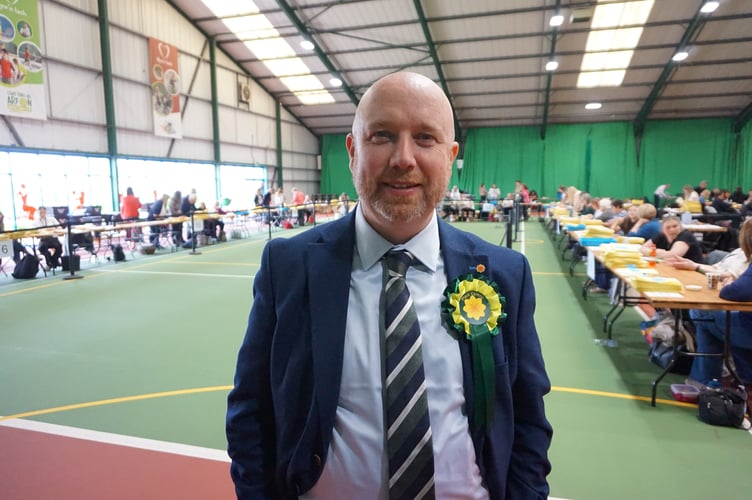
The 47-year-old was first elected in 2021 to represent Dwyfor Meirionnydd, which is now part of the new Gwynedd Maldwyn constituency.
Though the party is synonymous with the independence movement in Wales, it didn’t lead with that during the campaign, instead promising to address the cost of living and environmental crises and appealing to young families with the much-picked-apart offer of free childcare.
Whilst Reform UK is synonymous with the call for tougher borders and deportations, their key campaign pledges focused on ending the Nation of Sanctuary status in Wales and taking 1p off income tax.
Andrew Griffin
Lead candidate for Reform UK Andrew Griffin wrote in a Facebook post shortly after the results: “I’m incredibly honoured and humbled to have been elected as a Member of the Senedd for Gwynedd Maldwyn.
“Thank you to everyone across Gwynedd, Maldwyn and Glyndŵr who voted for Reform UK and placed their trust in us at this election.
“I’m also hugely grateful to everyone who supported the campaign, delivered leaflets, knocked doors, sent messages of encouragement, or simply took the time to speak with me over the past months.”
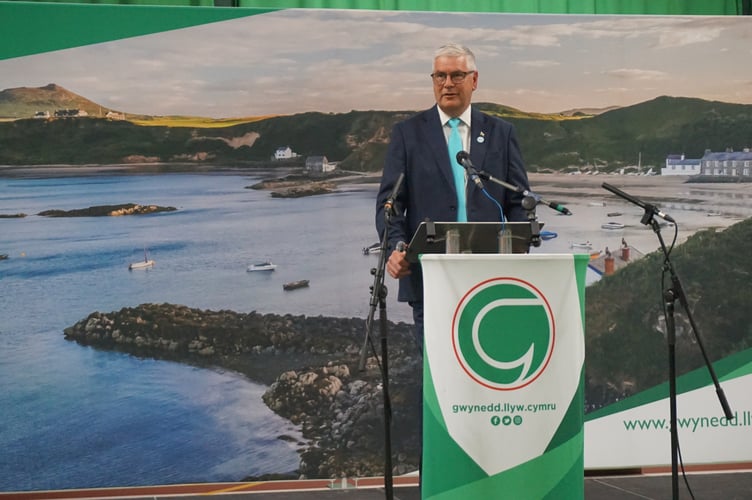
He added: “This is a huge and diverse constituency with proud communities right across Gwynedd, Montgomeryshire and Glyndŵr, and I know not everybody supported Reform UK.
“But I want everyone across the constituency to know that I will work hard for all residents, regardless of politics or background.”
In the same post, he acknowledged that “people want representatives who are visible, approachable and willing”, whilst appearing not to have given any media interviews on count day or taking up the Cambrian News’ request for an interview prior to print.
The town councillor from Llanfyllin lives by the motto ‘service before self‘, billing himself as a keen volunteer prior to his election campaign, spending over 30 years with the Cadet Forces and volunteering throughout the Covid-19 pandemic.
Claire Johnson-Wood
Claire Johnson-Wood, the second Reform UK MS for Gwynedd Maldwyn, began life in politics as a Powys Councillor for the Conservatives covering the Llanyre ward (significantly outside of the large Gwynedd Maldwyn patch).
She jumped ship to Reform UK a year ago, citing the increasing popularity of the party that is “in touch with the worries and concerns of the British public”.
Nigel Farage’s party, Reform UK, rebranded from the Brexit Party in 2021, is the new kid on the Welsh block.
The leader for Wales, Dan Thomas, was only nominated to the position in February this year, having defected from the Conservatives last summer.
In very little time, the party has grown from having no representation in Wales to having 34 Members of Senedd out of 96 seats.
In Claire’s short acceptance speech, she said she was “honoured and proud” to be elected.
When she joined Reform UK, she said that with the party she wanted to “reintroduce some good old-fashioned common sense into the way our county council is run, and in the future, Wales and indeed the UK.”
Her election campaign hinged around calling for “change”, putting Reform as “the only party to offer real change and not just more of the same” whilst not mentioning much of what that change might look like.
“Change” was a popular word for everyone this election, as the voter turnout proved – the biggest turnout in Wales since the Senedd began in 1999.
Last Thursday, 51.65 per cent of registered voters in Wales turned out to vote, up from 47 per cent in 2021.
This is significant, but still lower than voter turnout at UK general elections – 59.9 per cent voted in the 2024 general election.
In Gwynedd Maldwyn, 52.59 per cent turned out to vote, up from 2021.
Beca Brown
Seat four went to 52-year-old Beca Brown, Gwynedd Councillor for Llanrug since 2022.
Between the crowd grabbing the mum-of-two for hugs and ‘llongyfarchiadau’, she said to the Cambrian News that voters were “hungry for change”: “I’ve been an activist for Plaid Cymru for over a decade, I have never found people so engaged and so eager and open.”
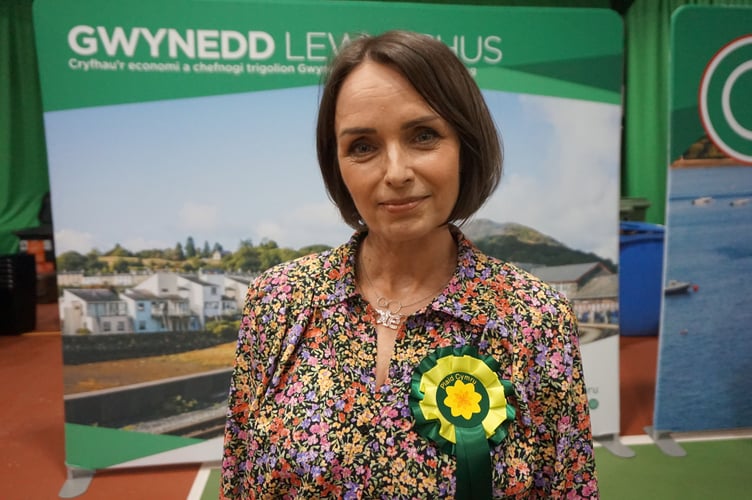
The former journalist, documentary-maker and Welsh teacher said she is keen to hit the ground running: “Everyone talks of how big Gwynedd Maldwyn is, but it’s been an absolute privilege to speak to people on the doors and hear stories and hopes and challenges people face.
“I will be going down to the Senedd enriched by all the stories and challenges I’ve heard.
“Wanting to take charge of child poverty – that's a really important one for me.
“I run a food scheme and school uniform swap in my own community, and I’m painfully aware of how difficult it is for families at the moment.
"I want to get cracking and make a real difference to people’s lives.”
One question unanswered is how the Senedd Members will cover the new larger constituencies - merged from several Westminster constituencies, Gwynedd Maldwyn covers roughly a quarter of Wales.
Elwyn Vaughan
One person feeling that will be newly elected Senedd Member, Elwyn Vaughan from Llanbrynmair, joining the Senedd for the first time in the hotly contested sixth seat.
The 60-year-old acknowledged the “tremendous support” he received from his own community in the Dyfi Valley.
Asked what constituents can expect to see from him, he said: “I want to focus on the needs of Montgomeryshire in particular.
“I’ve said in the past that I want to see Montgomeryshire at the heart of Wales, like a Celtic knot tying Wales together rather than a gap between the north and south.”
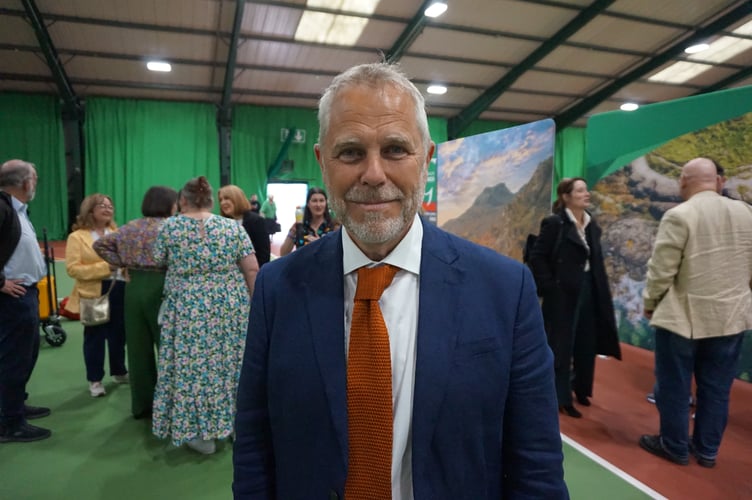
The Powys Councillor, first elected in 2017, said, along with continuing his work campaigning for rural healthcare, he wants to focus on the economy as a dad of two boys: “Our economy is the cornerstone of our communities.
“We're losing too many talented young people, and I want to make sure they have the opportunities, if they wish, to stay, live and work locally.”
Along with the increased responsibility and geographical boundaries the new Senedd Members have been elected to represent comes a £79,817 pay packet.
Their entire job is to make the government, and the nation of Wales, work better for you - their electors.
To get in touch with your newly elected Senedd Members, find their contact details to email or call them via the Senedd.Wales website - https://senedd.wales/find-a-member-of-the-senedd/
Comments
This article has no comments yet. Be the first to leave a comment.