

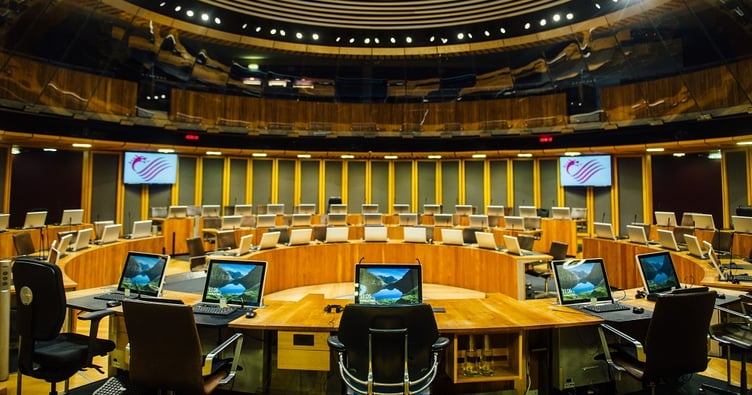
The way you vote in Senedd elections is changing. We’re not talking about who you vote for the ‘how’ you’re voting is changing. And changing significantly.
When you head into the polling station on 7 May, the ballot papers will be different – not just the names of people standing for election – but the manner in which you exercise your voting preference will be different too.
The Senedd has power to make laws over many key areas of Welsh life. These include most aspects of health and social care, housing, education, local transport, economic development, social services, language and culture, the environment, and local government.
When initially created, the Senedd was able only to pass secondary legislation in devolved areas. The Government of Wales Act 2006 gave the Senedd limited powers to pass primary legislation. Following a referendum in 2011, the Welsh electorate voted in favour of extending primary law-making powers to all areas where the Senedd has responsibility.




Since 2011 it has been able to pass primary legislation in the form of Acts of Senedd Cymru. A total of 63.5 per cent of voters were in favour of the change.
Since 2014, it has also held some tax-raising powers, including control of local taxes, taxes on property transactions (stamp duty land tax) and landfill, and the power to vary income tax rates in Wales.
The Senedd has fewer powers than the Northern Ireland assembly and Scottish parliament. In particular, it has no power over policing and justice, which remain the responsibility of the UK government.
In previous Senedd elections, a voting system called the ‘Additional Member System’ was used. This system combined two types of voting.
First, people voted for a candidate to represent their constituency using the First Past the Post (FPTP) method. Then there was a second vote, using proportional voting to choose candidates to represent regions of Wales. The combination of these two votes elected all 60 Members of the Senedd.
This time around, a new system will be used — a ‘closed proportional list system.’ This means the number of seats a party or independent candidate wins will more closely reflect the percentage of votes they get.
And yes, the new Senedd will have more members.
Wales will be divided into 16 constituencies for the 2026 election, with each constituency returning six MSs – making 96 in the Senedd.
Unlike before, these 16 constituencies cover far bigger geographical area, with the current 40 Senedd constituencies and five regions set to be scrapped.
The 16 constituencies are: Bangor Conwy Môn; Clwyd; Fflint Wrecsam; Gwynedd Maldwyn; Ceredigion Penfro; Sir Gaerfyrddin; Gŵyr Abertawe; Brycheiniog Tawe Need; Afan Ogwr Rhondda; Pontypridd Cynon Merthyr; Blaenau Gwent Caerffili Rhymni; Sir Fynwy Torfaen; Casnewydd Islwyn; Caerdydd Penarth; Caerdydd Ffynnon Taf and Pen-y-bont Bro Morgannwg.
Each of the new constituencies have about 140,000 voters but Bangor Conwy Môn will have around 20,000 fewer because Ynys Môn has historically been a protected seat.
The new Gwynedd Maldwyn seat – a combination of Dwyfor Meirionnydd and Montgomeryshire and Glydŵr –stretched from the coast to the English border.
Ceredigion Penfro and Brycheiniog Tawe Nedd will also be geographically giant seats.
The new ‘closed proportional list’ system uses a formula called ‘the D’Hondt method’ to make sure seats are allocated to closely reflect their share of the vote.
So, if Party A gets 50 per cent of the votes in a constituency, they will likely get three of the six seats. If Party B gets 30 per cent, they will likely get two of the six seats. If an independent candidate has enough votes, they will also win a seat.
This way, your vote helps decide how many seats your chosen party or independent candidate has.
In previous Senedd elections, proportional representation was used to elect your regional Members of the Senedd.
However, a 'first past the post' system was used to elect your constituency Members. This is also the system used in UK General Elections, to elect your MP.
Under this system the person with the most votes wins. This means that only the votes for the person who won contributed to the final result.
It’s hoped that ‘the D’Hondt method’ will be more equitable. In May, all seats will be allocated based on the share of votes each party or independent candidate gets. It means that your vote is more likely to help decide the overall result, because seats in the Senedd will be allocated based on the total share of the vote.
And that means that the final make-up of the Senedd will better represent voters’ choice across Wales.
In the past, you had two votes. The first vote was to choose a candidate to represent your constituency, and the second vote was usually for a party to represent the region of Wales you lived in.
The new means that you will only cast one vote for a political party and its attached list of candidates. You could also vote for an independent candidate standing in the election.
New Members of the Senedd will be elected, in order, from party lists. Independent candidates will be elected where they win enough votes.
The D’Hondt formula divides each party's votes by the number of seats they have already won, plus one.
After winning a seat, a party’s votes are then divided by two; after winning two seats, their votes are divided by three, and so on.
Vote counts take place in rounds, with the party with the highest total in each round winning the seat. The new system makes sure the number of seats each party or independent candidate wins is closer to the percentage of votes they receive.
There are new rules too about who can stand for election. Anyone standing for election in Wales must live in Wales. And from now on, Senedd elections will take place every four years, starting on 7 May.
When the new Senedd was being planned, there was a suggestion that gender quotas might be applied during the election process to ensure there would be a higher or equal proportion of female MSs than traditionally were elected to Cardiff Bay or, indeed, Westminster. That’s not happening now as the Welsh Government withdrew the bill in September 2024 that would have introduced a requirement for candidate quotas for women at Senedd elections.
Instead, the Welsh Government has issued new guidance aimed at helping political parties improve diversity and inclusion among potential candidates hoping to stand on 7 May.
As things stand now, you still won’t be able to ‘recall’ or remove elected politicians between elections, but it is working its way through the current Senedd now.
The Welsh Government introduced the Senedd Cymru (Member Accountability and Elections) Bill last November 2025.
Under the draft bill, following similar reforms in Westminster and Scotland, a recall poll would be triggered if a politician was convicted of an offence and sentenced to imprisonment, including a suspended sentence or if the Senedd voted by a simple majority to hold a poll after a standards committee recommendation as a result of serious misconduct.
Before the Senedd can trigger a recall for misconduct, the standards committee would need to publish "recall guidance” setting out more detail.
To be successful, a simple majority of those who vote in the recall poll must vote to remove the Senedd member and the draft bill does not include a minimum turnout requirement.
The power to recall politicians does not have an automatic start date and the draft bill states the system would come into force on a future date specified by Welsh ministers separately.
The draft bill also seeks to strengthen the Senedd’s standards of conduct committee, which is made up of politicians, and the role of standards commissioner.
The standards committee would become a permanent, legal requirement for every Senedd and independent “lay members” could sit on the committee for the first time.
Douglas Bain, the standards commissioner who investigates politicians in Cardiff Bay would be given “own-initiative” powers to launch investigations rather than rely on complaints.
If you’re not already registered to vote – the voting registers are maintained by your Local Authority, and they send reminders and other information through the post – there is still time to do so.
So why a bigger Senedd?
The Senedd has had the same number of members since devolution began in 1999 – and that’s despite an increase in the powers wielded by it over Welsh affairs.
The Senedd now possesses full law-making powers and the ability to raise taxes in Wales, which it could not do when it was created. That’s why, for example, the Senedd was able to introduce the so-called ‘tourism tax’ – the levy on visitors staying overnight in Wales.
By increasing the size of the Senedd from 60 to 96, politicians believe they will have a greater ability to look at and challenge the Welsh Government’s plans and spending on major issues like the health service, education and transport. And by doing that, they you’re your community will have a greater input into how decisions are made.
They also say the changes will strengthen and prepare the Senedd for the future.
The Senedd is the smallest parliament in the UK and one of the smallest in Europe. Increasing the number of Members to 96 will bring it more in line with other countries of a similar size to Wales, like Scotland which has 129 Members and Northern Ireland which has 90.
In 2015, the Assembly Commission published a report looking at the future of the National Assembly for Wales. It unanimously called for more Members, stating the Assembly was “underpowered and overstretched”.
Previous research conducted by the Expert Panel on Assembly Electoral Reform, the Committee on Senedd Electoral Reform and the Special Purpose Committee on Senedd Reform, all recognised the need for change and growth.
Why, you might ask, wasn't there a referendum on all these changes?
They were actually introduced in a Bill by the Welsh Government. Confirmation through a referendum was not included in the proposal, which was based on years of research, public consultation, and scrutiny. Proposed amendments at the Bill’s Stage 2 and 3 proceedings which would have added a requirement for a referendum were unsuccessful.
Under the Wales Act 2017, the Senedd gained powers to legislate on its own size and electoral arrangements as long as changes are supported by at least two thirds of Members. A supermajority of 43 out of 60 Members voted in favour of the changes in 2024, and the law to bring them about was passed.
Anyone over the age of 16 will be able to cast a ballot but you will need to be registered.
Your Local Authority maintains the electoral register.
Registering to vote is quick and easy. You’ll be asked for your National Insurance Number, but you can still register if you don’t have one.
In the coming weeks, check your letter box – traditional post, not email – for correspondence from your council on checking to see if you’re registered.
One of the first decisions Members will make after the election is how to organise parliamentary business. They will need to plan time for both Plenary (when all Members meet in the debating chamber) and committee meetings.
The Future Senedd Committee was set up to help with this. It has already looked at different ways to organise Senedd business, such as adding a third day for Plenary or having a multi-week timetable, like some schools. A multi-week timetable could include, for example, week one focussing on plenary, the second a mixed week and the third focussing on committee work.
The Committee published a report giving its recommendations after looking at the pros and cons of each approach. However, the final decision will rest with the newly elected Members of the Senedd when they meet after the election.
Comments
We've recently changed our login process. If you have an account for commenting, you will need to re-register on the login window.
This article has no comments yet. Be the first to leave a comment.