
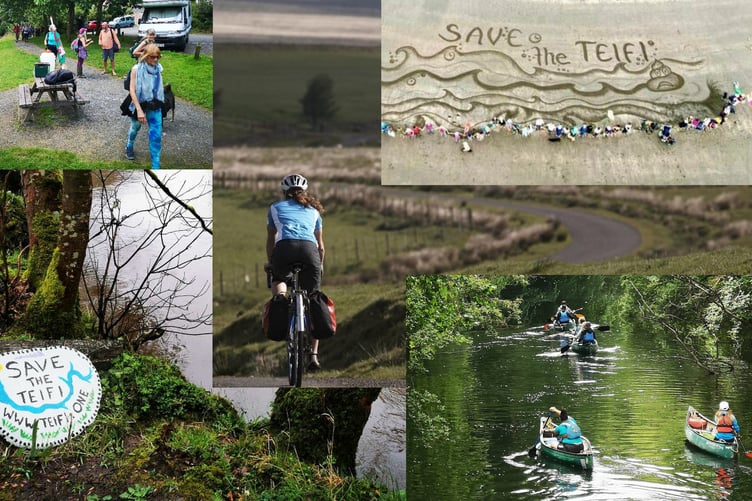
The river Teifi has topped the charts as the poopiest waterway in all of England and Wales.
Statistics from the Top of the Poops website reveal that the winding river has won the accolade for the highest number of hours of untreated sewage spilt in 2025, up from fifth place last year.
Those hours were spilt across 2,494 occasions - that averages out at seven times a day.


.png?width=209&height=140&crop=209:145,smart&quality=75)
But if you’re feeling left out, fear not, for most of Wales was named in the top 10 poopiest constituencies in England and Wales.
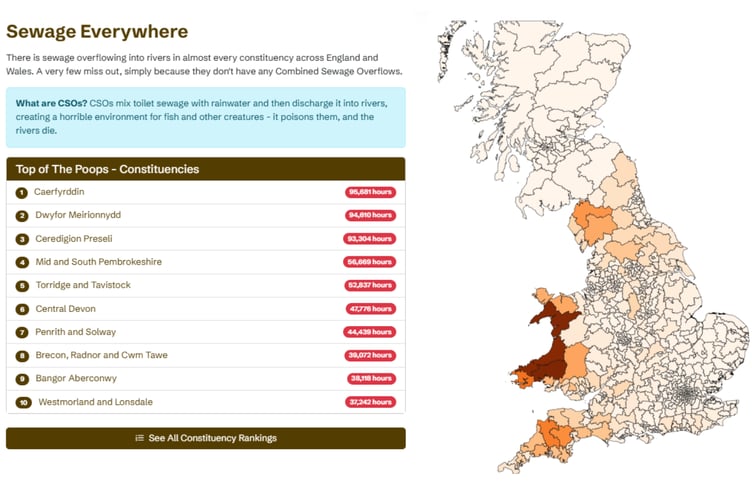
Caerfyrddin ranks top at 95,681 hours of overflow, followed closely by Dwyfor Meirionnydd with 94,610, then Ceredigion Preseli with 93,304.
Fourth is Mid and South Pembrokeshire with 56,669 hours, before a few areas in the Lake District take over.
Brecon, Radnor and Cwm Tawe came eighth, and Bangor Aberconwy ninth.
Chief Executive Officer for West Wales River Trust, Harriet Alvis, described the findings as “incredibly disheartening”, calling for authorities to give wildlife a chance: “If given a choice, fish and other riverine species can, and will, recover.
“At present, they are not being given the chance due to the volume of pollutants entering watercourses from sewerage, agriculture, industry and other sources.”
The Top of the Poops data shows when raw untreated sewage is being spilt into our waterways, a practice which is legal up to a point.
Water companies are allowed to spill sewage into our waterways during periods of exceptional rainfall.
In Wales, this is deemed as rainfall greater than 4mm per hour.
They’re allowed to do this for up to 1,000 hours.
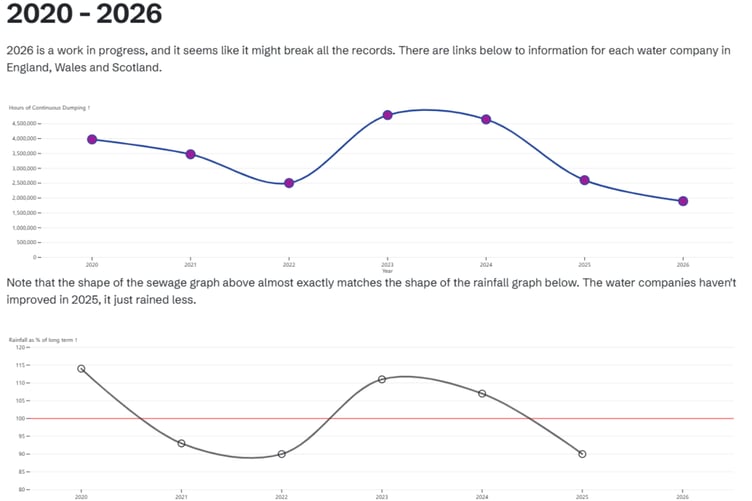
Dŵr Cymru is keen to stress that Wales is one of the wettest places in the UK because of its proximity to the Atlantic, meaning that there will be more spillages because there’s more rainfall.
This goes some way to explain Dŵr Cymru having the highest number of hours of overflow out of any water company for 2025, accounting for 30 per cent of all recorded spills in England and Wales.
However, Dŵr Cymru went over its legal limit for overflow on multiple assets in 2025, despite there being lower rainfall than the year before.
According to analysis from Afonydd Cymru, the umbrella organisation for Welsh river trusts, many sites in West Wales operated outside of their permits, with some spilling for over 5,000 hours.
Afonydd Cymru said these failures were increasingly occurring at wastewater treatment works rather than the wider network, with a spokesperson adding: “It shows the need to have more understanding of what drives the failure of overflows to deliver the right investment decision.
“Ensuring that storm overflows operate only when necessary, and not as a routine occurrence, is critical to protecting the health of Wales’s rivers, wildlife and communities.”
Only last month, Dŵr Cymru was fined a proposed £44.7m after regulator Ofwat found the company had failed to properly operate, maintain and upgrade its wastewater network to cope with levels of sewage and wastewater, including not having proper processes or oversight in place.
Last year, Dŵr Cymru was fined £1.35m, reduced to £120k at appeal, for over 800 breaches of environmental permits to discharge sewage in 2020-21.
In response to the increasingly high-profile cases of environmental misconduct from water companies and widening concerns about the health of their river, a residents' group dubbed Save the Teifi formed three years ago.
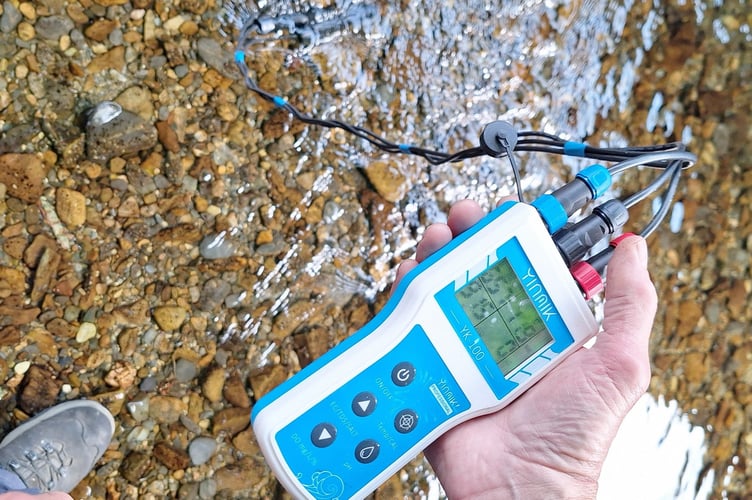
One member said he joined after seeing the sewage pollution reported in the press, and “knowing that so many of our rivers are suffering and need help and support”.
The volunteer, who didn’t want to be named, said: “People say there are far fewer salmon in the Teifi now and fewer sightings of kingfishers.
“There are clearly issues, and I thought this was a good way of making a contribution locally.”
With so little transparency coming from authorities (Dŵr Cymru was criticised last year as part of a court case for holes in their self-reporting system), the group initially set up to understand the issues facing their river.
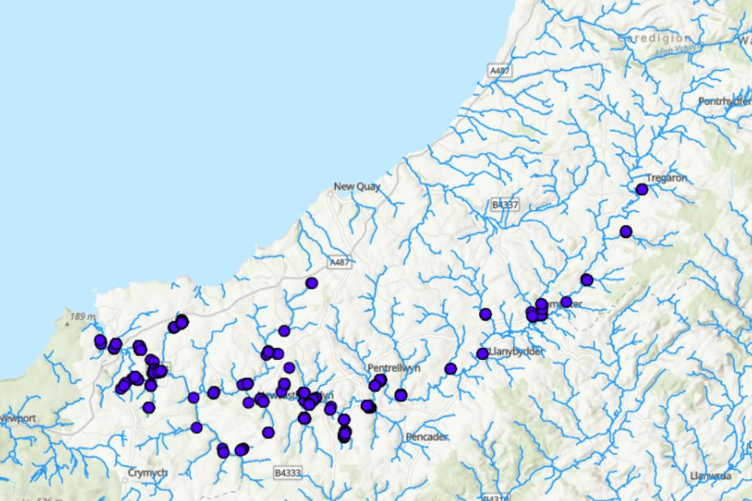
Joining forces with Ceredigion County Council, the volunteer-led group tested the water at spots that weren’t already tested.
The volunteers, including retired academics and swimming groups, did field tests along the Teifi 1,119 times between July 2025 and February 2026.
At Cilgerran and Lower Ceri, the average phosphate levels were above NRW thresholds, even when controlling for outliers, whilst the average levels at Bargod were below NRW’s good target levels, and increasing across time.
Phosphates leak into rivers from both agriculture and raw sewage discharge, causing algal blooms which block out the light in waterways and reduce oxygen levels, causing problems for both wildlife and plants.
A spokesperson for Save the Teifi said: “We want reduced sewage pollution, we want to hold authorities to account, and to get NRW to come out and inspect after pollution events.
“We know high nutrient levels (including phosphate) are stopping houses from being built along the Teifi.
“We want a clean river in which people can feel safe to enter and bathe, without fear of ill health.”
One of the simplest things the group is calling for is signage to be placed at discharge points along the river: “Even the treated sewage is undrinkable.
“There should be some sort of warning to say where sewage is coming out.”
In response to this, Dŵr Cymru pointed to their near-real-time online map.

Though these measurements and the health of the Teifi are cause for concern, another reason for west Wales’ poop-status is its setup.
Rural communities will have lots of small sewage sites dotted around to service the spread out population, whereas cities are more likely to have a few large sewage sites serving a concentrated population. This means the number of hours of overflow will be greater in rural areas because more sites are overflowing.
But one thing the Top of the Poops data doesn’t measure is volume of discharge, which is likely to be a lot less at the many small sewage sites along the Teifi than the volumes coming out of city-sized plants.
Dŵr Cymru has committed to a huge level of investment (£4.2 billion) to do much-needed improvements to its assets, along with an additional £2.5 billion dedicated to environmental improvements.
A Dŵr Cymru spokesperson added: “Welsh government policy focuses on tackling storm overflows causing environmental harm first, as opposed to reducing the frequency of spills.
“This allows us to go further and faster to improve river and coastal water quality.
“We are investing £68m within the Teifi catchment between 2025-30 to enhance our wastewater treatment, with the focus firmly on where improvements are most needed.
“The data shows a direct link between rainfall levels and storm overflow activations.
“As a country on the western side of the UK, we have high levels of rainfall and are seeing an increase in severe events linked to climate change.”
Comments
This article has no comments yet. Be the first to leave a comment.