

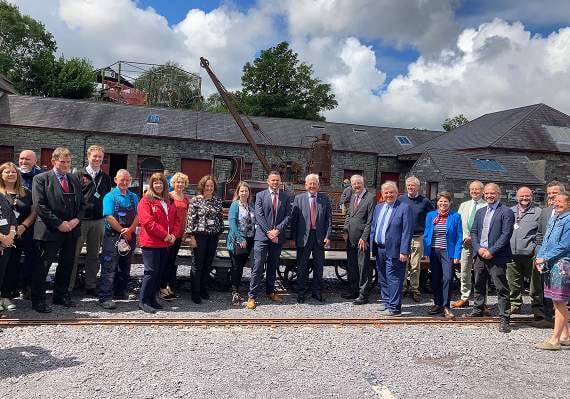
While Gwynedd slate once roofed the world, what was then the region’s dominant industry now employs a mere fraction compared to its 19th century heyday.
But Wednesday’s awarding of UNESCO World Heritage Status to the landscape that towers over communities across the North West has prompted fresh hopes that resulting global interest could prompt an economic boom.
Lord Dafydd Wigley, who chaired the Wales Slate Partnership Steering Group, paid tribute to those who persevered with the bid.
“The success is the culmination of over 10 years’ work, led by Gwynedd Council but involving local businesses and communities who see the opportunity to gain a worldwide profile and that this will help attract people from overseas,” he said.
.jpeg?width=209&height=140&crop=209:145,smart&quality=75)

“It raises the profile of the area, not only in terms of industry and the slates that were exported, but in terms of the technology we also exported to the world as well as the skills of the people.
“Also, the culture that goes along with it, the slate quarrying industry helped mould the culture of this area, linguistically in terms of music and drama and art, there’s such a range of culture that has its roots in the slate quarrying communities and getting that better known around the world is something we hope will be of benefit to the whole of Wales.”
Wales office minister David TC Davies MP described Wednesday’s announcement as “brilliant news for North Wales” and said the region would benefit from a tourism boost following a “terrible” time for the industry.
Shadow minister for North Wales, Darren Millar MS added: “The decision will help attract visitors, boost investment, and create jobs in the region and adds yet another feather to Wales’ cap as a significant cultural exporter on the world stage.”
However, a language pressure group fear it will add to an existing “over tourism” issue in “honey pot” areas of Gwynedd.
Cylch yr Iaith said: “The experience of other areas within the county shows how the character and language of a community are changed as a result of incompatible tourism developments.
“Whatever the hope of the county council, it must be honestly acknowledged that gaining World Heritage Site status would increase tourism to the areas concerned.”
Welcoming UNESCO’s decision, council leader Dyfrig Siencyn believes such status will provide a confidence boost for communities across the county.
“It’s very important that the whole project is based on what the communities want and there’s an important role for young people to not only realise their history but to also move ahead with a thriving and prosperous future,” he said.
“I think it also ties in with our principles of sustainable tourism because we hope to attract people who are interested in our culture, language and history, and to see how we have adapted to a new future. I’m very optimistic.”
First Minister Mark Drakeford, also in Llanberis for Wednesday’s announcement, was equally optimistic.
“In terms of tourism, I think it emphasises the need for sustainable tourism, tourists who’ll come to this part of Wales because of its history, who want to respect the landscape and leave the area in a state that future generations who come after us will also be able to see, enjoy and respect.
“It’s positive change, it will lead to investment, the Welsh Government has significant plans to build on the platform that’s been created today, but I think it does put an emphasis on a tourism that respects the nature of the place that people are visiting.
“This world recognition, I think, puts extra emphasis not just on tourism itself but on the nature of tourism and the sorts of people we want to attract to come but also respect what this part of Wales has to offer.”
The successful bid includes six specific areas, namely:
• Penrhyn Slate Quarry and Bethesda, and the Ogwen Valley to Port Penrhyn
• Dinorwig Slate Quarry Mountain Landscape
• Nantlle Valley Slate Quarry Landscape
• Gorseddau and Prince of Wales Slate Quarries, Railways and Mill
• Ffestiniog: its Slate Mines and Quarries, ‘city of slates’ and Railway to Porthmadog
• Bryneglwys Slate Quarry, Abergynolwyn Village and the Talyllyn Railway
Arfon MS Sian Gwenllian said: “I know local people, many of them direct descendants, as am I, of families that depended on the quarrying industry, will feel pride about this announcement.
“We know very well that Arfon’s slate quarries were once an industrial epicentre of the world. Slates from Gwynedd were shipped across the world.
“Little did the local communities of Gwynedd see of the immense wealth generated, and I will be thinking of those generations today.
“As we reflect on the rich history of the area, we won’t just be thinking about the quarrymen, like my great grandfather, but also of their families.”
Comments
This article has no comments yet. Be the first to leave a comment.