

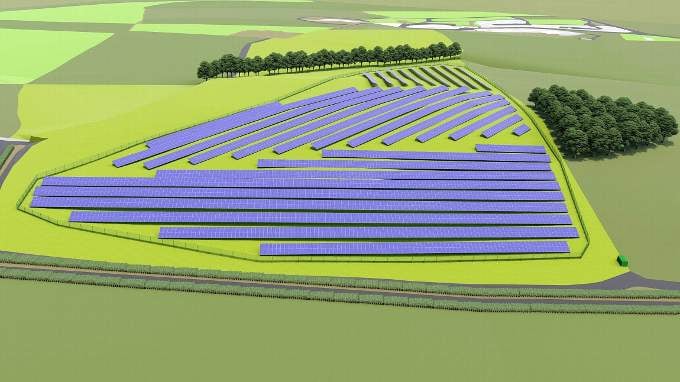
WORK is set to begin early next year on a solar farm that is set to make Aberystwyth University one of the greenest campuses in Wales.
The £2.9m solar array, which will be located on university-owned land adjacent to its Fferm Penglais student accommodation, is expected to cut annual energy bills by over £320,000 and reduce energy related carbon emissions by eight per cent a year.
Work on the project, which is due to begin in February 2022, will see approximately 5,000 solar panels installed across a four-hectare facility.
Aberystwyth will be one of only a handful of universities in the UK to develop its own full scale solar array.



Over the lifetime of the panels, the university is expected to save £18m in electricity costs.
The project is part of wider plans to become carbon neutral by 2030.
Over the last year the university has invested more than £3.4m in energy efficiency projects across the campus including upgrading lighting to more efficient LED models across 14 buildings, installing and optimising Building Energy Management Systems (BEMS) throughout the site, making improvements to pipework insulation in plant rooms, adding new modern freezers and plant growth cabinets to replace inefficient units.
The university has also upgraded its air handling unit in its zoology facility, as well as the lighting across its greenhouses, which are a key energy user due to its research on carbon capture.
In total, the initiatives installed over the last 12 months will save £350,000 a year and 900 tonnes of carbon dioxide.
These projects have been made possible thanks to funding from Salix Finance in partnership with Welsh Government, which provides interest-free loans to the public sector to invest in energy efficient technologies.
The university has received over £1.8m of funding from Salix, with the remainder of the projects being financed through a combination of the university’s own capital and a grant from the Higher Education Funding Council for Wales (HEFCW).
The Salix loans will be paid back over a period of several years from the savings made on the university’s energy bills.
Comments
This article has no comments yet. Be the first to leave a comment.