

Every year, around 30,000 students domiciled in Wales graduate from undergraduate University courses across the UK. Around half of these students will graduate in universities outside Wales.
Many people don’t realise the challenge lots of these students face when they want to get a job that’s remotely relevant to what they studied.
The recent economic crisis and the concurrent AI boom have drastically reduced the number of entry-level vacancies and several employers are either coming out of hiring freezes, or still have them.
There are lots of reasons for this beyond AI and the state of the economic post-Covid, and I will try to touch on as many as possible.

Not many people will want to admit this, but there are simply too many students enrolled at universities. Tony Blair wanted as many young people as possible to go to university and other higher education institutions, without regard for the fact that many young people’s best pathway to employment is via apprenticeship and hands-on training with employers.
Having spent four years studying biology at University, I can say with confidence that a disturbingly high proportion of undergraduates only go to university to have three years of subsidised drinking and clubbing. They turn up to lectures for the first week of term, never to be seen again.
And this was in a science course. I can only imagine what the so-called “Mickey Mouse degree” courses were like.
Lots of courses that universities offer as degrees simply shouldn’t be. Creative arts, for example. I can appreciate a good song or painting, but they shouldn’t be fully-fledged degrees. Look through any university’s offering and you will almost certainly find courses that are either not academic in nature whatsoever, or which are valuable but can be better taught in a vocational or workplace environment. A third category perhaps exists which is subjects that are nominally academic but which are of no real use in finding a relevant job, such as media studies, creating writing and music.
To de-saturate the labour market, the government and schools need to make more prominent the alternative courses that students can take to find stable, rewarding employment at a young age.



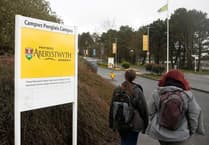
Some of the most successful young people I know are those who didn’t go to university, and instead pursued skilled trades, started at entry-level hospitality roles and climbed the ladder, and two people I know became cabin crew members at major airlines. They’re certainly doing better than me at the moment!
I know this probably comes across as me coping with the fact that I’m yet to have had a job offer from several applications, and perhaps it is, but we are in a situation where tens of thousands of graduates every year are polishing their CVs, meeting with careers advisors, and applying to several jobs every week, only to get completely ignored, fail to get to interview, or, in some cases, actually get interviewed and fall at the last hurdle.
This isn’t all the employers’ fault. They have business interests and we shouldn’t expect them to hire way more staff than they need at a given time.
What needs to happen will be difficult and take years, but starts with acknowledging what’s actually going wrong for young people today, not pretending that everything is fine.
This ties nicely into the need to keep young Welsh talent in Wales, but sadly that will have to be another column for another day.
Comments
We've recently changed our login process. If you have an account for commenting, you will need to re-register on the login window.
This article has no comments yet. Be the first to leave a comment.