
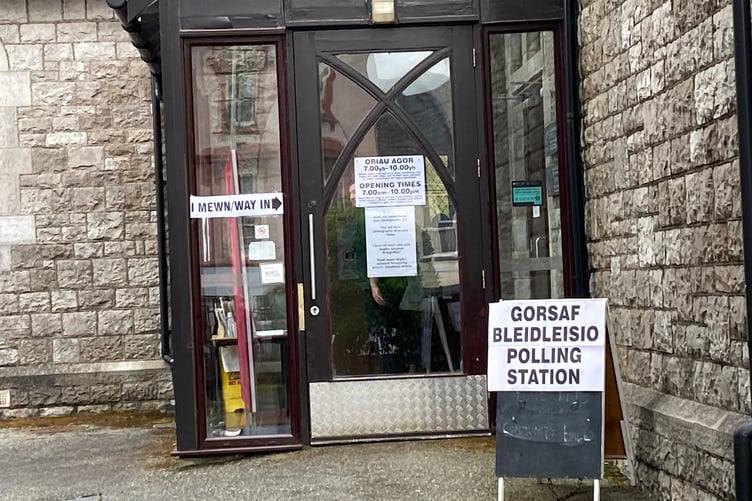
A stitch in time saves nine. That’s how I was brought up. There are so many policies where this principle should be applied. If I could wave a magic wand, I’d sort things tomorrow. But we live in the real world. I’ve been to hustings during the election campaign, listened to broadcasts and have had numerous conversations on doorsteps and with the public on street-stalls, and one thing’s certain, the electorate doesn’t buy badly costed promises.
I’d like to see prevention of problems far higher on the political agenda than it is for most parties. Before offering some examples, I shall state that most of this will take initial investment before we reap the benefits. And how to find the funds for these investments is the sixty million dollar question. We can tax more people through raising income tax, unpopular; we can tax the wealthy more, popular with poorer households but sadly unpopular with the wealthy; we can raise VAT on certain products (and while I mention VAT, we definitely have to lower it, even down to zero, on other products such as insulation materials for retrofitting houses); we can create money, governments have been doing it for decades, but I don’t think we should leave our next generations to pick up the pieces of our profligacy; we can spend less on certain elements in society, Reform, Conservatives and even Labour politicians are keen to cut the welfare bill, which I consider misguided and simplistic thinking; we can stop spending on ridiculous projects or at least getting them right in the first place, Aberaeron Harbour springs to mind. I wish to see money not wasted on expensive consultants, the likes of Price Waterhouse Coopers who were called in to advise Ceredigion County Council on how to save money. That little joke costs us, the taxpayers, something like £2million, a job that could and should’ve been done by the council’s own staff.




Here’s a current example. Externiture Ltd is being employed to deliver a review of bus shelters in South West Wales, the first region to have its bus services franchised under the Welsh Government Bus Services (Wales) Act 2026. I have to say that I love the photo used in the Cambrian News which shows the bus ‘shelter’ in Aberaeron, definitely not part of this review. If it was, and these wonderful Externiture experts turn up on a sunny day, they would give that particular shelter a large thumbs-up for being pretty. Turn up on a rainy day and they’ll get a wet bum.
I’ve been giving our local council as well as Transport for Wales, our local Senedd Member and even the Minister, all the information that this expert public transport user can provide, on the state of almost every bus stop in Ceredigion. Not only that, I’ve given them updates on the dreadful information in the shelters and even on the information provided on the buses themselves. Guess what, over the years I haven’t charged them a penny. No need for Externiture Ltd in Ceredigion. My hunch is that there are plenty of well-informed passengers in Pembrokeshire too. And I haven’t even mentioned those well-travelled bus drivers who see the shelters every single journey.
Here’s another way to save money. Let’s make a concerted effort to rid our NHS of agency staff. It has to make more sense to pay permanent staff properly. According to A24 group, “the average A24Group agency nurse currently earns £43.65 per hour (2024 figures).” I checked the current figure for a non-agency nurse. According to ‘Indeed’ the average is £21.80 per hour.
If we can create a ‘Prevention Pot’, made up of money not spent on wasteful things, we can make a start. How about the following ideas.
Talking about the NHS, can we please create dentist contracts that pay better for prevention through regular check-ups and hygienist appointments than for fillings, extractions and other emergency work?
With enough well-paid permanent staff, the NHS, especially in primary care, will be able to treat patients on time before they need costly operations. And please can patients be treated as a whole person, not as bits of machines that are tested to check if they work or not?
I have written a lot before regarding farmers and about obesity due to bad diets. There is a new UK-wide research project called Procurement for Good (PFG). Gareth Owen, research officer at Garden Organic explains that this project has a big question at its core, “What if public money spent on food helped to support local growers, healthy diets and resilient food systems, instead of reinforcing an industrial, globalised model that is failing us?”
Can we create a budget based on and for prevention? Can our young people in our new agricultural college in Lampeter be part of the solution? Of course!
Comments
This article has no comments yet. Be the first to leave a comment.