

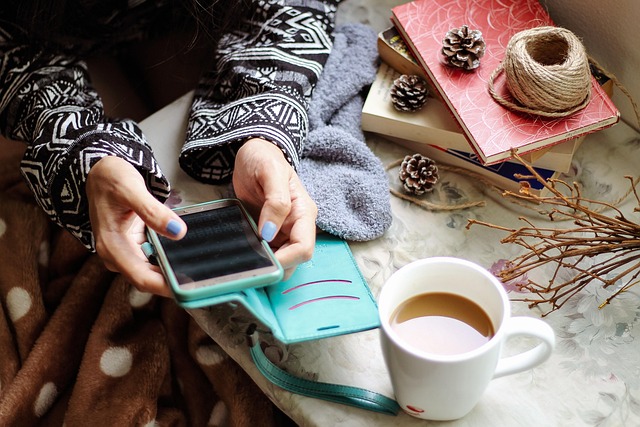
When the social media ban for under-16s was announced I was delighted.
Like many people, I spend far too much time on one platform in particular. Yes, I am addicted to Facebook.
I think it’s fantastic for keeping in touch with friends and family, sharing events, knowledge, helping each other through good times and bad. We can learn so much on it, but it’s designed to be addictive and so it has become. I don’t want the same for our youngsters.
It’s an addiction I’ve been tackling with some success because when, as in my case, your daughter looks at you and asks you to put you phone down, you really need to listen.
I’ve thrown myself into doing even more activities with her to distract myself from social media and show her there’s more to life.
I’ve returned to reading, which I love, joined gym classes, which I’m learning to love, and started spending more time outdoors with my phone safely stored away in my bag.
It’s hard not to reach for it – I’m worried I’ll miss something important – but I’m enjoying the free time and want to set a good example for my daughter who, as I mentioned in a previous column, does not - and will not if I have anything to do with it - have a device of her own for many more years on which to access social media.
So yes, I was delighted when the under-16 ban was announced. I’ve seen what it’s done to me and my free time, and I’ve read about its effect on children. From cyberbullying to doom scrolling, impact on mood and sleep, exposure to strangers and harmful content, etc. The ban is surely a good thing.
But then, ironically, I looked at social media and wondered if I had been hoodwinked.
Rather than seeing swathes of posts welcoming the ban, I was met with many condemning it.




Some say it will be too difficult to enforce, others that it will lead to unregulated sites and even more dangerous situations, and many are convinced it was never about protecting our children, and this is merely a way to introduce digital id for all.
In a bid to find out more, I’ve read many press releases we’ve received here about the ban. This quote from Dr Christopher Snowdon of the Institute of Economic Affairs stood out for me. He said: "We must stop judging new legislation by the good intentions of its advocates rather than its likely consequences. We know from Australia that most teenagers will get around the ban and those who are not able to do so will suffer from social isolation.
"There are legitimate concerns about screen addiction among both children and adults, but parents are already able to restrict what their children see online and limit the number of hours they can use a smartphone. These guardrails are removed when kids log in via VPNs or sign up to platforms as adults.
"What the government is trying to do is reminiscent of attempts to ban the printing press. It is similarly impractical, illiberal and ultimately undesirable."
Oh…
But this, from the Institute for Public Policy Research (IPPR), reminds me why I agree with it.
The IPPR calls for a blanket ban on social media for under-16s, arguing that the debate must move beyond harmful content alone. It says interaction between platform features and critical stages of child and adolescent development is swallowing up childhood. Young people's identities are increasingly shaped by the rise and fall of likes, followers and Snapchat streaks, while every joke, insecurity and mistake can be documented, judged and shared, fuelling rising anxiety.
The researchers say claims that a ban would be paternalistic, or an attack on personal freedom, ignore the reality of existing protections for children. The UK already prohibits children from gambling, drinking alcohol and driving, they note. They argue there is nothing liberating about exposing young people to algorithms designed to capture, retain and monetise their attention.
Avnee Morjaria, associate director at IPPR, and former teacher, said: “Having spent years teaching in secondary schools, I saw first-hand how childhood has changed. More and more of children’s lives are now lived through screens. Previous generations had the freedom to make mistakes, experiment and move on. Today’s children are growing up under constant scrutiny, where every insecurity can be amplified and every mistake permanently recorded.
“A blanket social media ban for under-16s is the only effective option. Not because technology is inherently bad, but because we are allowing childhood itself to be shaped for the worse by algorithms. Childhood should be defined by real-world experiences, friendships and opportunities to grow, not by an endless competition for attention and approval. The greatest loss of the smartphone age is not privacy; it’s childhood itself.”
I would say, to my shame, that motherhood may have gone the same way for a while, but not any more. I’ve banned my daughter from using social media and I’ve restricted my use of it too so, if you need me for work, maybe don’t DM me, email the usual address.
Comments
We've recently changed our login process. If you have an account for commenting, you will need to re-register on the login window.
This article has no comments yet. Be the first to leave a comment.