
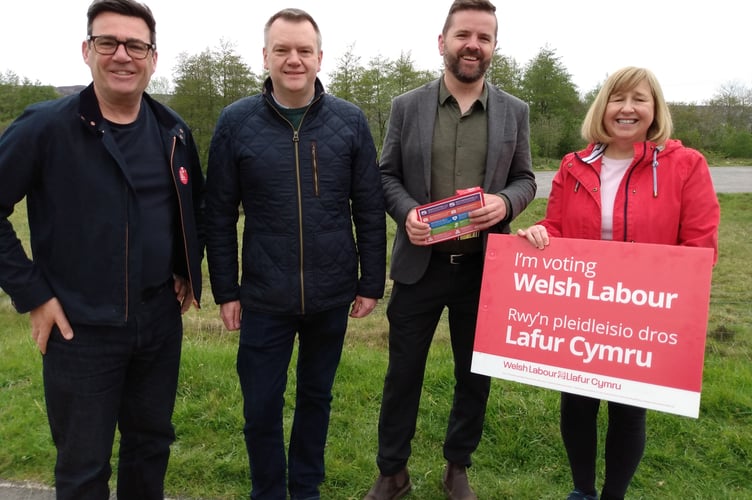
Andy Burnham is now the seventh UK Prime Minister in 10 years. Without a single vote being cast by any Labour members, let alone the public, the man who was not even an MP until mid-June is now in charge of the UK.
Many people had high hopes for what Burnham might do for Wales and for devolution. I never had high hopes for him, and on day one, I was proved correct.
In England, Andy Burnham is seen as one of devolution’s biggest advocates. Having been mayor of Greater Manchester for nine years and pushing for more power for the North of England when in office, it wouldn’t have been unreasonable to expect a similar attitude towards Wales, but in the leadup to his takeover, he gave no indication of this.

And my suspicions were confirmed when he appointed Stephen Kinnock as his Secretary of State for Wales.
Stephen Kinnock has been quiet on the devolution debate, but is undoubtedly more aligned with Westminster than Wales, purely by virtue of his cabinet history. His father, Neil was, on the other hand, one of the staunchest voices against devolution during his time as Labour leader. Will this have any bearing? Maybe.
Let’s be clear: the bar for a pro-Wales Secretary of State is vanishingly low. Outgoing Secretary Jo Stevens was probably the least pro-devolution office holder in the last 30 years, and her Conservative predecessors weren’t much better.
The Wales Office has been reduced to merely being another voice of Westminster in Wales, even during the short-lived ‘partnership in power’ era.
The last time the Welsh Government gained additional powers was in 2017, when the Wales Act 2017 was enacted, having been introduced by Alun Cairns and the Conservative Government.

.png?width=209&height=140&crop=209:145,smart&quality=75)

Two years into a Labour government which was elected on the promise of more powers, or at least consideration of them, and we haven’t come close to even the drafting of an act which would provide any, and it seems now that Labour are out of the Welsh Government that we are further away from additional control than we have been in a long time.
So what should we expect going forward?
For Wales, nothing, really. We might see a slight softening of the Starmerite attitude towards Wales, but more powers? Very unlikely. It’s even less likely that any change we do see (from Westminster) will be perceivable to most people. We risk being left behind and forgotten even more than we are already.
In England, there will almost certainly be an expansion of regional mayors and the powers of combined authorities, especially in the North, and a more general divergence in policy between different parts of the country. An acknowledgment, perhaps, that different areas face different challenges and have different needs.
It’s possible, of course, that I could be wrong. We should give Burnham and Kinnock a chance, but as was warned in May of the Plaid Cymru Welsh Government, the honeymoon period will be very short. People will be expecting to feel changes very quickly.
The most important thing, before all else, is that the Welsh and UK Governments can find at least some common ground. The people of Wales should come well before any sort of political or partisan interests.
Comments
This article has no comments yet. Be the first to leave a comment.