

THE average house price in Ceredigion is more than £40,000 higher than the national average, new figures have revealed.
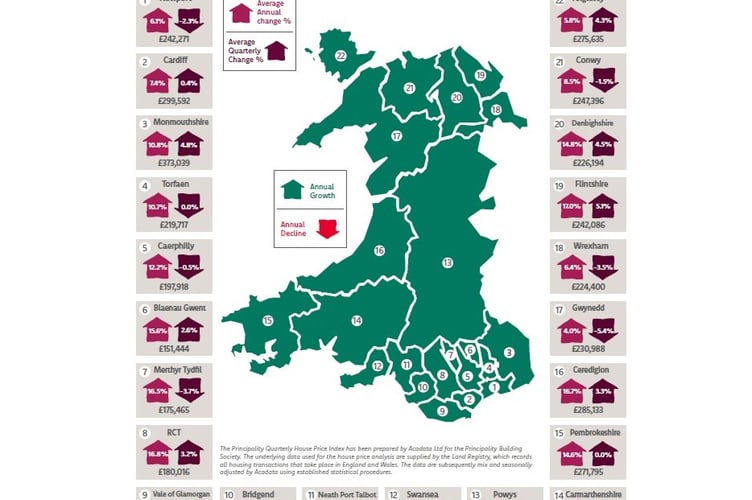
House prices in Ceredigion have risen by the highest rate across west Wales at 16.7 per cent annually in the third quarter of 2022 (July-September), to reach a new peak price of £285,133.
The figures have been released from Principality Building Society’s Wales House Price Index for Q3 2022, which demonstrates the rise and fall in house prices in each of the 22 local authorities in Wales.
Ceredigion’s annual double digit percentage rise is coupled with a moderate quarterly rise of 3.3 per cent.


Carmarthenshire also experienced a new peak price in Q3 of £224,914 reflected in a 10.5% annual increase but a modest 0.4 per cent quarterly rise.
While Pembrokeshire recorded a strong 14.6 per cent increase when compared to this time last year to reach a new average price of £271,795, there was no change over the last quarter.
House prices in Gwynedd have dropped in the last quarter by 5.4 per cent, with prices currently four per cent higher than they were this time last year, with the average house costing £230,988.
The average house in Powys now costs £278,582 with a 0.1 per cent increase in the last quarter, meaning houses are 13.4 per cent dearer now than they were last year.
Shaun Middleton, Head of Distribution at Principality Building Society, said: “It is slightly strange talking about house prices in Wales reaching new peaks when so much has happened at the end of the third quarter with the UK government mini-budget and continued cost of living pressures. Transaction levels remained relatively strong over the third quarter, helped in part by buyers wishing to complete their house purchase with the attractive mortgage deals they had previously secured.
“With interest rates surging higher, meaning repayments on mortgages will become much more costly per month, the market faces significant challenges in the immediate future. Even though the Welsh Government has increased the Land Transaction Tax threshold from £180,000 to £225,000 in a bid to support first time buyers and those wishing to move homes, affordability will come under considerable pressure, which could mean that purchasing demand will reduce.”
Principality’s Wales House Price Index estimates there were as many as 12,400 transactions in Wales in Q3, 13 per cent higher than in Q2 and one per cent lower than a year ago, but on a par with corresponding pre-Covid (Q3 2019) levels. Average figures show that sales of detached homes have increased 11% annually, while semi-detached and terraced properties have increased 13-14 per cent annually. In contrast, flat sales report just a 1% increase year-on-year.
Shaun Middleton continued: “It must be remembered that higher energy costs and general rises in cost of living are increasing overall household expenditure which will have to be factored into mortgage lenders calculations when assessing borrowers’ ability to repay. This will reduce the amount lenders are able to loan to the borrower, make it even harder for first time buyers to obtain a mortgage and will also mean many people will be unable to obtain the bigger mortgage they need to move to their next home. For this reason, many are predicting a decline in house price inflation. However, there are many unknowns at this stage.
“A lot does depend on any potential government interventions, as well as, of course, on the actions of the Bank of England with regards to future rate rises. By the time of the fourth quarter report, there will hopefully be more clarity on what the outlook is for property prices.”
For more information go to: www.principality.co.uk/mortgages/house-price-index
Comments
This article has no comments yet. Be the first to leave a comment.