
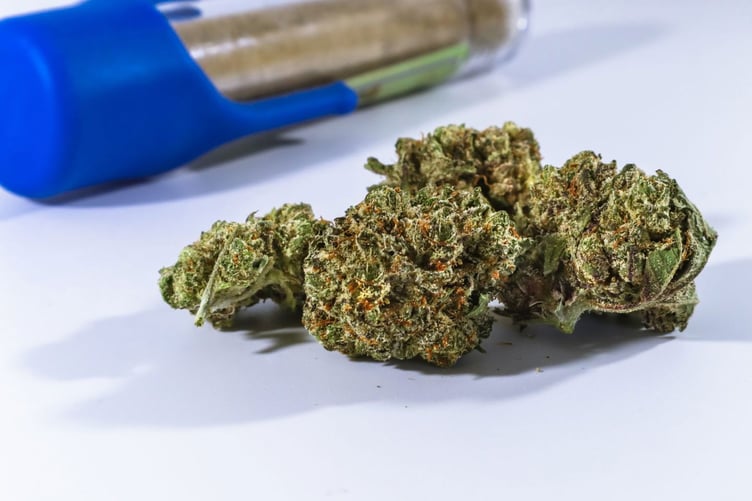
England and Wales have had legal medical cannabis since 2018. As of 2026 there are an estimated 90,000 patients across the UK quietly and legally treating their various conditions with prescription cannabis-medicines. However, if you read the local headlines regularly, you're more likely to see articles about black market cannabis busts and illicit farms.
This situation creates many misconceptions about medical cannabis and the law, particularly in rural Wales and other more isolated parts of the country where access isn't as easy or prevalent. This is what you need to know about medical cannabis and the law in Gwynedd.
Medical Cannabis is Available in Wales but Awareness and Access is Scattered
While the UK's medical cannabis market is growing steadily, patient uptake remains limited in Wales. The two main reasons are, arguably, the very limited access on the NHS, and the potential stigma and misunderstandings that come with lack of awareness.
Cannabis-based medicines are not currently available for prescription on the NHS, because they are not widely licensed by the NHS' medicines regulator NICE (National Institute for Health and Care Excellence). They have only been prescribed on very few occasions by the NHS since 2018, despite it being completely legal for them to do so - if NICE licensed them. So, patients have turned to the private sector.
Although growth has been modest compared to America or even a European market like Germany, the sector is growing steadily. Many industry projections put the number of patients at 100,000 or more by the end of 2026, which is adding several thousand patients a month.
Despite all the guidance and the growth of the medical cannabis sector across the UK, there are still many misconceptions about what treatment entails.
For example, many people who are potentially interested ask "can you drive on medical cannabis?" This is a common question that a respected private clinic will be able to answer for you whether in an online resource or through a qualified clinician in a consultation. Prescribing doctors are required to understand the field deeply, to run prospective patients through the process from consultation to prescription and delivery.
The simple answer, by the way, is yes you can drive while treating with medical cannabis. However, there are caveats. The law is designed to accommodate for people taking prescribed medications while going about daily activities, within their judgement of impairment.
For example, a patient that dosed the previous night would fail a roadside cannabis test if asked to do one the next morning. However, as a prescribed medication, if the patient does not feel, appear or act impaired then the result of the test does not matter legally.
 Gear up for Christmas: Affordable seasonal hiring solutions for local businesses
 Frights and delights this spooky season with these incredible Halloween events
 £435k Snowdonia cottage with stunning sea views on the market
 Get Christmas Advertising wrapped up with our 13 week Business Accelerator Packages
 Another common misconception is how medical cannabis is administered. You won't find medical cannabis patients smoking joints in Bangor town centre - because smoking cannabis remains illegal and prescribed flower has to be vaped with certified medical devices.
Stigma Remains Amid Black Market Crackdown, Even as Evidence Mounts Up
These kinds of stigma can be difficult for medical cannabis patients in Wales - many of whom report significant quality of life benefits after beginning treatment. Although the law protects them, when not everyone is aware of the facts patients can still face scrutiny at work or from police. Local headlines about black market farms in Caernarfon and police crackdowns probably don't help the public image of medical cannabis.
The data however, tells a different story. While large scale clinical studies sometimes have mixed conclusions for certain conditions, patient-led studies and reported data from UK patients are overwhelmingly positive for medical cannabis' efficacy.
In Gwynedd in particular, which is policed by North Wales Police, officers may be more aware than some areas of England and Wales. Former regional Police and Crime Commissioner Arfon Jones has long supported the expansion of medical cannabis.
Given the opinion of their not long ago Commissioner, it is likely North Wales police will be aware of the recent national guidance issued to police forces regarding medical cannabis. It is now, or should be, national policy for police to treat those presenting cannabis prescriptions as legitimate patients unless confirmed otherwise.
Local Politicians and the National Picture
The local Members of Parliament for the Gwynedd district are Labour's Claire Hughes and Plaid Cymru's Liz Saville Roberts. While both parties support medical cannabis to varying degrees, their exact policies represent a split in the national picture.
The Labour government has not made medical cannabis much of a priority under either Keir Starmer or Andy Burnham so far. There has been little pressure on NICE to expand NHS prescriptions. However, it has broadly left the private medical cannabis sector alone and clinics have continued to expand over this time.
Plaid Cymru however, has for a long time publicly held the position of decriminalization or even a completely legal market for cannabis. How this would effect the medical market is unclear. Liz Saville Roberts has even spoken in Westminster about the possibility, which she says could raise billions in taxes.
Neither Welsh Labour nor the national party under Andy Burnham, despite some social media rumors this year, openly supports large-scale reform to the current system.
Comments
This article has no comments yet. Be the first to leave a comment.