
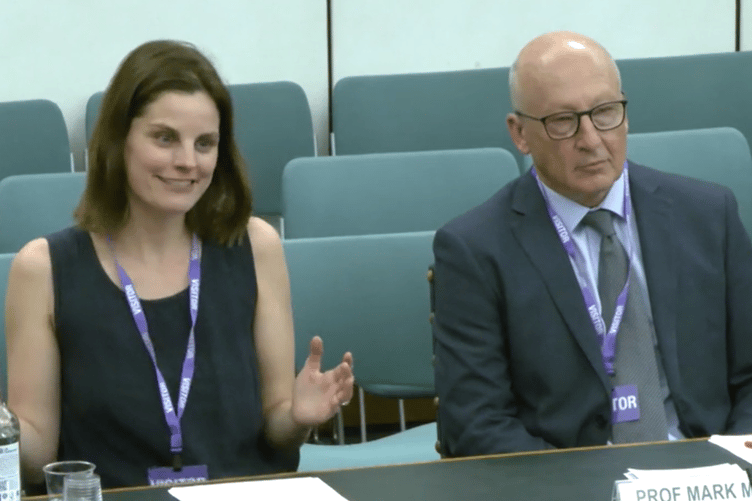
During a Welsh Affairs Committee in Westminster on 1 July, Welsh MPs heard the extent of the unaddressed problem in Wales.
Instead of rolling out systematic testing similar to the US to measure lead levels in the population, Professor Mark Macklin, who has studied this issue for 40 years, said that for the majority of his career his calls to UK authorities have fallen on deaf ears.
However Financial Times journalist Laura Hughes, who also presented evidence to the committee, reported a child who lost their life due to unaddressed lead contamination in the UK - both called on authorities to roll out a mapping exercise and testing of communities who may be exposed to lead contamination.
The investigative journalist, who plotted her discoveries on the three-episode podcast Untold: Toxic Legacy, spoke of a mother whose daughter's gums turned green: “I’ve spoken to parents whose children have become very, very sick.
“It’s my belief that because we don’t screen anyone for lead levels, that there will be many people out there who aren’t reaching their full potential and suffering health-wise as a consequence of something that we have decided to bury our heads over.”
The World Health Organisation (WHO) designates that no level of lead in our bodies is without harm, but with no system for informing the communities who may be exposed to lead on a daily basis, the panel stated that many will be living with the health consequences of lead ingestion without realising it.
Lead poisoning can cause death, with children most at risk, linked to intellectual disability and behavioural problems, with high exposure leading to brain and nervous system damage.
However the problem is not as simple as stopping the closed mines from leaking into the environment.



The committee heard from Professor Macklin of Lincoln University, who lives in Ceredigion, that the UK was one of the first industrialised nations, with unregulated heavy metal mining going back hundreds of years.
Professor Macklin described lead as the “original forever chemical”, remaining where it lies in soils for hundreds of years, and accumulating in the bodies of those who inadvertently consume the toxic metal.
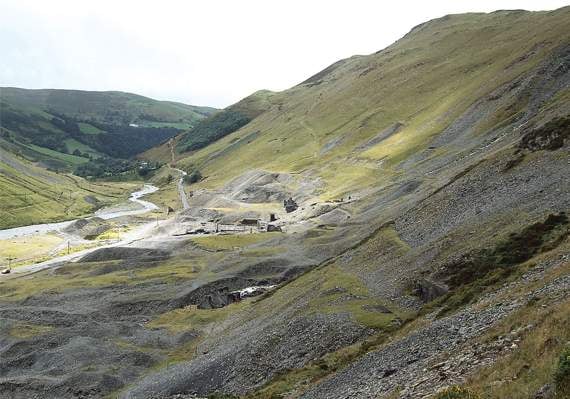
With approximately 2,300 lead mines in Wales, the damage doesn’t stop at the mines - where few plants grow, no fish live in the river, and many men died during the mines' active years.
The lead is washed downstream through water channels and rivers, deposited in the flatter lands and floodplains that many call home, including the entire downstream catchment of the Ystwyth River from the Cwmystwyth mine to Aberystwyth, and from Dylife mine to the Dyfi River.
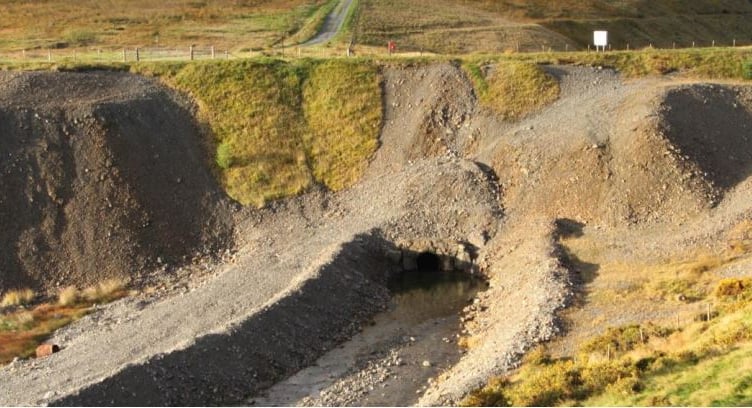
This means the scale of contaminated land is significantly bigger than the mine sites themselves, with Professor Macklin’s research estimating 140km² of land is potentially contaminated in Wales - the equivalent of 14,000 rugby pitches.
He said to the committee: “What we’ve been doing for the last 25 years is struggling to convince regulators that this is a two-part problem - the mines themselves, and the channels and floodplains downstream where people grow their crops, have their allotments, graze their chickens and eat contaminated eggs.”
His research included a 2012 study on Aberystwyth cattle that died from lead poisoning after eating silage that had been cut shortly after a flood, which had remobilised the lead and contaminated the plant matter.
Other studies have found poultry are particularly susceptible to lead, with one study finding eggs from two farms downstream of lead mines in west Wales contained lead levels so high that if a child were to regularly eat one or two of them, they would become severely cognitively impaired.
Ms Hughes pointed to a severe lack of regulation, with there being no guidance on safe lead levels in eggs.
The lack of regulation, testing or remediation also means GPs aren’t aware to test for lead when children present with such issues, Ms Hughes highlighting that very little food is tested for lead in the UK, there is no signage on mines stating that it may be dangerous to play on the mines, no warnings for communities living downstream to not grow vegetables or keep poultry, and no system for warning GPs of potential risk areas.
She found residents who had used the spoil from mine tips as gravel on their driveways because it stopped weeds, and letting their children ride bikes over the spoil tips: “There is a total complete and utter lack of information sharing.
“If doctors knew their patients were living on potentially contaminated soil, it enables you to think differently - if a child presents with anaemia, struggles with sleep, has stomach problems, do a lead test.
“Because no one is testing anything, no one knows anything.”
Whilst remediation of some of the worst affected mines themselves is in progress to “turn off the taps”, this is slow and expensive.
Professor Macklin argued the risk maps that could be adopted, similar to flood risk maps used when someone looks to purchase property, which would be relatively cheap and quick to set up: “There is a saying that no one is a prophet in their own land.
“Our work is used worldwide, from South America to Eastern Europe; they use our methodology.
“In terms of Wales and the UK, although we have drafted a lot of policy documentation, we haven’t got it over the line in terms of risk maps we’ve developed...
“We have this information at our fingertips; we need to transfer it into a risk management system.
“For the same cost to clean up one mine, this mapping and management tool could be rolled out across Wales.
“In the short term it would get us to a much better place... a nationwide ‘heads up’.
“Wales could be ahead of the game internationally in terms of the Future Generations Act; we could export both the mine remediation strategies and map methodology worldwide.
“We could make a virtue out of this; we just need to join things up.”
The pair pointed to the lack of responsibility for the mines as a reason for the reluctance to address it, being an expensive issue that no one group is truly responsible for. The old mines themselves are “orphaned”. Natural Resources Wales (NRW) protects waterways whilst local authorities, with limited resources, are responsible for land contamination.
With Professor Macklin naming climate change as a factor that will make this lead contamination issue worse, causing more flooding in the country that will “remobilise” these lead particles, as in the 2012 floods which killed the cattle, the issue is a pressing concern.
Ceredigion MP Ben Lake, Caerfyrddin MP Ann Davies and Montgomeryshire and Glyndŵr MP Steve Witherden were amongst those who attended the session, with Witherden stating afterwards: “I have long held concerns about whether the funding of NRW and the Mining Remediation Authority is sufficient for them to carry out the full extent of their duties.
“It is one thing to identify contaminated land, and another to do anything about it.
“As usual, the public is forced to foot the bill that the polluter should have paid.”
Comments
We've recently changed our login process. If you have an account for commenting, you will need to re-register on the login window.
This article has no comments yet. Be the first to leave a comment.