

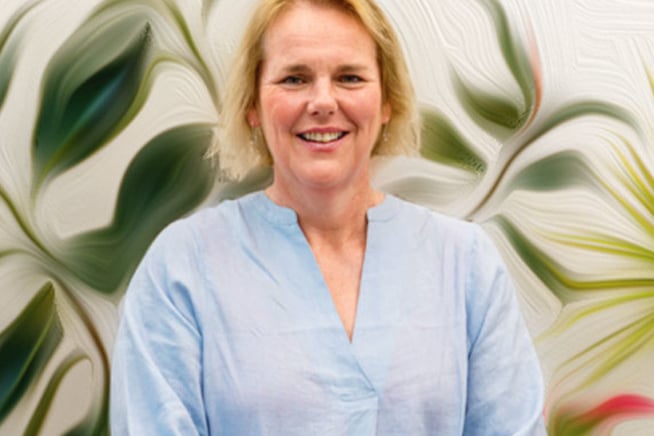
‘It’s now do or die’, says church leader ahead of meeting in Porthmadog to safeguard the future of the Presbyterian Church.
The General Assembly of the Presbyterian Church of Wales (PCW) will meet in Porthmadog on Monday and Tuesday, 6 and 7 July.
The main item on the agenda will determine its destiny for the next 10 years.
Facing an eight per cent annual decline in its membership since 2020, the General Assembly will have the chance to give the green light to a comprehensive restructuring strategy. With a total membership of 11,430, across 443 local churches, and only 275 members under the age of 25, the PCW has spent the last 12 months consulting its members about the future.



Responses were gathered from across the denomination, including the Associations in the North, South, and East, Boards, Departments, and the Wrexham Conference held earlier this year. It has resulted in a unified roadmap for the Church’s future. The proposed strategy includes these key recommendations include placing local congregations at the centre of worship, mission, and community witness, recognising the challenges faced by smaller, elderly, or pastorless rural congregations, reimagining Regional Leadership, streamlining governance and slashing red tape, and treating buildings as opportunities for mission rather than just liabilities.
The PCW also want to cultivate innovation and pioneer projects and, to prevent duplication, trial the "clustering" of various Boards, Departments, and Committees (including Children & Youth, Mission, and Women’s work). Additionally, the Church will introduce minimal constitutional changes initially, using the General Assembly as the joint meeting of the Association to simplify decision-making.
Commenting on the report being presented to the General Assembly, PCW General Secretary Rev Nan Powell Davies said: “The consultation has given both a mandate and a warning.
“It grants permission to continue because there is broad agreement that the present system is too heavy, too opaque, and too thinly resourced for the Church now before us. However, it warns that reform will fail if it is perceived as centralisation, an uncosted administrative exercise, or a withdrawal of support from fragile congregations.
“It’s now do or die for us as a denomination.”
Despite the steep challenges facing the PCW, the report also highlights signs of hope.
Financial statistics returned from individual congregations reveal a substantial combined wealth of just over £21 million, providing a robust financial cushion for future mission work.
There are 626 children attending 67 Sunday Schools, 354 young people attending 24 Youth Clubs, and 1,720 people participating in family services at 81 locations.
Sixteen dedicated Parent and Toddler groups alongside 88 recorded Infant Baptisms are also recorded, as well as 110 churches actively running, helping, or hosting local Foodbanks, and 21 operating as designated Warm Spaces.
The report also identifies 109 "other outreach" initiatives, including community coffee mornings, groups for older people, and neighbourhood lunches.
A comprehensive strategic plan featuring measurable 12-month and three-year goals will be drafted between October 2026 and April 2027. This plan will specifically account for both Welsh and English language contexts, rural settings, and urban centres.
Comments
We've recently changed our login process. If you have an account for commenting, you will need to re-register on the login window.
This article has no comments yet. Be the first to leave a comment.