
Should National Service be reintroduced is a question I found myself asking some of those who experienced it during the 1940, 50s and 60s.
For two of those men, the answer is a resounding yes.
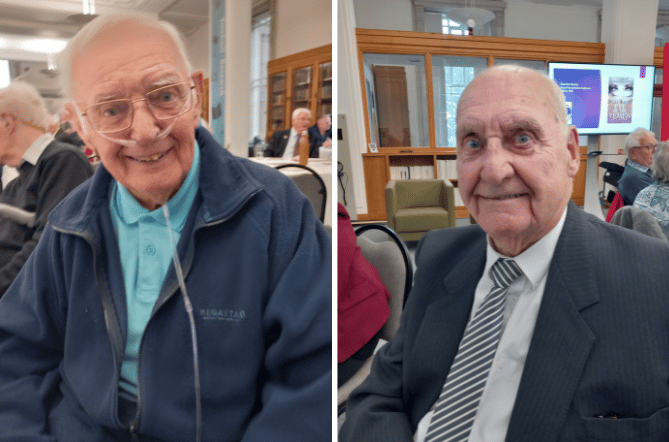
I met William Morris, who lives in Llandysul, and Dennis Aston, from Sarnau, at the National Library of Wales in Aberystwyth. They were there to celebrate the launch of the Wales and National Service (1947-63) project, for which Age Cymru Dyfed sought to save the stories and experiences of former National Servicemen living in the Dyfed, Powys and Pembrokeshire regions, before they are lost forever.
Having successfully applied to the Heritage Lottery Fund for funding, the charity undertook a year-long, bilingual project, to uncover and document the experiences of National Service.
Over the course of interviewing participants, Age Cymru Dyfed’s Field Officers uncovered stories of:
• hand-hand fighting in the trenches in Korea
• living and working in the drenched conditions of hot and humid Malaya
• conflict with EOKA terrorists in Cyprus long before it became the holiday destination we know today
• being human guinea pigs in the H-Bomb tests on Christmas Island
• and more stories of service in Kenya, Malta and Aden.


Closer to home one veteran shared his story of administering vaccinations to the public during the south Wales smallpox epidemic of January 1962. Others served in Germany, Singapore, Hong Kong and many other places.
All these veterans have unique stories to tell, but it should also be remembered that, sadly, some of their National Service friends never made it home.
The interview collection is for people of all ages to access, and it is hoped children will visit make use of the resource too. The People’s Collection Wales and Age Cymru Dyfed are currently developing a digital training materials for schools throughout Wales to learn about National Service. The tool includes a unique interview with National Service Veteran Norman Kenney of Aberystwyth, by 13-year-old Lyra Morgan, a pupil at Penweddig School.
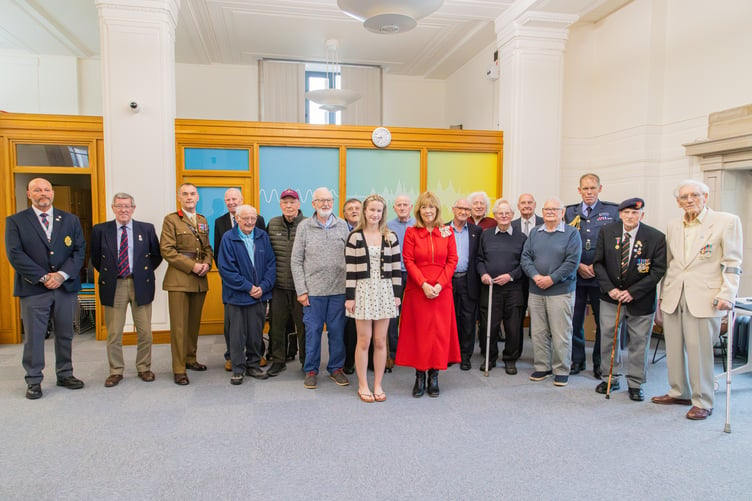
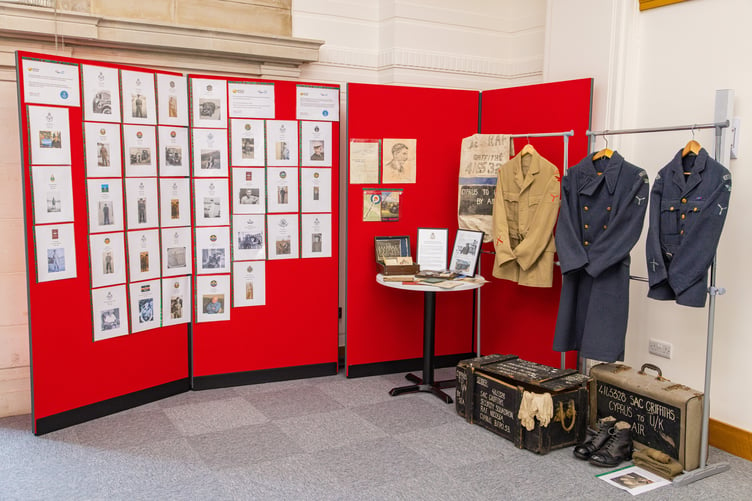
Now in their late 80s and 90s many of those conscripted into National Service over 60 years ago were invited to the project launch on 11 June to celebrate their service and share memories with each other. There was also an opportunity to watch and listen to interviews with National Service veterans filmed by Age Cymru Dyfed.
This remarkable historical event also included the launch of ‘The Lt Col David Mathias DL Collection of Interviews with Veterans of the Great War’. Lt Col Mathias gave a short talk about his interviews with veterans of World War I during the 1980s, with his collection now also being held on Age Cymru Dyfed’s West Wales Veterans Archive, People’s Collection Wales.
Attendees and speakers at the event included Air Officer Wales Air Commodore, Rob Woods OBE DL, Col Sion Walker OBE DL Deputy Commander 160 Brigade, the Lord Lieutenant of Dyfed, Miss Sara Edwards, Dr Owain Rhys Roberts, Director of Collections and Digital Services, and Deputy CEO and Librarian of the National Library of Wales, Peter Hamilton Chair Age Cymru Dyfed, from the National Lottery Heritage Fund.
This unique event was attended by a maximum capacity of 100 and served to shed light on a little-known part of history. This collection presents photographs of the many veterans, their relatives, senior military figures and the Lord Lieutenant of Dyfed Miss Sara Edwards.
But what was National Service?
After the World War II ended, Britain began to reduce its armed forces as people returned to civilian life. However, the government still wanted enough troops to meet its responsibilities in Britain and overseas. To do this, it introduced National Service through the National Service Act 1948. This meant that most fit young men had to register by law and could be called up to join the armed forces. Women were not included in this law. National Service was a form of peacetime conscription, and it affected many families and communities in Wales and across the UK.
Young men were usually called up at the age of 18. They had to register, attend a medical examination, and, if accepted, go to a training camp. Refusing to take part could lead to punishment by law, including prison. However, some people could delay or avoid service. For example, it could be postponed for apprentices, university students, or others whose education or training would be interrupted. Men working in important jobs, such as farming or coal mining, could sometimes be excused while they stayed in that work. These rules show how the government tried to balance military needs with the needs of the economy and everyday life.
People did not all feel the same way about National Service. Some accepted it as part of their duty, while others disagreed with it for moral, political, or religious reasons. People who said they were conscientious objectors had to explain their views to a tribunal. If their case was accepted, they might not have to do military service, or they could be asked to do civilian work instead. Studying these different experiences can help learners think about how governments make decisions, and how people respond when laws affect their lives.
Age Cymru Dyfed interviewed 25 former National Servicemen for this project. The veterans spoke openly about their individual experiences. Many reflected on what they learnt, which included new skills that have remained with them throughout their lives.
I attended the event and met William Morris from Pontsian, Llandysul.
He did his National Service from 1960-1962. He was a senior air-craftsman, acting corporal and a medic.
He vaccinated people against smallpox in 1961 when there was an epidemic of it in the South Wales Valleys.
“We went out on coaches out to the villages to vaccinate people,” the 87-year-old recalls.
“I don’t think people realise what a lot of us went through.
“It was a different era then, you did your duty. You were called up and you just went.”
Reflecting on the project launch day he said everyone’s National Service stories were “fascinating”.
“The things people did then, they wouldn’t do now. I’d do it again.
“I remember I got 37-and-a-half pence a week pay at the start.
“I flew out to different countries, bringing patients back on hospital aeroplanes.
“I think National Service should come back. I think people need a bit of discipline, and the force has been depleted.
“I didn’t want to go, but it was compulsory, but I enjoyed it.
“I was a bit timid at first, but after a while I was a different person, more confident.
“It was hard work, but good fun, and I had good friends.
“I was there towards the end of National Service and things got harder. I was on duty all the time.”
He added: “The project launch has been excellent. It’s been a long time since I’ve seen people from my own generation, sharing different but similar experiences. It has been fascinating to hear their stories.”
Dennis Aston from Sarnau did his National Service from 1956-1958.
The now 89-year-old was in the fire fighter section.
“I was posted as part of a liaison unit to RAF Manston with the Americans for 18 months,” he recalls.
“The Cold War had just finished. Jets were going past us all the time.
“I was lucky to have been part of it all.
“The memories you never lose, but I wish National Service was still compulsory now.
“You go in a boy and come out a man. You only realise afterwards, what it did for you. I loved every minute of it.”
He was delighted to take part in the archive project.
He said: “It is important to record these stories so the younger generations know what went on.
“There was comradeship, and you never forget your mates.
“The organisation of the launch has been brilliant.
“The work that’s gone on to pull it all together, it’s amazing.
“The people behind the scenes have been amazing.
“I’ve had a little part to play, but they’ve been amazing and have put all of this together.”
Hugh Morgan OBE helped to organise the event.
He said: “It was brilliant to see so many National Service veterans from the 1950s and early 1960s assembled together at this unique event in the National Library of Wales.
“It was also fantastic to see the Air Officer Wales, Air Commodore Rob Woods OBE and Colonel Sion Walker OBE and The Lord-Lieutenant of Dyfed Sara Edwards chatting away with veterans who are now in their late 80s and 90s.
“So many different elements came to the fore during the day: personal testimony, military and social history with intergenerational and educational slants.
“We were also delighted to include the launch of Lt Col David Matthias’ extraordinary collection of Great War veteran interviews which Lt Col Mathias had conducted in the 1980’s at Mametz Wood and other places.
“Age Cymru Dyfed’s digital West West Veterans Archive which can be found on People’s Collection Wales, contains the National Service (1947-63) collection of filmed interviews as well as many other veterans interviews from World War I to the 1980s and is a fantastic and unique resource which we would urge anybody with an interest in the military history of Wales and beyond to access and enjoy.”
Co-organiser Neil Davies said: “At 18 years of age these National Servicemen were compulsory conscripted to serve their country for the next two years in the Armed Forces.
“They could find themselves posted across the globe, fighting in conflicts and wars, on peace-keeping duties, even terrifyingly as human ‘guinea-pigs’ in the infamous H-Bombs tests on Christmas Island. We have had these people here today, sharing their stories with each other and with the rest of us. It has been a wonderful occasion and we are so very grateful to both the staff of the National
Library of Wales and The National Lottery Heritage Fund for making this amazing event possible.”
Lyra Morgan from Aberystwyth’s Penweddig School also attended the event, having been part of the interviewing process. She said: “I really enjoyed interviewing army veteran Norman Kenney and learning about his National Service during the 1950s. It was also a really good experience to meet all the other National Service veterans who attended the National Service event in the National Library of Wales because all of them have such amazing stories. Some made me laugh but others were very frightening.
“I feel really proud to have played a small part in making the new school training materials, which the National Library of Wales has just published in partnership with Age Cymru Dyfed so that other children can learn about this important part of Welsh history.
“It was especially nice to meet an ex-Penweddig school pupil, Colonel Sion Walker OBE, who asked me about my experience of interviewing veterans. I thoroughly enjoyed this special day and I feel so lucky to have been a part of it.”
Pembrokeshire participants have also been included in the project.
Royal Air Force Veteran Mervyn Rees, from Sundersfoot was conscripted for National Service in 1956 and served for the majority of his two years on Christmas Island in the Pacific Ocean. Mervyn witnessed an incredible five atomic detonations, as Britain pursued its atomic weapons testing and development programme.
Hugh Morgan OBE describes Mervyn’s account of his time in National Service as “a remarkable and possibly unique story”.
“I am not aware of any other of the 'human guinea pigs' from the Christmas Island British Nuclear Tests who were exposed to as many as 5 H-Bomb Tests,” he added.
Other Pembrokeshire participants included Grenville Jones of Pembroke Dock.
“Gren was one of the first to do National Service in 1946,” said Huw.
“Unlike Mervyn he stayed in the UK during his time in the RAF.”
Peter Walter of Herbrandston, Milford Haven, has also taken part in the project.
“He served almost all of his time as a National Serviceman in the early 1950's at RAF Pembroke Dock,” Huw added.
The National Service (Wales) Collection 1947-63 is a fascinating archive of stories and material relating to the period of compulsory conscription (1947 to 1963) focused on men and women who live or have lived in Dyfed and Powys.
The collection, possible thanks to funding from The National Lottery Heritage Fund, features video or audio interviews with men who were conscripted for National Service and servicemen and women who served alongside conscripted men. The material is supported by narrative accounts and photographs.
This collection of films, audio clips and narratives can now be found on the West Wales Veterans Archive, held on People’s Collection Wales at https://www.peoplescollection.wales/users/44171
Comments
We've recently changed our login process. If you have an account for commenting, you will need to re-register on the login window.
This article has no comments yet. Be the first to leave a comment.