
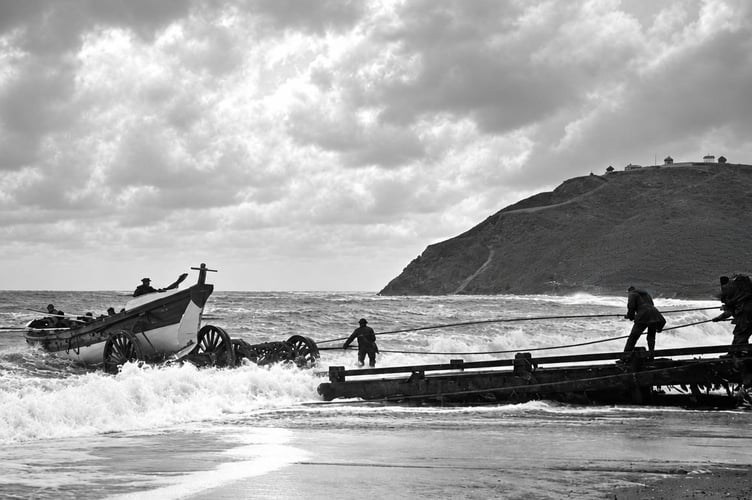
Long before engines, radios and modern rescue equipment, the people of Aberystwyth knew what was expected of them when somebody was in trouble at sea.
You went to help.
The town’s first lifeboat was bought in 1843, paid for with money raised locally. In 1861, a public meeting led to the formation of the Aberystwyth branch of the RNLI.
But the real story was never simply about the boats. It was about the people who climbed into them, those who helped launch them from the shore, and the many others who raised the money needed to keep them ready for the next emergency.
Some paid a terrible price.
In 1866, Aberystwyth man Watkin Lewis swam out through dangerous water to the wrecked schooner Rebecca and helped save all six members of her crew.

Only a few months later, he was back in the sea. This time he was trying to save his own father, who had been swept out while attempting to rescue somebody else.
Watkin Lewis was later awarded the RNLI Silver Medal for bravery.
Then, in 1877, lifeboatman John James went out with the Aberystwyth crew to help the schooner Sarah Ellen in appalling conditions. The rescue lasted around six hours and the sailors were saved, but John James did not make it home.




He died from cold and exhaustion on the return journey, leaving a wife and two children behind.
His name is still remembered at Aberystwyth Lifeboat Station through the John James Award for Outstanding Commitment.
That same willingness to help carried on through the generations.
When the call came, men left their homes and made for the sea, often knowing only too well what sort of conditions they were heading into. Others stayed ashore, helping to launch and recover the lifeboat, hauling ropes and doing whatever else was needed.
Then there were the people who never went to sea at all.
They collected money, organised events, stood with collection tins and served on committees. Many gave up evenings, weekends and years of their lives simply to make sure the lifeboat would be there when somebody needed it.
That mattered then, and it still matters now.
Today the RNLI has found itself drawn into an argument that would probably have seemed very strange to those earlier lifeboatmen.
Crews have been criticised, and sometimes abused, for rescuing people attempting to cross the English Channel in small boats.
But the job itself has not changed.
If somebody is in danger of drowning, you try to save them.
For generations, Aberystwyth lifeboat crews did not stop to ask where a drowning sailor came from, what he believed, or whether somebody safely standing on shore thought he deserved to be rescued.
They went because somebody needed them.
Some people gave money. Others gave their time. Some climbed into a lifeboat and headed out into a storm while their families waited on shore, not knowing when, or even if, they would see them again.
And some gave everything.
The RNLI still relies heavily on public generosity to keep its lifeboats at sea and its crews trained, equipped and ready.
So if you are able to give something, however small, please consider making a donation.
Most of us will never know the person whose life that money may one day help to save.
Perhaps that is the whole point.
When someone is drowning, it should not matter where they were born, what they believe, or how they came to be there.
Courage is knowing the risk and going anyway, because somebody else needs you.
Comments
This article has no comments yet. Be the first to leave a comment.