

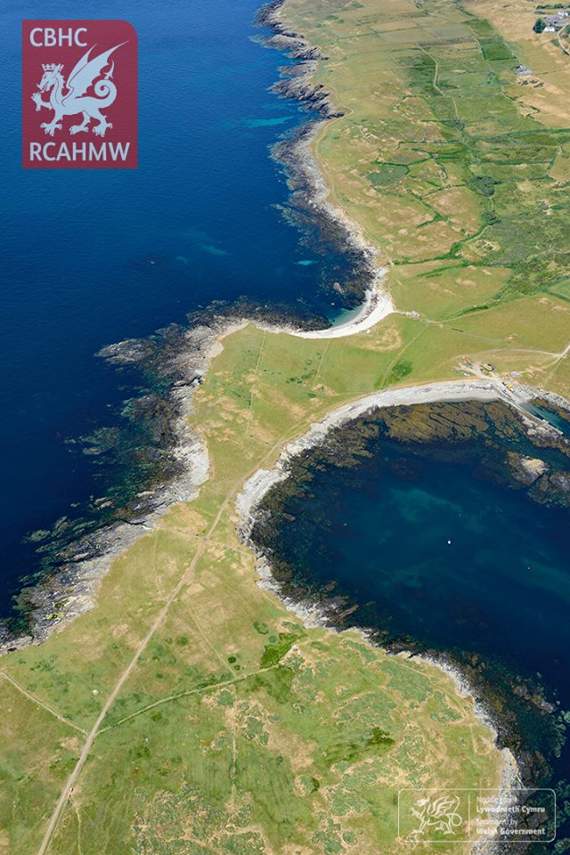
THE outlines of long-lost settlements in Gwynedd have come into view thanks to the heatwave and drought.
Aerial flights organised by the Royal Commission of the Ancient and Historical Monuments of Wales have captured long-vanished archaeological sites in fields of ripening crops and parched grassland.
Attempting to survey and photograph all the different regions of Wales requires long hours in the cockpit.
All flights start at Haverfordwest Airport in Pembrokeshire with stopovers made for fuel at Caernarfon, Welshpool or even Gloucester airports to extend sorties to the corners of Wales.



Parts of north Wales have been exceptionally dry, yielding wide-spreading cropmarks of Bronze Age barrows and prehistoric settlements across the Llyn Peninsula.
A newly discovered early medieval cemetery of square barrows seen in south Gwynedd is a very rare monument type for Wales.
Dr Toby Driver, senior aerial investigator, said: “I’ve not seen conditions like this since I took over the archaeological flying at the Royal Commission in 1997.
“So much new archaeology is showing it is incredible; the urgent work in the air now will lead to months of research in the office in the winter months to map and record all the sites which have been seen, and reveal their true significance.”
Comments
This article has no comments yet. Be the first to leave a comment.