

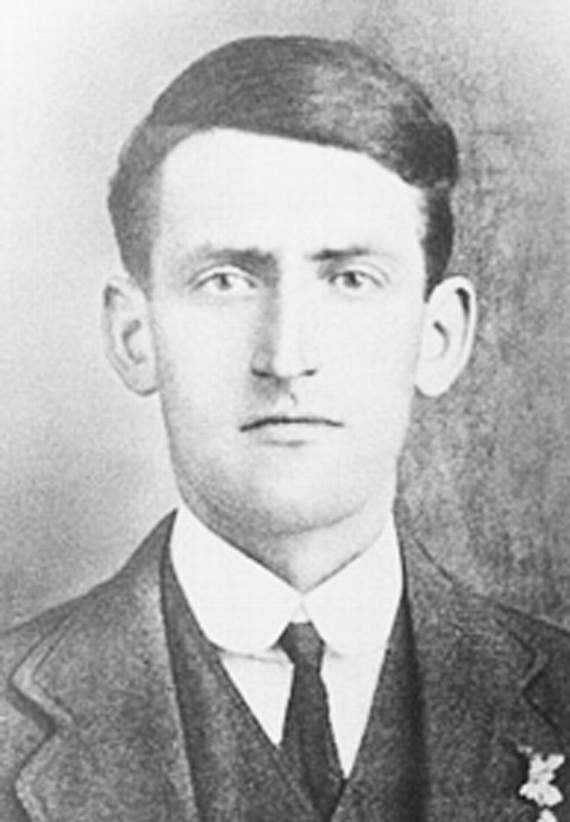
A CEMETERY containing the grave of WW1 Welsh poet Private Ellis Humphrey Evans – better known as Hedd Wyn – is being restored by the Commonwealth War Graves Commission (CWGC) in Belgium a century after his death.
The restoration of Artillery Wood Cemetery has been made possible due to a grant of 3.9m euros from the Flemish government.
The grant was agreed in 2017 by Flemish Minister-President Geert Bourgeois and CWGC Vice Chairman Sir Tim Laurence.
The subsidy will be spread over five years and will be used to renovate 24 CWGC Military Cemeteries in the Ypres Salient.



It has been made in recognition of the huge sacrifices made by Commonwealth forces in Belgium during the First World War and the historical, architectural and artistic value of the cemeteries and memorials maintained by the CWGC with such care for more than a century.
Artillery Wood is the final resting place of two of the most important poets of the Great War – Irishman Francis Ledwidge and Welsh language poet Hedd Wyn.
CWGC historian, Dr Glyn Prysor, said: “Like so many Welsh men and women, Ellis Evans left his home to serve in a war which at times defied imagination. Writing as Hedd Wyn, his poetry was among the most profound, moving and inspirational to emerge from the war.
Artillery Wood Cemetery is a place of pilgrimage for those of us who come here to reflect on his life, and the lives of thousands of his countrymen who now lie in Commonwealth War Graves, or whose names are inscribed on Memorials to the Missing, across Flanders, Europe, and the world.”
Ellis Evans came from a farming family in rural Gwynedd and enlisted in the Royal Welsh Fusiliers in February 1917. On 31 July 1917, the first day of the Battle of Pilckem Ridge (part of the Third Battle of Ypres), he was hit by a piece of trench mortar shell near Langemark and died at a nearby aid post. He is buried at the CWGC Artillery Wood Cemetery in a plot close to fellow poet Francis Ledwidge.
Evans was largely self-educated and showed an early talent for poetry in the Welsh bardic tradition. He took the first of the six poetry chairs he would win in competition in 1907 and was awarded his bardic name Hedd Wyn (‘blessed peace’) in 1910.
Soon after his departure on active service, he completed Yr Arwr (The Hero), his entry for the 1917 National Eisteddfod, for which he was posthumously awarded the poetry chair.
The restoration works at CWGC Artillery Wood Cemetery include the dismantling and reconstruction of the entrance building, tool shed and cemetery walls. To ensure the sustainability of the project, every element is carefully taken apart and if possible repaired and re-used. To this day, bricks are made by hand, baked in traditional ovens and chosen to ensure that the cemetery walls have the same colour palette as a century ago.
Comments
This article has no comments yet. Be the first to leave a comment.