
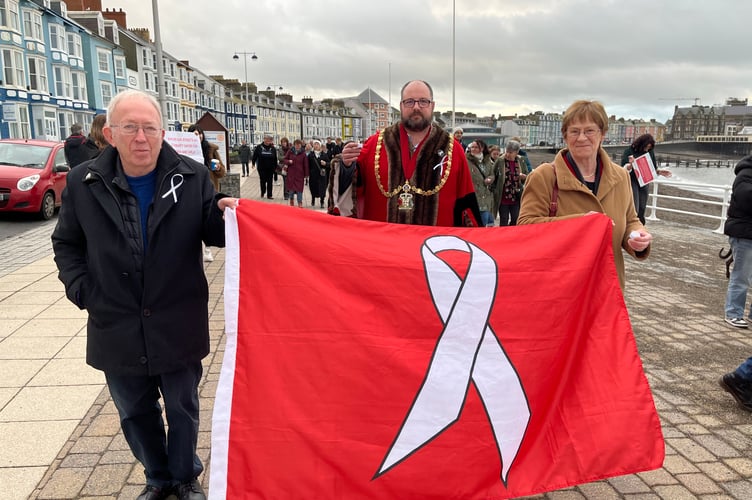
Anna from Pembrokeshire was just 15 when she endured months of abuse from her boyfriend.
It started with butterflies, but ended in emotional and sexual abuse she didn’t know how to name.
“It escalated really badly to the point where [the abuse] was unbelievable. I didn’t know what it was. I was ashamed.”
Anna finally spoke out when the boy started carrying weapons and her dad called the police– only then was she told that what she had experienced was not normal.
.png?width=209&height=140&crop=209:145,smart&quality=75)


.png?width=209&height=140&crop=209:145,smart&quality=75)
But that was the beginning of her troubles – enduring bullying from her peers and a school that didn’t support her, she missed out on weeks of school ahead of exams in place of the boy, being told she was “being dramatic”: “Everyone was taking his side”.
The bullying was the reason she chose not to press charges: “I was really terrified that if I did move forward with it, it would cause even more issues.”
Anna said: “A lot of people messaged me saying things about me.
“The school really isolated me, I lost a lot of friends and all my confidence.”
The main thing she wants people to learn from her story is that abuse is happening in rural Wales, in your communities, right under your nose – and her story shows that the way we talk about and handle abuse is as important as stopping it from happening in the first place.
According to the World Health Organisation (WHO), one in three women will experience physical or sexual abuse in their lifetime.
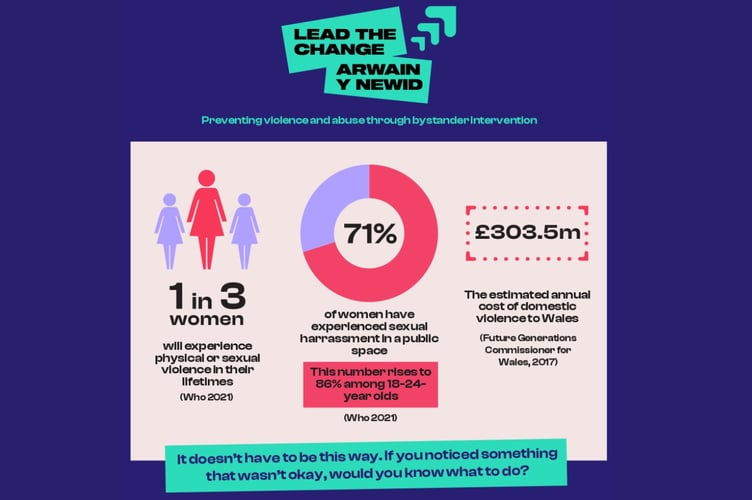
Dyfed-Powys Police recorded more domestic abuse crimes in the last year (April 2024-March 2025) than the year before – 6,525 up from 6,029.
The numbers are higher in North Wales – 11,572 domestic abuse-related crimes – but this only shows the numbers reported, leaving a data gap where silent victims live.
Out of the crimes reported to Dyfed-Powys, only seven per cent resulted in a charge or summons last year – likely because of issues similar to those Anna faced.
The consequences of not supporting victims are terrifying – according to Femicide Census, a woman has been killed by a man in the UK on average once every three days over the last 10 years, with no significant change since they started recording data in 2009.
Another three women die by suicide every week following abuse.
Though the rolling hills of mid Wales and the breathtaking mountains of Eryri evoke wonder and beauty, they hide a belly of abuse that is so prevalent it is accepted as the norm.
Machynlleth Town Councillor Kim Bryan said she was ”naive” about how common domestic abuse was before her best friend was killed by her partner in 2018: “I thought domestic violence was something that happened to other people.”
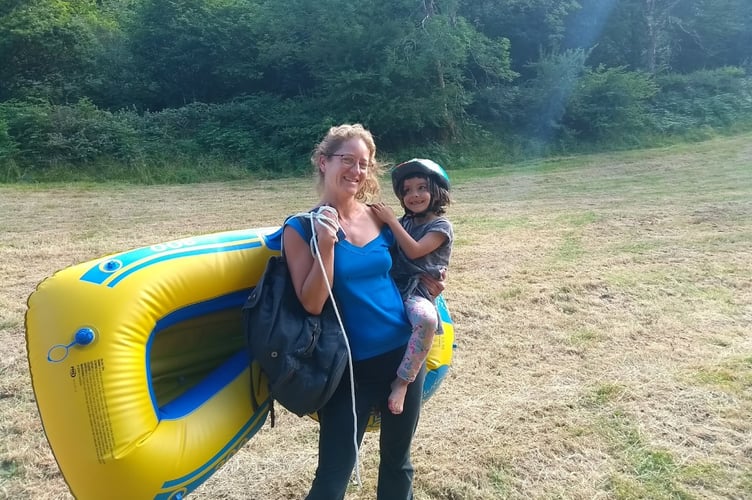
Rebecca Sullivan was the godmother to Cllr Bryan’s youngest daughter when she was killed by her boyfriend at 41.
She was a successful folk musician who had made a name for herself in Machynlleth before moving back to Salt Lake City where she was killed by Nathan Parry, later convicted of manslaughter.
Emergency responders found her without a pulse, with strangulation marks and a large cut on her forehead– a bag was found partially packed; her family believes she was trying to leave him.
She had stayed at Bryan’s that summer, when Bryan became concerned about the relationship after “piecing together” anecdotes Sullivan had shared with a friend.
Cllr Bryan said: “[I’ve learnt that] if someone is in an abusive situation, they’re not going to tell you.
“We sat down together and planned to get her out, but it was too late.
“We never thought it would end in her death.
“Rebecca was an incredibly intelligent, gorgeous musician. I didn’t believe it at first.
“I was surprised to learn how many strong, amazing women end up in these situations.
“I think Rebecca thought she could help Nate.”
Similarly to Anna’s situation, Sullivan’s case wasn’t taken seriously to begin with - Bryan felt the detectives were "obsessed” with Sullivan being 41 and childless and having multiple dating profiles, “it felt similar to blaming women who are assaulted for wearing short skirts”.
She regrets not having the uncomfortable conversation with her friend: “People don’t take it seriously enough.
“Let’s not be afraid to have these conversations if you have any doubts at all.
“Don’t do what I did and not mention it for a month and think it will be fine.
“Intervene before you get to the point where it’s too late.”
Online chatter normalising violence against women and girls has become mainstream in recent years, between the President of the United States joking about sexually assaulting women, and the manosphere’s Andrew Tate’s gender stereotypes beamed into smartphones across the world.
Cllr Bryan says as a woman in politics, the abuse online is an extension of real-world violence.

Just before she was announced as a Welsh Labour candidate for the 2026 Senedd elections she attended a Women in Leadership programme named after Jo Cox, the MP who was murdered in 2016, where she met a lot of women experiencing the same “vitriol” she did as a councillor: “Female politicians are disproportionately impacted by toxic and abusive discourse online; the way Diane Abbot and Zarah Sultana are spoken about is absolutely obscene.
“It’s an extension of the idea that we can be abusive towards women.
“As a town councillor and Senedd candidate, I need to call it out time and time again.”
Data from 2015 shows violence against women increased in the UK from 2009 to such a level that it pushed up the overall levels of violent crime – experts theorise it's not a coincidence that the rise occurred after the financial crash and the beginning of austerity politics.
Similarly, experts put the 15 per cent rise in domestic abuse cases after Christmas down to things like financial pressures and alcohol consumption during the festive season – though some say this shifts the blame unhelpfully away from perpetrators.
Alice Clarke, Head of Operations at Kindling Interventions (an organisation training Wales to become active bystanders), says the pedalling of damaging female stereotypes in mainstream culture is nothing new: “They’re all based on the same notion that men should be strong and dominant and women should be weak and submissive.
“There might be a new focus or medium sharing the idea like the manosphere, but the concept has always been evident in pop culture, media, adverts and politics.”
This year, Gwent Police saw the highest rate of domestic abuse-related incidents reported out of all police forces in England and Wales, an average rate of 34 incidents per 1,000 people.
Dyfed-Powys Police had the highest percentage of domestic abuse-related prosecutions out of all England and Wales forces (21 per cent).
Though it may feel like gender-based abuse is as old as Eryri and as immovable as Yr Wyddfa, there are amazing people across Wales working to stop it, including Kindling Interventions.
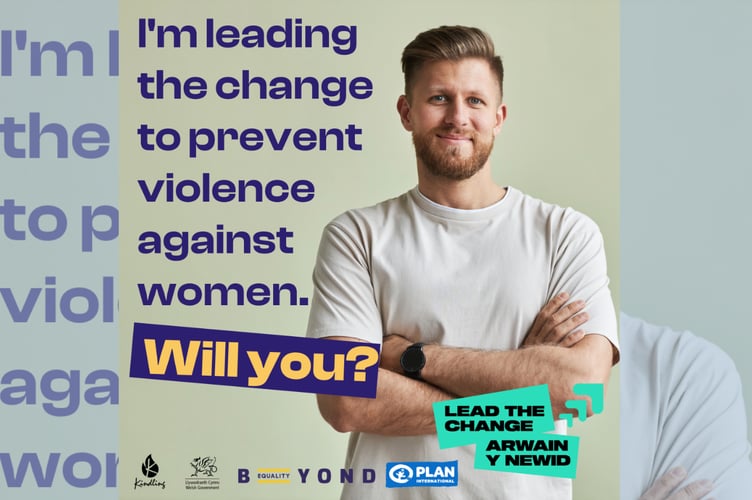
This Welsh Government-funded pilot is the first national-level bystander intervention training pilot in the world, and is part of their wider strategy to make Wales the safest country for women.
Kindling Interventions has supported the Welsh government to train 1,000 Welsh residents over 55 courses in the last three years to speak up.
Bystander intervention training has a considerable evidence base showing significant positive impacts on participants' ability to recognise harmful beliefs and behaviours, and on their confidence and ability to intervene to prevent situations.
Multiple studies have documented interventions being made because of the training.
Kindling Interventions has worked with sports teams, businesses, universities, councils, fire services, the NHS, and community groups across Wales, teaching them to ‘Lead the Change’.
Clarke describes it as a public health initiative working on primary prevention: “If you’re in a setting where there’s a lot of sexist banter and misogyny, it becomes normalised – and this allows some people to take it further.
“If we hear something that we don’t feel comfortable with and no one calls it out, then nothing changes.
“We’re training people to understand that these low-level behaviours are linked to higher-level harms and perpetrations of violence.
“People can intervene in what might seem like very small ways, but if we have many small interventions, we can begin to shift norms.”
The training gives people practical and communication skills to start having conversations: “We’re not training people to be first responders; we teach people how to recognise potential harm, support victims and feel confident to speak up.”
Last year, they trained Welsh residents to become facilitators, including Jess Herman from South Gwynedd.
Herman has since begun teaching anti-misogyny courses in mid-Wales schools after a request from a teacher “seeing a problem” in their school, provided by the Machynlleth charity Eginiad, supported by the Principality Building Society’s Future Generations Fund.
.jpeg?trim=0,0,0,0&width=752&height=500&crop=752:500)
Herman said: “The sessions are interactive, the young people get involved to discuss different attitudes and where they come from – the idea is that they’ll critically analyse what they’re seeing, be it an advert for milk or an Andrew Tate video.”
At the end of the sessions, young people are asked what they can do in their schools and communities, with suggestions from the students being to ‘listen to each other’ and ‘understand people from their perspectives’.
West Wales Domestic Abuse Service (WWDAS) was there for Anna when no one else was, supported by case worker Jessica Terry-Hamer as part of a team of three working with 5-16-year-olds across Ceredigion and Pembrokeshire.
Anna said: “We’d do support sessions but in really fun ways.
“I’m not one to talk about my emotions, but when I was with Jess, I liked to because she made me feel better about myself.”
Anna says that thanks to Terry-Hamer, her confidence has returned, and she is about to start work experience to become a support worker herself.
As part of the Ar Trac programme, Terry-Hamer's team run group sessions in primary and secondary schools, holding drop-in sessions and classes on healthy relationships, friendship, self-esteem, confidence, safety and diversity.
Terry-Hamer said the referrals for “misogynistic behaviour” have become a bigger part of her role than a year ago: “Teens talk to me about what they hear in class about Andrew Tate or [the porn star] Bonnie Blue.
“[These extremes are] becoming normalised among young people.”
Young people opt to attend the sessions, whilst one-to-one support is offered for those with underlying issues such as abuse at home.
Dewis Choice in Aberystwyth started in 2022 as the first dedicated service in the UK for older adults who have experienced abuse.
Since then, 140 older people and their families have been given support, with 43 women coming forward who hadn't realised what they were experiencing was abuse.
WWDAS Chief Executive Michelle Pooley said this can be a particular issue in mid-Wales: “It takes a lot when you’re living in a rural community to speak out.
“You may not be happy with the status quo, with someone harming you, but feel like you can’t talk about it.
“Ceredigion is such a beautiful place, but if we don’t do the work, how can we ever change?
“It’s about working with the community through the community to change the narrative so Ceredigion can become a sanctuary for everyone.”
In spring this year, North Wales Police became one of the first police forces in the UK to pilot Domestic Abuse Protection Orders (DAPO), offering stronger protections for domestic abuse victims.
Unlike existing schemes, DAPOs cover all types of domestic abuse, including physical, controlling or coercive behaviour, economic abuse and stalking, forcing perpetrators to stay in strict exclusion zones, wear GPS tags with no maximum duration, and go on substance misuse or mental health intervention courses.
Families, friends and support workers can apply for DAPOs on the victim's behalf, with a sentence of up to five years imprisonment for breaching an order.
Wales as a sanctuary for women may be a pipe dream, but these are just some of the people working to make it a reality.
Some details have been changed to protect anonymity.
Comments
We've recently changed our login process. If you have an account for commenting, you will need to re-register on the login window.
This article has no comments yet. Be the first to leave a comment.