

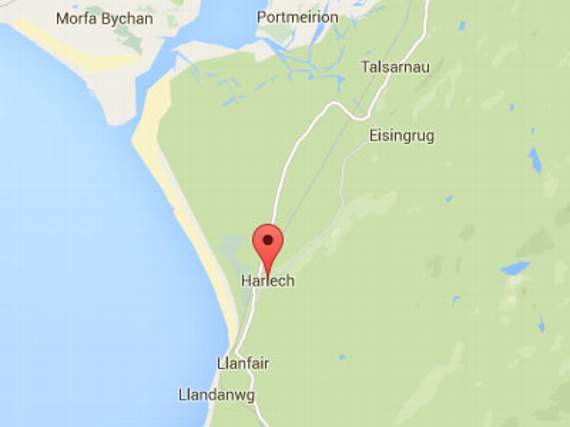
THE latest community news from Harlech.
Historical Society
THE society’s new season of indoor meetings opened with a fascinating account by local historian Jon Parry of the internment of Irish Prisoners at Fron-goch, following the Easter Rising in Dublin in 1916.
The rising was executed largely by the Irish Republican Brotherhood and planning remained relatively secret in the hands of a few men.
.jpeg?width=209&height=140&crop=209:145,smart&quality=75)
Much of Dublin and Ireland was in a state of flux in 1916. Despite this, the British government, distracted by the war perhaps, was fairly confident nothing was going to happen. But on Easter Monday the General Post Office was occupied.
One of the leaders, Padraig Pearse read out the Proclamation of the Republic.
Though initially caught off balance, the British forces regained control by the Saturday, at the cost of many casualties including noncombatants. The Rebels surrendered and were rounded up.
It was easy to weed out the main leaders and 16 were executed by firing squad in Kilmainham jail.
Up to then, most of Dublin, indeed most of Ireland, had been loyal to the Crown. But the populace were stunned at the executions and eventually London ordered the military to end them.
About 1,800 other men had also been rounded up, including some who had nothing to do with the Rising. Most had never been out of Ireland, some never out of their counties. What was to be done with them? To leave them in Ireland could risk another rising.
Why was Fron-goch chosen? The former site of a whisky distillery, it had been converted into a camp for German prisoners of war. It was divided into two sites a north camp and a south camp. Isolated and rural, it was also near enough to the military base at Chester.
Lessons in Irish and Welsh, craft classes and sports were organised by the detainees and many wrote home about the nice countryside. But it was still a strict regime.
There was no smoking and detainees were not allowed near the fence. The food was terrible and malnutrition was rife. Altogether it was a mundane, boring, miserable existence.
Most of the men were Catholics so a priest was brought in who travelled constantly between Wrexham and the camp at Fron-goch.
However, some were Protestants, and Catholics, including Michael Collins, by then the main spokesman, insisted that they were also catered for.
Another big issue was conscription. Some London-based Irish had joined the Rising to avoid the war. The British Government wanted them back so attempts were made to weed them out. Five hundred and fifty men were left at Fron-goch by 16 December, 1916 when the camp was emptied and the men returned home.
Their leaders had been executed and the young men were “second division”. But they had acquired there the knowledge and skills necessary to gain political power and used their Fron-goch networks to further their nationalist and revolutionary work.
De Valera, who was never in the camp, was able to mobilise them and Michael Collins also used the Fron-goch experience to build his cells and networks.
Mr Parry concluded that Irish political democracy owes a lot to Fron-goch, Bala and Meirionnydd. He was thanked by Neil Evans for providing a great start to the new season of talks.
Community council
THE clerk had met Julie Thomas from the Harelch Community Parks Association to sign on behalf of the community council the form needed to get a grant from the landfill community with tarmac.
The clerk also received a letter from the Denbighshire Environmental Trust asking or assistance from the community council that we were willing to contribute £4,151 towards the grants.
The clerks assured them on behalf of the community council that this would be done but not until 2017/18 but would be paid after March 2017.
Cadw had agreed to carry out all work needed at the Llyn y Felin playing fields, the council urged them to do the work as soon as possible.
New noticeboard had been installed, all notices to be given to the clerk to a key was held at Llew Glas Cafe.
The council had agreed to help financially by agreeing to option E as long as every other council agreed to support the swimming pool.
The Christmas celebrations were discussed. They will take place in the town from 1 December to the 8 and a lantern procession would take place over two weekends under the leadership of Paula Ireland.
A fun race would be held on 29 October. A competition would be held this year for the best dressed premises. This would be judged on the 10 December.
Every councillor would take turn
to translate the minutes from Welsh to English, it was decided.
Give way signs needed by the Old School. The situation with public toilets needed to be discussed at the next council meeting.
Councillors thought that Harlech was being neglected as the main street needed clearing and rubbish bins needed emptying more often. Many of the allotments were empty and we hoped that more young people would be interested in tasking them up.
A letter was needed to be sent to Cyngor Gwynedd that the surface of the public footpath from Bron y Graig to the Pendref was dangerous.
Cllr Caerwyn Roberts had been in touch with Cyngor Gwynedd to arrange for buses to park in Bron y Graig top parking ground.
The community council agreed to this as long as Cyngor Gwynedd worked to advertise where the buses were to park.
Cyngor Gwynedd to be asked to cut trees that were overgrown near the Tan y Castell workshops. Concern was expressed at the amount of overgrowth on the side of the road towards the St David’s crossroads.
The public footpath under the college need cutting, councillors heard.
Coffee morning
HARLECH and Ardudwy Leisure are hosting a Macmillan Coffee Morning for Cancer Support in the Waterside Cafe on Friday, 30 September from 10am to 12pm. All welcome to enjoy the delicious homemade cakes, raffle and tombola.
If you’re a member of a club, society or group, send your news to [email protected]
Comments
This article has no comments yet. Be the first to leave a comment.