

South Seddon, with its colourful mosaic, was home to the University’s departments of Physics and Chemistry for many years.
Yet, it started life in 1865 as a public restaurant and coffee room, and its developer, Thomas Savin, wanted a flat roof that could be used as a promenade.
The roof walk was short-lived as the rapidly developing academic needs of the University meant a third floor was added to provide student accommodation and study spaces.
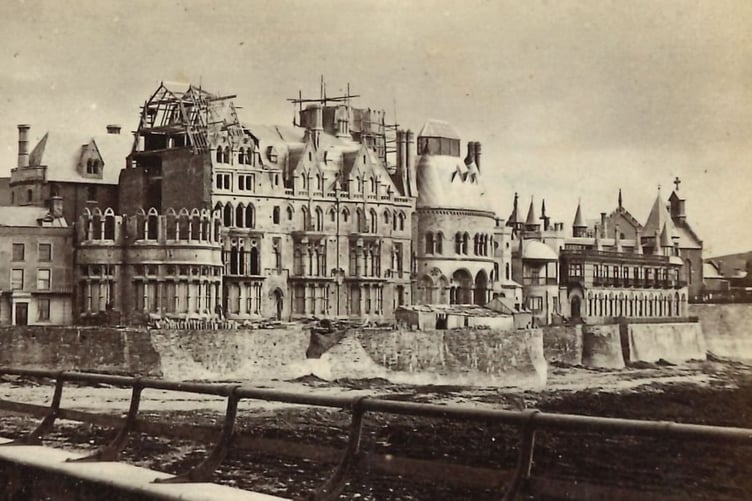
Though not directly affected by the great fire of 1885, South Seddon was totally rebuilt, as it is today, and opened in time for the summer term of 1888.
And the flat roof was reinstated, but without the promenade.
Reroofing has been one of the Old College project’s great challenges.
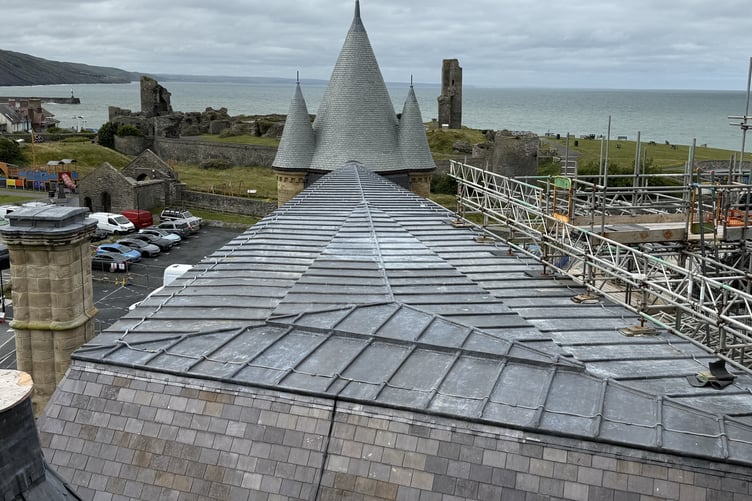
Hidden from view is the newly completed flat roof of South Seddon.
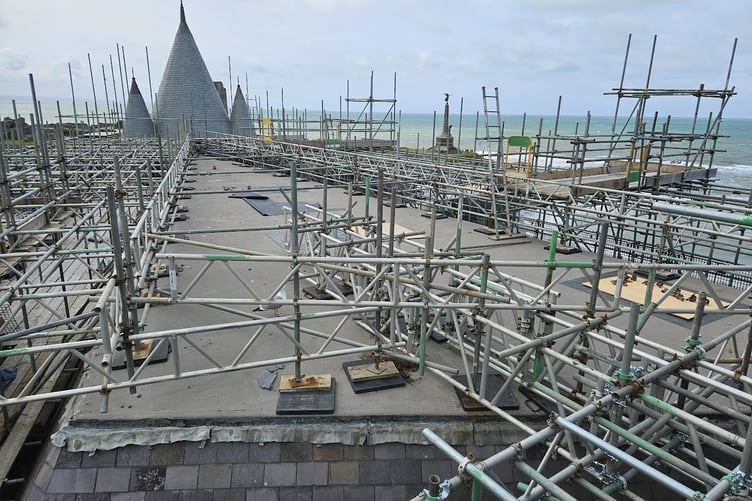
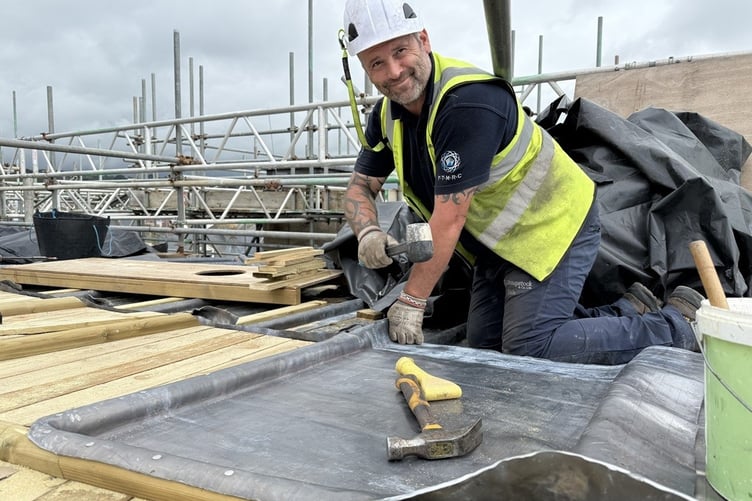
The work by Anglesey-based roofers Greenough & Sons is quite remarkable in its detail and its completion represents another significant milestone for this ambitious project.

Working inside the complex lattice of the scaffolding, the old bitumen roof was removed section by section and the supporting timbers restored and repaired.
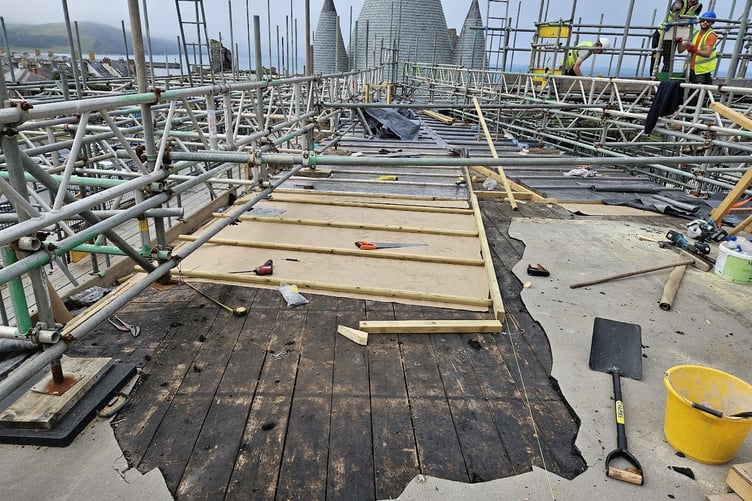
Keeping the rain out was also a priority as the new lead roof was carefully crafted.
As the scaffolding is lowered, it is an opportune moment to marvel at the craftsmanship.
Equally fascinating is the conservation of the University crest on the old King Street entrance.
Undertaken by Skillington’s, specialists in the conservation of historic buildings, milk is one of the key ingredients.
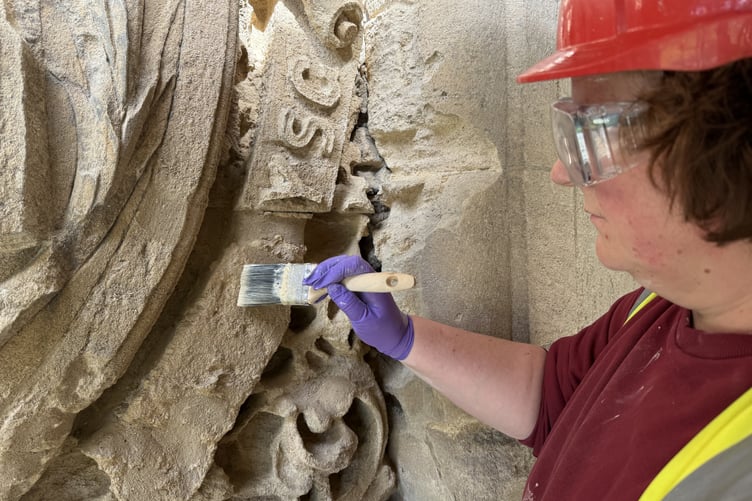
Lime putty has been used to prevent pools of water collecting on the intricate carving and a shelter coat, made from limewash, stone dust and skimmed milk, applied for protection.
The casein in the milk, a protein essential for cheese-making, acts like a glue, contributing to the protection of the carved stone.
Comments
We've recently changed our login process. If you have an account for commenting, you will need to re-register on the login window.
This article has no comments yet. Be the first to leave a comment.