
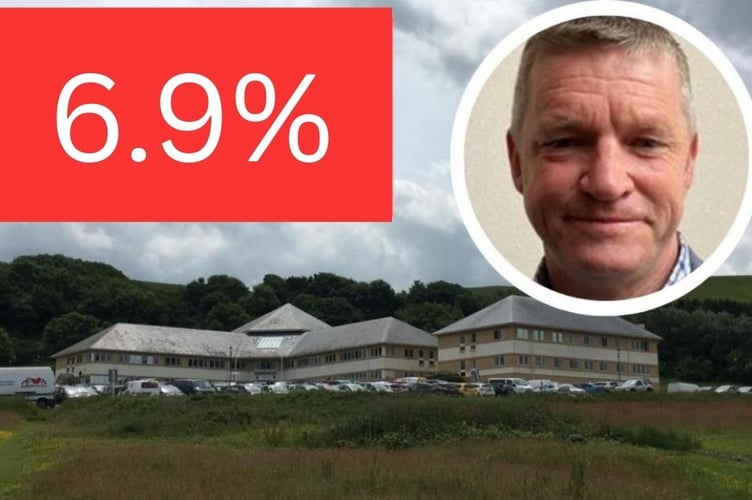
Council tax in Ceredigion could rise by nearly seven per cent next year, lower than previously expected, despite the council receiving one of the lowest funding settlements from the Welsh Government.
While council tax makes up a proportion of the council’s annual revenue, a crucial area of funding is the Aggregate External Finance (AEF) rate from Welsh Government.
Welsh Government Cabinet Secretary for Housing and Local Government, Jayne Bryant, has announced that local authorities will next year receive £6.4bn from the Welsh Government to spend on delivering key services.
The investment, which comes from the Revenue Support Grant and non-domestic rates, means that Welsh councils will receive an average 2.7 per cent funding increase, with a fully funded floor will ensure that no council receives less than a 2.3 per cent increase.

In addition to the core settlement, there will also be grants for local government amounting to over £1.3bn for revenue purposes and over £1.08bn for capital investment.
Ceredigion is to receive a 2.3 per cent increase, some £3,388,000 extra for a total of £150,670,000; neighbouring Pembrokeshire also receiving a 2.3 per cent increase.
For the current financial year, Ceredigion saw a late increase in the Welsh government financial support funding floor, a rise of 3.6 per cent to 3.8 per cent, leading to a council tax increase of 9.3 per cent for the current financial year.
The final budget will be published in January following consultation with local authorities and stakeholders.
A council spokesperson responded to the settlement: “Ceredigion has, once again, received a disappointing settlement in the Revenue Support Grant from Welsh Government. The increase of 2.3 per cent is significantly lower than inflation, which is currently at 3.6 per cent and the increase in the council’s own cost pressures equates to an inflation rate of just under five per cent.
“The 2.3 per cent increase in the 2026-27 budget is at Welsh Government’s ‘funding floor’ and Ceredigion is one of 10 Local Authorities receiving the minimum increase. The expectation to fund the Welsh Government’s Real Living Wage policy for registered social workers (which is seeing a 6.75 per cent increase to £13.85 per hour) is also going to be challenging in the content of this settlement.
“We are grateful that this year’s settlement is subject to a funding floor but this being below the rate of inflation represents a real-terms cut in funding for Ceredigion once again.”
At Ceredigion County Council’s full council meeting of 27 November, Leader Cllr Bryan Davies said he wanted to maintain services as much as possible whilst keeping the rise in council tax as low as possible.
He told members that early estimates indicated that an 8.9 per cent increase in council tax would be necessary, but an improved position of 6.9 per cent has now been indicated as a result of a further modelling of service cost pressures and operational savings.
The actual budget propositions will come before council in January prior to the setting of the annual budget.
Comments
This article has no comments yet. Be the first to leave a comment.