
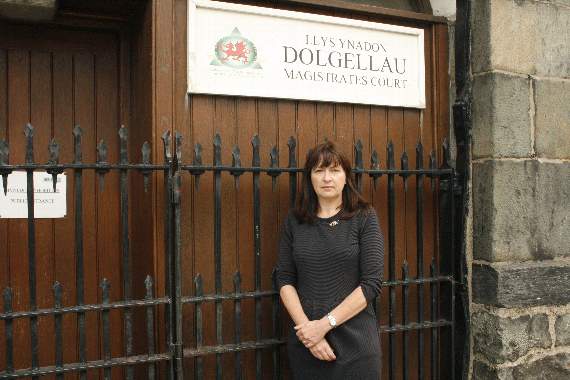
DWYFOR and Meirionnydd residents are at risk of being denied their right to fair trial, it has been claimed.
MP Liz Saville Roberts has warned against the continued erosion of judicial services in rural areas as government reforms pushes access to justice further beyond the reach of ordinary citizens.
Speaking during a Westminster Hall debate, Mrs Saville Roberts said Wales, and in particular rural communities such as parts of Dwyfor Meirionnydd, were witnessing a gradual yet steep decline in access to justice, citing the government’s recent court closure programme and restrictions to legal aid as further evidence that the cost of providing justice was being shifted from the state to the individual.
Since the 2015 election, 14 courts across Wales have closed or been earmarked for closure including Dolgellau Magistrates Court, which means cases will be transferred to Caernarfon or Aberystwyth.




Mrs Saville Roberts said: “What we effectively have is the cost of justice being passed from the state to the individual.
“Not content with overseeing the closure of local courts across Wales, the government is rolling back progressive measures such as legal aid, a cornerstone in providing ordinary citizens with access to justice regardless of their ability to pay.
“Unfortunately this means many people simply cannot afford to access justice, whether their court is within reach or not.
“The issue of inadequate public transport compounds the situation for many people in my constituency.
“A journey from Dolgellau to Aberystwyth is not simply a task of getting on a tube with an oyster card.
“A recent report from the Ministry of Justice states that 85 per cent of car journeys would take an hour or more to reach the alternative venue.
“The public are effectively being asked to subsidise proposed changes with their own transport costs.
“If a court building is deemed to be unsuitable for modern court proceedings, then I would urge the government to consider alternative suitable local public spaces, such as council chambers.
“Cyngor Gwynedd’s Meirionnydd chamber in Dolgellau has parking facilities and an in-built translation system, and must surely be a better solution for local people?”
The proposed court closure documents also include plans to install digital technology as a means of accessing the justice system.
Mrs Saville Roberts is wary to fully endorse the move to a more digital format in such a rural area.
“In principle I support efforts to access justice through technology such as video conferencing, particularly in areas where the transport infrastructure makes it impossible for people to reach their nearest court in time for a prompt 9.30am start,” she said.
“However, digital connectivity varies in quality throughout the Dwyfor Meirionnydd constituency, I have to ask what considerations, if any, has the government given to the reliability of the digital infrastructure in rural areas that face losing their courts?
“It’s one thing to provide an alternative to attending court in person, but if that alternative is inadequate and unreliable then it calls into question the fundamental principles of an accessible justice system for all.
“I would also like assurances that people will be treated as fairly over video as they would if they were to attend court in person.
“A two-tier system of justice based on whether an individual can attend a court in person or not is unacceptable.”
Comments
This article has no comments yet. Be the first to leave a comment.