

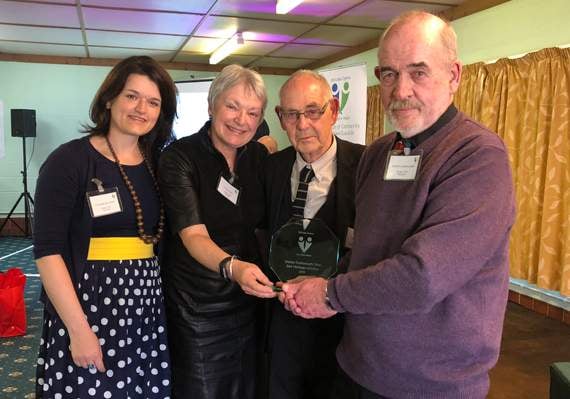
Criccieth Town Council has scooped a national award for its First World War project.
The town council has been awarded the Best Heritage Initiative prize at One Voice Wales’ national awards ceremony.
This award recognises the council’s project to commemorate Criccieth’s Contribution to the Great War.
The project was in partnership with Ysgol Treferthyr, Coleg Meirion-Dwyfor and Criccieth Memorial Hall.
.jpeg?width=209&height=140&crop=209:145,smart&quality=75)

.png?width=209&height=140&crop=209:145,smart&quality=75)
Criccieth has a unique heritage in regards to the First World War.
The Memorial Hall is a testament to 49 local individuals who fought and died, and many of the families to and descendants of these individuals still live in or near Criccieth today and have many stories and records.
Criccieth was also home to David Lloyd George, Prime Minister during the First World War, and during his time in No 10 Downing Street many Welsh speakers from Criccieth worked there and many of their families and descendants still live in Criccieth and the area today.
Hundreds of people came from far and near to attend a series of events at Criccieth during Remembrance Week 2018 which was a culmination of the unique work that has been undertaken during the year. All this was possible as a result of Criccieth Town Council being awarded a £10,000 grant from the National Lottery Heritage Fund (‘First World War: then and now’ programme).
Cllr Elizabeth George, Chair of Criccieth Town Council said: “We are delighted and honoured to have received this award. It has been an exciting year to be part of this project supported by the Heritage Lottery Fund. This has given the area’s children and young people an opportunity to research into the history and the effect the First World War had on the area, with an emphasis on peace and reflection. This grant has provided an opportunity to collaborate with partners and well-known specialists in a broad range of areas to realise the aims of this exciting project, which would otherwise not have been possible.”
Local MP, Liz Saville Roberts, congratulated the council, saying: “Without doubt the big success of the project was the creative ways used to reach out and create appropriate and memorable events to different ages and backgrounds in the local community, and this bilingually.
“This heritage belongs to everyone, and it traces the big events of a century ago in a respectful and accessible way and creates memories owned by everyone who contributed.”
Comments
This article has no comments yet. Be the first to leave a comment.