
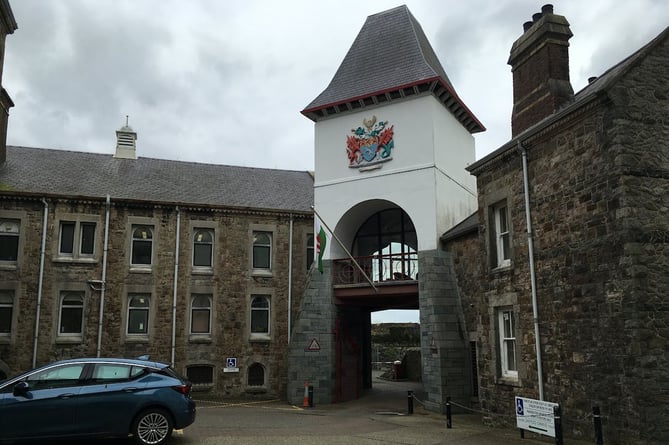
English speakers are being “encouraged and motivated” not to speak the language with colleagues.
Gwynedd Council’s Welsh language policy aims to maximise use of the language right across all of its council services as part of efforts to ensure the language can thrive in the county.
A report due to come before the council’s Language Committee next week noted how native English speakers in the maritime service were being actively discouraged from using their own tongue to speak to each other.
The report also notes seafaring manuals or safety posters were chiefly written in English, that maritime organisations corresponded in English only, and specialist training was usually only offered through the medium of English. English is recognised as the universal language of the sea and maritime industry.

The approach emerged in a council report over its Welsh language strategy, set to be discussed by its Language Committee on Monday.
The Economy and Community Department report described the implementation of the council’s language policy and contribution towards the realisation of the Welsh Language Strategy 2023–2033.
A section of the report called for “examples of any obstacles, complaints and commendations” associated with the provision and promotion of Welsh-medium services.
With reference to the Maritime Service, the report noted: “Some officers within the service, because English is their first language, speak English together on occasions despite our efforts to encourage and motivate them to speak Welsh.
“It is difficult to monitor the use of the Welsh language in the workplace in every location, but the matter is regularly addressed by the team to remind all officers of the expectation.
“All team meetings are held through the medium of Welsh.
“We encourage all customers who visit our offices to start every conversation in Welsh, and we also try to answer all phone calls with a bilingual message.
“The message under the email signature of the majority of service staff welcomes anyone to use Welsh or English and we have previously received positive comments about this.”
The report added: “Whilst we endeavour to display information bilingually at our destinations (on notice boards or in offices) unfortunately, some information/material is only available in English, e.g. seafarers’ manuals or safety posters.”
Although it noted that it was displaying safety material from the RNLI and organisations such as Welsh Water Safety, in Welsh.
Other organisations however, such as the “Coastguard Agency, Trinity House, the UK Harbour Masters Association correspond in English only, and specialist training is usually only offered through the medium of English”.
“In addition, some documents such as our Marine Safety Code and risk assessments are also written in English as it is necessary to share and discuss
the content of these documents with external organisations, such as the Coastguard Agency, the Marine Accident Investigation Branch or the HSE.”
The report added: “All members of the team speak Welsh, although some are less confident. Recruiting for certain positions with specific maritime skills can be challenging.”
Comments
This article has no comments yet. Be the first to leave a comment.