
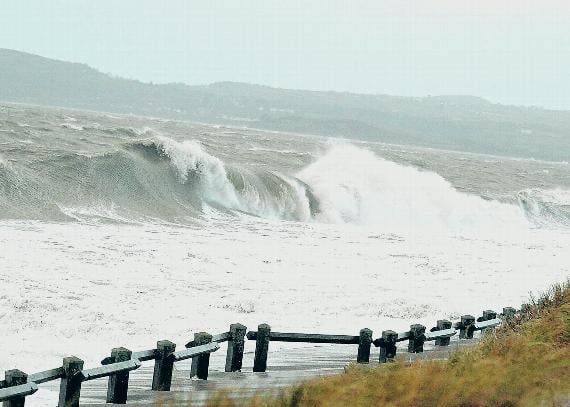
A MULTI-MILLION pound European research project investigating the risks of climate change includes Harlech and the Llyn Peninsula.
With funding of €4.1m from the EU’s Ireland-Wales programme, the CHERISH (Climate, Heritage and Environments of Reefs, Islands and Headlands) project is being led by the Royal Commission on the Ancient and Historical Monuments of Wales (RCAHMW) in collaboration with Aberystwyth University.
Two Irish partners are also involved in the five-year study - the Discovery Programme: Centre for Archaeology and Innovation Ireland, and the Geological Survey, Ireland.
The project will focus on the headlands and islands around Pembrokeshire, Cardigan Bay and the Llyn Peninsula and sites along the south and east coast of Ireland.

.jpeg?width=209&height=140&crop=209:145,smart&quality=75)

Cutting-edge technologies will be used to analyse coastal and island archaeology and maritime heritage sites most affected by climate change, coastal erosion, storms and rising sea levels.
The project will fund new excavations, records of environmental change, marine mapping and landscape modelling.
One of the aims is to uncover some of the secrets hidden beneath the coastal waters around west Wales and Ireland, including ancient shipwrecks.
Dr Toby Driver is a senior investigator at the Royal Commission on Ancient and Historic Monuments Wales: “Our fellow researchers from Ireland will use a specially equipped boat to carry out multi beam surveys under the sea and thanks to cutting-edge marine mapping, we’ll be able to take high-resolution images of the wrecks that foundered on undersea locations such as Sarn Badrig near Harlech.
"Some will have been there for up to four centuries and it will be the first time many of them will ever have been seen under water.
Read the full story in this week’s north editions of the Cambrian News
Comments
This article has no comments yet. Be the first to leave a comment.