
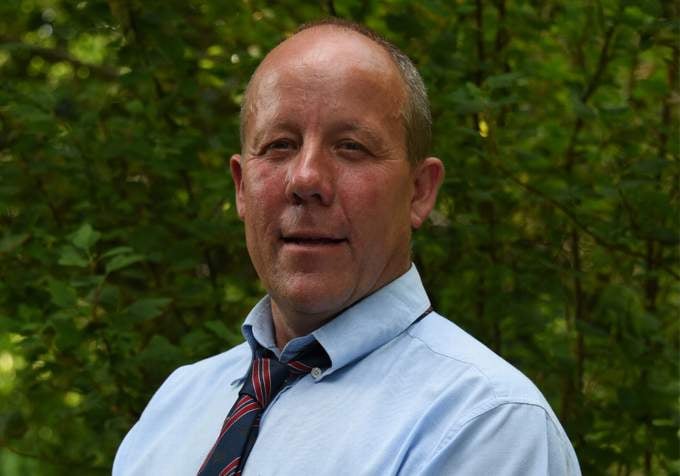
Farming in Wales is best placed to help tackle the climate crisis but a level playing field is needed, the Farmers’ Union of Wales’ deputy president has said.
FUW deputy president Ian Rickman addressed a COP Cymru 21 webinar, titled ‘Fields of ambition - farming at the centre of sustainable land use for the future,’ on Thursday, 25 November, which also heard from Hybu Cig Cymru, National Farmers Union Cymru and the National Sheep Association.
The panellists discussed integrating trees into farming systems, working towards Net Zero by improving farming’s productive efficiency, the role and use of carbon calculators, grazing for biodiversity, sustainable food security, the opportunities and risks of the carbon market, and how Welsh agriculture is uniquely placed to be a world leader in sustainable food production.
Speaking at the event, Mr Rickman told the audience: “Our ambition at the FUW for genuinely sustainable land use to tackle the climate and nature crises is twofold. Firstly we need a just and fair transition for all farms and farm types. Everyone needs to play their part, and should be given the opportunity to do so. And secondly- we need to focus on land sharing as opposed to land sparing, using land for a multitude of benefits instead of ‘releasing’ it from agriculture.”




Mr Rickman added that every farm has the ability to provide benefits to biodiversity, whether that’s through increasing their hedgerow network, as many farmers have done, managing on-farm woodlands or adapting livestock grazing for the benefit of ground nesting birds.
“However environmental schemes in the past have not been easily accessible to all farms or farming types, and instead have focused on creating ‘biodiversity pockets’, with smaller numbers of farms receiving most of those payments.
“Therefore we are lobbying for a payment cap on the proposed public goods scheme to prevent large landowners and charities from being the main recipients.”
The FUW therefore has argued that the Welsh Government should implement a payment cap, introduce redistributive payments for smaller holdings and include a strengthened active farmer rule.
This, Mr Rickman told the audience, will ensure the benefits of these payments stay within rural communities and farming families in Wales, helping create a fairer transition from one scheme to the next.
“Enhancing biodiversity on all farms as opposed to pockets also enables habitats to be linked up and connected together, which, as the Nature Recovery Action Plan for Wales states, ‘provides maximum benefit for biodiversity across the wider landscape’,” he said.
The FUW further used the opportunity to highlight that while offsetting emissions is an important tool in tackling climate change, it should not divert attention away from the core efforts of companies and industries to reduce emissions.
“We do not have land to spare to simply use it to offset current emissions, or for planting trees for carbon trading to provide companies with a ‘licence to pollute’. That would be the opposite of sustainable land management!” he said. “We want to see Wales’ family farms as part of the solution, not a casualty of carbon offsetting by powerful players.”
Mr Rickman was clear that farmers like to focus on what they can do practically on their own holdings.
“Farmers want to be involved. Indeed, farmers, rural communities and land managers have the best understanding, generational knowledge and practical experience of land management,” he said. “This practical experience and knowledge is absolutely vital for tackling the climate and nature crisis. Wales’ family farms must be on the frontline, and not in the firing line.”
Comments
This article has no comments yet. Be the first to leave a comment.