
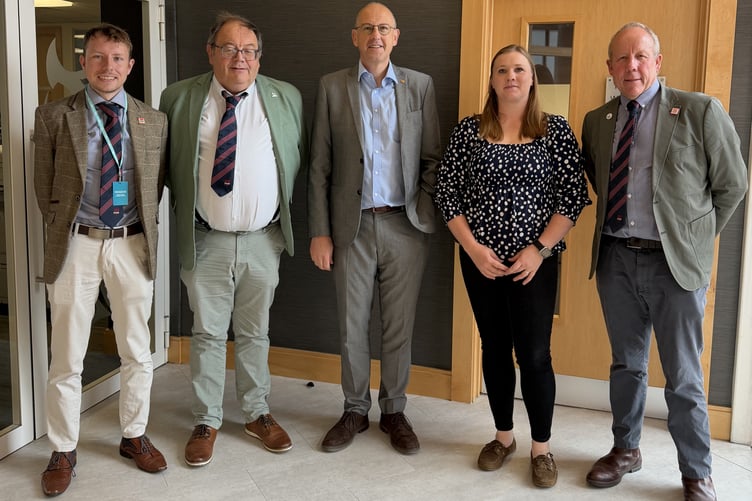
Welsh farmers are desperately in need of support and flexibility with rules and regulations following an exceptionally challenging season, the Farmers’ Union of Wales has told the Welsh Government.
With farmers being forced to choose between vaccinating their animals against Bluetongue Virus and buying winter fodder, FUW representatives raised concerns about the pressing dilemma facing the industry when they met with Cabinet Minister for Rural Resilience and Sustainability, Llyr Gruffydd MS, in Cardiff.
The union pressed the Welsh Government to do all it could to introduce immediate measures to relieve pressure on the industry, including moves to increase the 70% farm support Advance Payments in October to support farmers with their short-term cashflows.
The meeting came after Union representatives pressed for rapid action and forward planning to prepare for the wildfire risk in 2027, and called for the UK Government to establish an Emergency Fund to support farming businesses with short-term crises and financial challenges during meetings with Welsh Office and DEFRA ministers in London on 8 September.
They also reiterated their calls for greater flexibility with the Agricultural Pollution regulations, which will see farmers banned from spreading slurry and other organic manures from 15 October until 15 January 2027 on most grassland soil types. With farmers struggling with fodder availability following an exceptionally dry season, farm businesses across Wales will need to graze, spread slurry and take cuts of silage much later than planned for as long as the weather allows.
Questions were also asked about the timeline for making long-term changes to the Sustainable Farming Scheme, with the FUW highlighting its key asks that require urgent attention to ensure the universal layer of the Scheme is more accessible and practical in 2027.
President Ian Rickman said: “This year has proven to be extremely challenging for Welsh farming businesses. They have faced extreme weather conditions, disease outbreaks and rising input costs during the most significant transition in agricultural support policies for decades, and we welcomed the opportunity to discuss these challenges and potential solutions with the Cabinet Minister.
“The situation regarding Bluetongue is very worrying and the direction of travel in England with regards to testing and diagnosis is seriously concerning, highlighting the UK’s lack of resources when it comes to tackling disease outbreaks.
“Coupled with a shortage of fodder on many farms due to the recent drought conditions and the hottest summer on record, limited cashflow means some farmers are faced with a pressing dilemma, whether to vaccinate their animals against Bluetongue or buy more forage for the winter. This is why we are calling for immediate action to help relieve this pressure, and increasing the farm support Advance Payments in October would go a long way to support farm businesses in the short-term.”




Speaking about the closed period for spreading slurry, Mr Rickman added: “The current regulations are too rigid, too costly and too bureaucratic. This year’s drought has prevented timely slurry spreading, and there could be serious repercussions if farmers are unable to empty their stores appropriately before the winter.”
Comments
This article has no comments yet. Be the first to leave a comment.